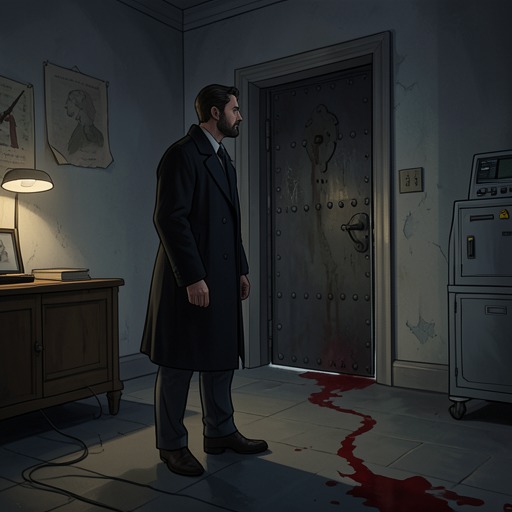
Fiete Returned by Police After His First Escape from Frerk's Farm
Der goldene HandschuhFiete’s first escape from Bauer Frerk’s farm ends not in freedom but in forced return: after fleeing on an old bicycle, the sixteen-year-old is handed back to the man who has been beating him. Recalling the episode to Helga years later, he describes a failed flight that turns the farm from a place of brutal labor into a prison of deliberate confinement and daily torment.
Background and First Escape
Fiete tells Helga that in 1951, aged sixteen, he fled the East Zone and ended up with the wrong person. He initially found irregular agricultural work with Bauer Frerk in Billwerder, but Frerk’s violence soon made the arrangement a trap. Day after day, Frerk struck him with fists, clubs, and a manure fork, without needing any particular provocation; the account presents his hatred as general, but especially directed at Fiete.
After two months, Fiete tried to escape on Frerk’s old bicycle. The farm’s stables had seemed to consume all his strength, and the bicycle offered a chance to get away from them. Instead, a police patrol happened to be driving through the area at that hour. The officers caught Fiete and took him back to Frerk, reversing his attempt to leave and placing him once more in the farmer’s power.
Return and Escalation
The return marks a sharp worsening of Fiete’s treatment. Frerk moved him into a tiny room off the main hall, which Fiete describes not as damp but as wet. At night, Frerk tied him to his bed and sometimes came without warning to check that the knots held. When Fiete wet himself, Frerk punished him by pressing him down into the urine.
The misery is rendered through relentless repetition: everything is wet, cold, and soaked. His food consists of half-rotten turnips and potatoes, green meat, spoiled vegetables, and foul water. Frerk continues devising new humiliations, so that Fiete’s captivity is not merely a return to the same violence but an escalation into calculated, sustained degradation.
Significance in Fiete’s Recollection
Years later, Fiete recounts this episode to Helga after she has shared her worries about her low-paid cleaning work and the mortgage she and Erich may not be able to repay. Her personal questions prompt him to speak about a past that, as the narration observes, few people have asked him to describe. The memory exposes the history behind his arrival in Hamburg: at sixteen, he was a runaway from the East Zone who found work only to be abused, returned by the police, and trapped again.
The episode’s decisive reversal is stark. The officers’ intervention does not rescue a vulnerable runaway; it restores him to the person harming him. That return makes the farm’s subsequent confinement and degradation possible, and gives Fiete’s later account of his past a concrete history of violence and failed escape.