Fiete's Escape from East Germany
Der goldene HandschuhFiete Honka’s 1951 flight from the East Zone, undertaken when he was sixteen, is the beginning of a journey from political displacement into another form of captivity. Years later, while alone with Helga and answering her questions about his past, he recounts how his search for a place in the West brought him to agricultural work in Billwerder—and to Bauer Frerk, the man who turned that apparent refuge into a daily ordeal.
The Flight and Its Immediate Aftermath
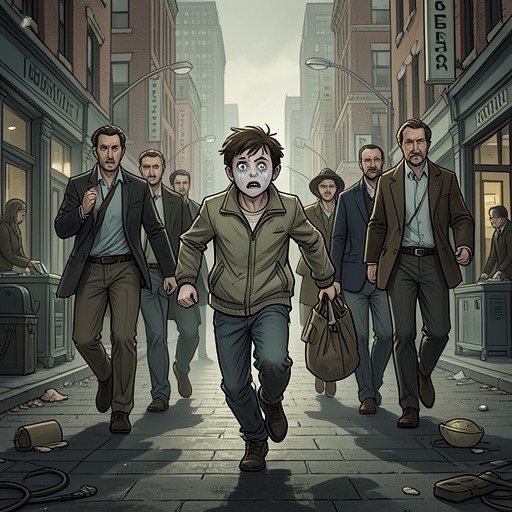
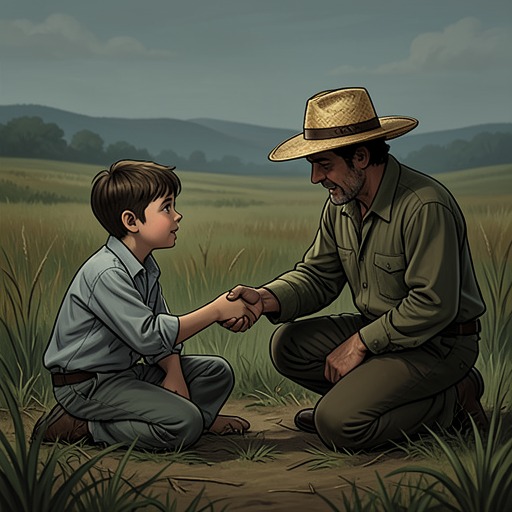
Fiete’s story starts with his departure from the East Zone in 1951. He was sixteen and, as he tells Helga, fell into the hands of the wrong person. The brief account gives no route or details of the crossing; its emphasis falls instead on what awaited him after he fled. In Billwerder, he initially found irregular employment in agriculture with Bauer Frerk, a foothold that soon proved to be another trap.
Work Under Bauer Frerk
The farm’s violence was not presented as an isolated punishment or the consequence of a particular mistake. Fiete says that Frerk beat him every day, using fists, clubs, and even a manure fork. The account describes an employer whose hostility required no special occasion: Frerk hated Fiete in particular, as well as everything more generally. To Fiete, the stables became a dark, devouring place that consumed his physical strength. His flight from the East Zone had brought him west, but it had not brought him safety.
A Second, Failed Escape
After two months, Fiete tried to get away from the farm on Frerk’s old, battered bicycle. This was a separate escape attempt from his earlier flight out of the East Zone. A police car happened to be patrolling the area at that hour; the narration stresses how extraordinary the coincidence seemed to Fiete. The officers returned him to Frerk, placing him back in the hands of the person who had been beating him.
That return marked a further descent rather than a rescue. Frerk moved Fiete into a tiny, soaking-wet room on the farmhouse’s threshing floor, tied him to his bed at night, and sometimes came without warning to check the knots. The account links Fiete’s repeated nighttime bed-wetting to Frerk’s punishment: he pressed the boy into his own urine. Fiete was also fed partly rotten turnips and potatoes, green meat, and foul water. The escape from the East Zone thus opens a sequence in which flight repeatedly fails to secure freedom, and the police intervention makes his immediate captivity worse.
The Recalled Episode
The episode reaches the reader through Fiete’s account to Helga. She has asked what brought him to Hamburg and what he had done before; it has been a long time since anyone asked him something personal. His answer gives their conversation a new depth, but it also sets his trust beside the brutality he describes. The narrative moves from his teenage flight to the farm and then to the failed bicycle escape, making the distinction between leaving the East and escaping Frerk essential: Fiete accomplished the first, but the second ended with his return to the abuser.