Säberalma
Der goldene HandschuhSäberalma names a stigmatized category of women in the drinking world around Zum Goldenen Handschuh: women whose prolonged alcohol use has damaged their brains and nerves so severely that saliva runs from their mouths. The label turns a physical consequence of illness into a public identity. Through Gerda and a group of women encountered at the bar, the novel shows both the bodily degradation attached to the term and the precarious circumstances it obscures.
Meaning and Visible Signs
The term is explained through Gerda, whose sunken mouth works against a flood of saliva. The narration attributes this symptom to alcohol’s damage to the brain and nerves, describing the process as a bodily decline that eventually becomes impossible to conceal. Erna, Inge, Herta, and Ilse are named among the other Almas, suggesting that the label marks a recognizable presence in the bar’s social world rather than an isolated case.
Appearance also becomes a means of sorting the women. The other Almas, however ragged, still use something—lipstick, eye shadow, or rouge. Gerda does not. This contrast does not make the others less impaired; it shows how small acts of self-presentation distinguish them even within a group defined by visible damage. The category compresses individual lives into a shared bodily sign, while the details resist making every woman identical.
The Barroom Group
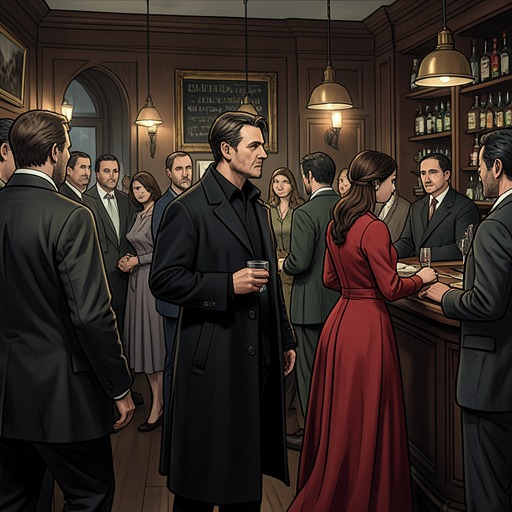
At one point, Zum Goldenen Handschuh has almost returned to its regular crowd, with several Säberalmas seated by the jukebox. Inge, Hildegart, and Agnes are identified as newcomers there. Their descriptions differ: Inge is rendered as an unfinished, massive block of wood, concrete, or granite; Hildegart is marked as scarred and of ordinary weight; Agnes as thin and bony, with the nickname Akne. The range of bodies makes the group visible as a social category, not a uniform physical condition.
Agnes does not understand the insult in her nickname, which resembles another degrading label used in the bar. That gap between the name imposed on her and her understanding of it sharpens the cruelty of the bar’s naming culture: a label can circulate among observers whether or not its target recognizes what it means. Elsewhere, Fiete’s pride in receiving a nickname shows that naming can also offer a fragile form of belonging in this world. The difference is not that nicknames are harmless in one case and harmful in another, but that their force depends on who gives them, what they signify, and whether the person named has any control over them.
Poverty and Disappearance
The women’s arrival at the bar follows a material upheaval in their lives. Agnes had scarcely left her apartment for almost twenty years, having barricaded herself against the dangers outside; when her apartment was terminated, she ended up on the street. She prostitutes herself when an opportunity arises, while Inge and Hildegart survive through petty scams. The grouping at the bar therefore brings together not only visible bodily difference but also people pushed into precarious ways of living.
They believe they will die earlier than other people, yet even the time left to them seems too long. The narration imagines them disappearing from view from one day to the next. That anticipated disappearance gives the label a grim social dimension: the women are recognizable enough to be classified and mocked, but their lives remain exposed to eviction, street poverty, and an early death that others expect without being able to prevent.
Narrative Significance
The category connects alcohol-related bodily damage to the bar’s wider economy of judgment, where bodies are inspected, nicknamed, and treated as types. Fiete, feeling battered and lonely, regards the bar as a place to meet women and has long pursued older women because those his own age seem beyond his reach. His willingness to accept almost any physical condition reveals how desire in this setting can coexist with a blunt, objectifying gaze. The Säberalmas are not merely a background feature of the drinking scene: their presence makes visible the human cost that the bar’s casual classifications both register and conceal.