Wilhelm Heinrich von Dohren (First Generation)
Der goldene HandschuhWilhelm Heinrich von Dohren (First Generation), or WH 1, is a former shipping magnate whose postwar disgrace never becomes repentance: he turns it into a twenty-year private ledger of grievances and waits for a chance to retaliate. His public rehabilitation, arranged by his son, cannot undo that fixation. The ceremony instead reveals how thoroughly he has made resentment his shelter and his purpose.
Identity and Postwar Fall
WH 1 joined the Nazi Party in the 1920s, the narrative says, not from conviction but because his instinct told him the Nazis would seize power. In 1935, the Arronge family was among the first Jewish families dispossessed. Their villa on Harvestehuder Weg, estate at Hornbek, and entire fleet passed to WH 1, an early party member who benefited directly from the confiscation. After the war, reports emerged that some members of the family had escaped abroad, while most of those who remained were deported to camps and murdered.
The knowledge of the Arronges’ fate made WH 1’s position untenable. The Allies also confiscated two-thirds of the von Dohren fleet after the war, and Hamburg’s merchant community ostracized him. Under that pressure, he had to hand the company’s management to his son. He regards the outcome as a particular injustice: in his view, other prominent families had also built fortunes on exploitation, yet he was the one made to pay. That comparison becomes part of his self-defense, not a reckoning with the property he acquired.
The Performance of Decline
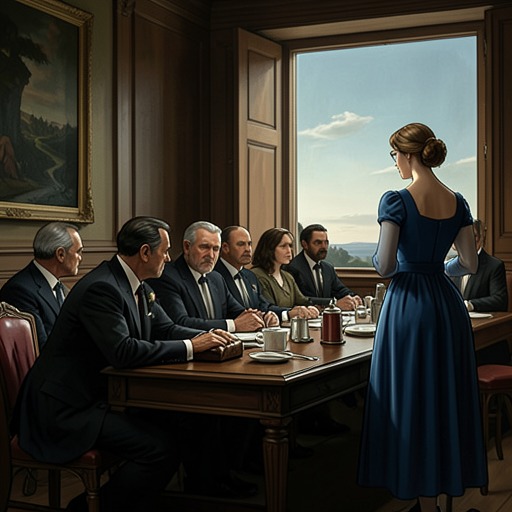
At seventy-nine, WH 1 sits with his son, grandson, and daughter-in-law at the family’s regular 7:30 dinner in the Red Salon, a room large enough for eighty people. The meal proceeds by ritual—scallops with Beluga lentils, sauerbraten, then elderberry semifreddo—while conversation stays with safe subjects such as animals, protection, and the new traffic-violator registry. His wife Emily has died the previous year, and WH 1 has taken to silence. His family interprets it as senility and assumes he will soon die after her.
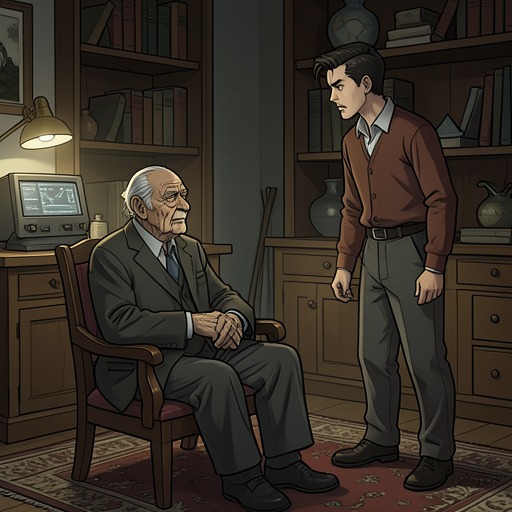
He encourages that impression. He has slowed his once-dominant walk into a halting shuffle and deliberately makes his movements slower than necessary. The narration likens the part he plays to that of a retired keeper of a decommissioned lighthouse, passing the time by noting ships, or a ceremonial figure with nothing left to do. The apparent frailty conceals neither forgetfulness nor surrender: he wants his family to stop counting on him, while he waits for an opening to avenge his removal from power two decades earlier.
A Ledger of Resentment
WH 1’s hatred is described as so extensive that it has become difficult to locate within him, as if set in his viscera like concrete. It now governs him. For twenty years he has recorded every insult, slight, exclusion, and failure to show respect in a book kept for that purpose. He assigns points according to the severity of each offense and links them to punishments to be carried out when the time is right. The record turns the past into an accounting system: an injury is never finished, only entered and ranked.
The fixation intrudes even on the dinner ritual. WH 1 attacks his sauerbraten with his knife as though he were putting the food to death, while the mention of the traffic registry sets off his contempt for another government office wasting taxpayers’ money. The twitch at his mouth keeps recurring; he must control his face lest his hatred break through. His grievance has outlasted the business defeat that began it and has become an organizing principle of his life.
The Public Gesture and Its Rejection
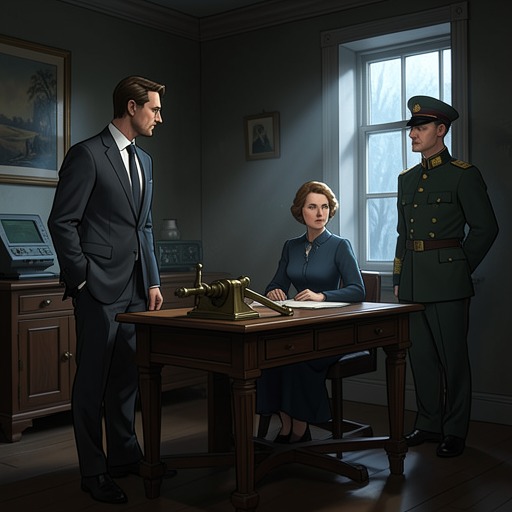
When a public effort to rehabilitate WH 1 is arranged, he is the only person who has not been told what is coming. A crowd of prominent guests, including the senator responsible for internal affairs, catches him by surprise. His son waits until five minutes to noon to explain, deliberately leaving no time for WH 1 to protest. After a quarter-century, WH 1 is brought face to face with Leyendieker, who is to make the public address.
WH 1 does not experience the occasion as honor, gratitude, or reconciliation. To him, the grand gesture is a slap in the face: it presumes that he wants the very absolution and reconciliation he refuses. Leyendieker speaks in the oppressive heat, gives a standardized address about the port, maritime trade, and the honoree’s life’s work, and approaches the subject of WH 1’s record without openly naming its central stain. The distance between public ceremony and private history sharpens the encounter’s failure. WH 1 has made himself so comfortable inside hatred and thoughts of revenge that, the narration observes, he could not change even if he wanted to.
Narrative Role
WH 1’s arc places private memory beside public reputation. The family’s orderly meal and the later ceremony offer social forms for managing the past, but neither produces a genuine reckoning: at dinner he hides behind silence, and at the ceremony he rejects the reconciliation imposed on him. His history includes both the material gains of dispossession and the postwar losses that followed, yet his account of injustice centers on his own humiliation. The ledger makes that imbalance visible: instead of revisiting what he profited from, he preserves every slight against himself and waits for repayment.