
Exclusion at the Deathbed
DevdasThis thread traces how family distance, social stigma, and caste rules converge around Devdas Mukherjee’s final days, denying him both timely care and an honored death.
increasing Bearing strength in each event
 decreasing
Bearing strength in each eventdecreasingAn Inheritance Divides the Family
Security Without Belonging
A practical settlement
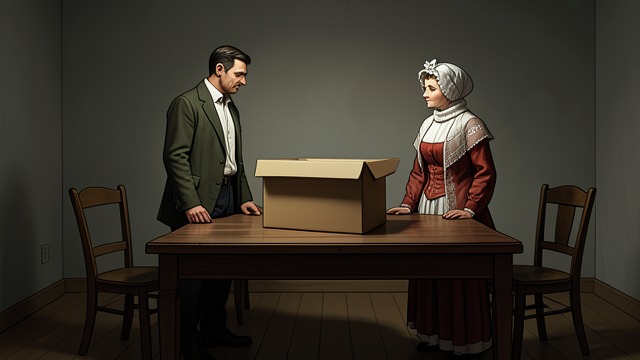
After Narayan Mukherjee’s death, Devdas Mukherjee discusses the estate with his brother Dwijodas. He agrees to a division of the remaining money that also reserves half of his share for their mother, Harimati Devi, rather than claiming everything for himself.
The financial settlement is orderly, but it does not restore close family bonds. Devdas remains detached from the household and soon continues his unsettled life away from home. Material inheritance therefore contrasts with his growing isolation: he has access to wealth, yet no stable daily place in which to receive care.
Care from a Disregarded Woman
Care Beyond Respectability
Chandramukhi changes her life
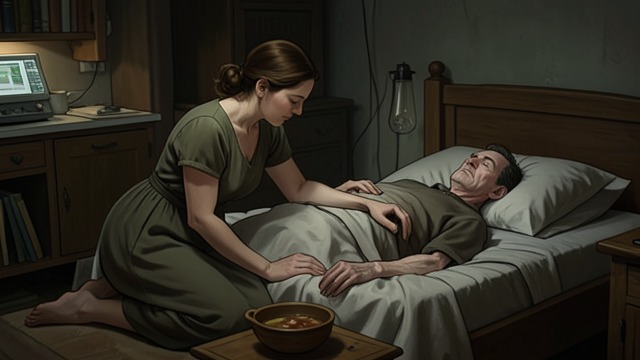
Chandramukhi leaves her former life and settles in Ashathjhuri, where she supports villagers and lives simply. When she learns that Devdas is in danger, she returns to Calcutta and searches for him, even rebuilding the appearance of her old occupation to find news of him.
She discovers Devdas drunk and takes him in, then nurses him through a dangerous illness. The care that sustains him comes from someone whom respectable society stigmatizes, while his acknowledged family remains far away. Chandramukhi’s devotion exposes the gap between social standing and actual compassion.
Refusal of a Respectable Place
Affection Without Public Standing
The limits of what Chandramukhi can offer
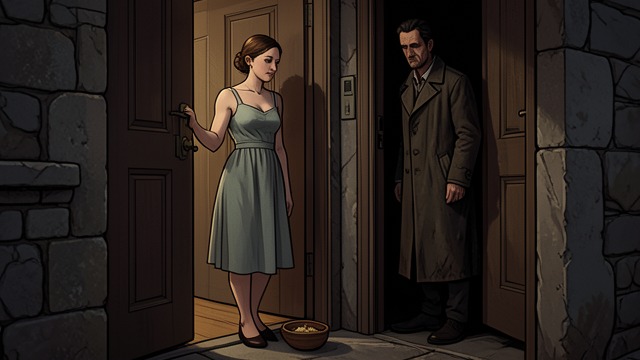
After helping Devdas recover, Chandramukhi asks to travel with him as a maid so that she can continue caring for him. Devdas refuses, saying that he cannot behave so shamelessly. His answer reflects the social barrier between them even as he acknowledges his love for her and promises not to forget her.
Chandramukhi understands that she may comfort and assist Devdas but cannot occupy a publicly honored position in his life. She accepts money to protect herself from destitution, then asks him to send for her if he becomes ill again. Their exchange makes care real but leaves it without the security of recognized family status.
A Promise to Return Unfulfilled
Care Arrives Too Late
The choice not to call for help
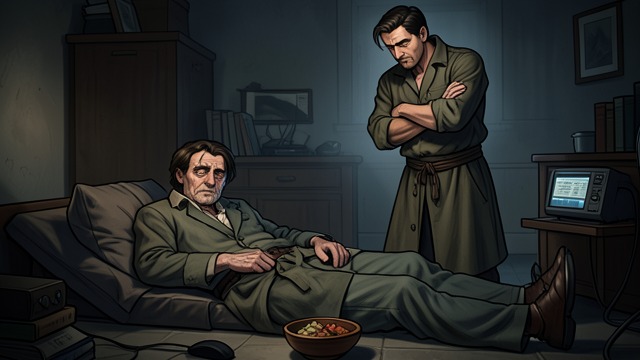
As Devdas’s illness worsens, Dharmadas urges him to seek help and considers contacting his mother. Devdas refuses to approach Harimati Devi while he is in such a state, and Chandramukhi’s name is not spoken because Dharmadas resents her.
When Devdas later leaves Bombay, he has the opportunity to ask for support, but his final journey is again made without Chandramukhi at his side. He remembers both her and his mother with grief as his condition worsens. The people who might care for him remain separated by his shame, others’ hostility, and his own refusals.
A Body No One Will Claim
Death Without Dignity
Caste rules after death
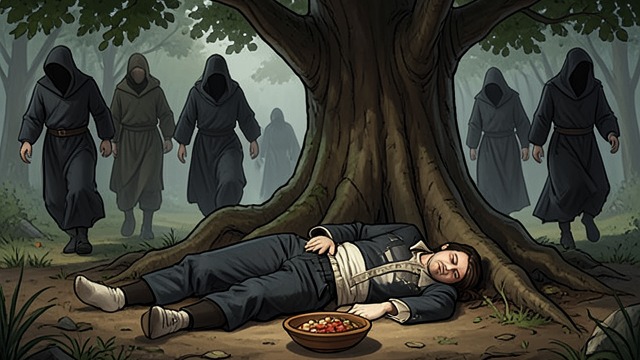
Devdas arrives at Hatipota during the night, too ill to enter the household or speak to the people around him. He dies beneath a tree before Parvati Chakravarty can reach him. Even after his identity is established, the question of who may touch and cremate his body becomes entangled in caste restrictions.
The lowest-caste cremation workers eventually take the body, but the rites are badly performed and the remains are left exposed to animals. Parvati learns too late that the dead man was Devdas and runs toward him, only to be stopped after he has been taken away. The ending makes physical care and dignity the final things denied him.
the days after Narayan Mukherjee’s funeral
after Chandramukhi finds Devdas gravely drunk in Calcutta
when Devdas prepares to leave Calcutta after recovering
during Devdas’s final trip from Bombay toward Bengal
the morning after Devdas dies at Hatipota
