
Dharmadas as Devdas’s Lifelong Caretaker
DevdasThis subplot traces Dharmadas’s enduring service to Devdas Mukherjee, from childhood supervision through adult crisis and the final journey that separates them.
increasing Bearing strength in each event
 decreasing
Bearing strength in each eventdecreasingThe Childhood Escort
A Caretaker’s Daily Round
Responsibility from infancy
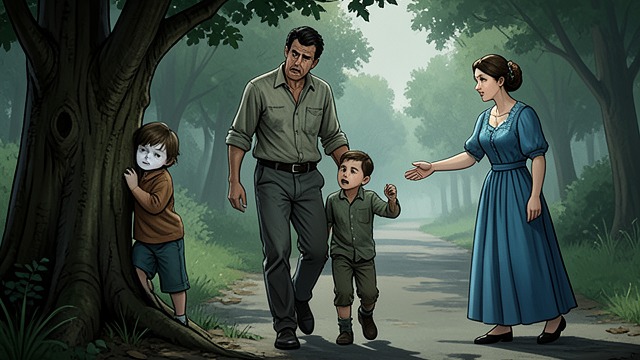
Dharmadas has looked after Devdas since the boy was an infant. His responsibilities include escorting Devdas to school and collecting him afterward, making him a familiar presence in the young boy’s daily life.
The work gives Dharmadas an intimate view of Devdas’s defiance. When the boy escapes school after an act of mischief, Dharmadas worries less about the complaint against him than about whether he is hungry and where he has hidden himself.
Parvati helps bring him home
Dharmadas meets Parvati Chakravarty on the road and asks where Devdas has gone. She initially guards Devdas’s hiding place, then agrees to carry him food herself so that he will not have to come back immediately.
Her intervention shows the kind of care surrounding Devdas in childhood: it is affectionate, practical, and often required by his refusal to submit to ordinary rules. Dharmadas’s concern begins here as daily supervision, but it will persist when childhood is long past.
The Journey to Calcutta

Care Beyond the Village
A departure under escort
When Devdas’s family decides that he must continue his studies in Calcutta, Dharmadas accompanies him. Devdas is reluctant to leave the village, and the journey places Dharmadas beside him as familiar company in an unfamiliar setting.
The separation also changes the texture of their care. Dharmadas can no longer simply collect Devdas from school or locate him in a nearby grove; he must help him navigate a new city and the household arrangements made for his education.
Concern follows the young man
Years later, Devdas returns to Calcutta as a young adult and stays in shared lodgings. Dharmadas remains connected to his movements and worries when Devdas abandons his studies and disappears from the family’s ordinary supervision.
When Devdas leaves the lodging house without a clear plan, Dharmadas eventually brings his belongings and a letter from his mother. His presence links the family’s concern with the life Devdas is trying to conduct on his own.
An Appeal to Go Home
A Servant Sees the Decline
An unsuccessful plea
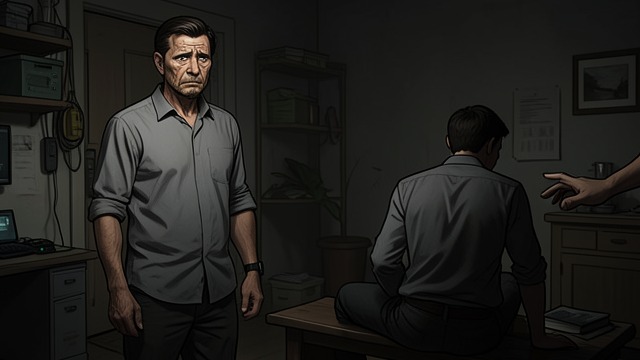
As Devdas begins to spend his time drinking and wandering, Dharmadas sees that staying in Calcutta is making his condition worse. He appeals to Chunilal to help send Devdas back to his mother, reasoning that there is little purpose in remaining in the city if Devdas no longer intends to study.
The appeal captures Dharmadas’s limited authority. He can observe danger and try to recruit another companion, but he cannot make Devdas accept care or explain what has brought him to this state.
Service without understanding
Dharmadas grieves over Devdas’s conduct without knowing the private events behind it. His role is defined by loyalty rather than full knowledge: he remains near the young man even when Devdas becomes hostile and difficult to approach.
That steadfastness later makes Dharmadas a witness to the consequences of Devdas’s choices. He cannot protect Devdas by controlling him, but he continues to offer the practical care that Devdas repeatedly refuses to arrange for himself.
Care During the Illness

The Attendant on the Road
Illness becomes impossible to ignore
As Devdas’s drinking and poor health continue, Dharmadas accompanies him between cities. In Lahore, he sees Devdas return after days away with a fever and urges him to seek help rather than treat the illness as something that can be endured privately.
Devdas resists telling his mother about his condition, embarrassed by the state in which he might appear before her. Dharmadas argues that illness is no disgrace and presses him to go to Varanasi once he is strong enough.
A request that cannot be fulfilled
In Bombay, Dharmadas supports Devdas as he leaves hospital and again asks whether they should visit his mother. Devdas refuses, though his tears show that the choice costs him something; he still feels unable to face her while gravely ill.
Dharmadas’s care becomes more urgent as Devdas’s body weakens, but it remains bounded by Devdas’s decisions. He can offer support, notice the decline, and accompany him, yet he cannot make the sick man accept the family reunion he fears.
A Sleeping Companion Left Behind
The Final Separation
Devdas leaves the train
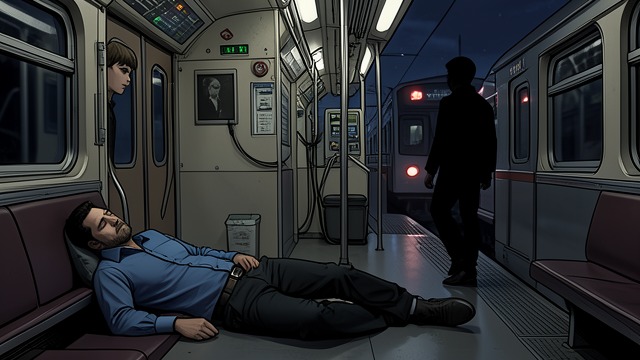
On the journey home, Devdas becomes convinced that he may not reach his destination in time. When the train stops at Pandua, Dharmadas is asleep on the floor, exhausted from tending to him over the long journey.
Devdas touches Dharmadas’s brow but does not wake him. He leaves the train alone and arranges a bullock cart toward Hatipota, choosing to spare his companion the immediate interruption or perhaps unable to explain the urgency that has taken hold of him.
Care reaches its limit
Dharmadas’s absence from the final stage is not a withdrawal of loyalty. He has accompanied Devdas through illness and travel, but the dying man’s last decision removes him from the journey without warning.
The separation leaves Devdas dependent on strangers for the final miles and the last night of his life. Dharmadas’s long service can carry him almost to the end, but it cannot ensure that Devdas will have a familiar, loving presence at the moment death arrives.
During Devdas Mukherjee’s school years in Talshonapur
When Devdas first leaves Talshonapur for school in Calcutta
After Devdas abandons his studies and returns to Calcutta
During Devdas’s travels through Lahore, Allahabad, and Bombay
At dawn after the train reaches Pandua
