
Love, Reason, and the Loss of Self
DianaThis thread follows the novel’s debate about whether honest love can arise from reason while nevertheless overwhelming the lover’s judgment.
increasing Bearing strength in each event
 decreasing
Bearing strength in each eventdecreasingThe Question to Felicia

The Question to Felicia
Sireno asks about love
Sireno asks how love can be born from reason yet behave without restraint. His question grows from the contradictions he has experienced: desire once seemed justified, but it brought him suffering.
A philosophical turn
The conversation shifts the pastoral narrative from individual complaints toward a general account of love. Felicia answers through the familiar language of classical allegory and moral distinction.
Love’s Allegorical Nature

Love’s Allegorical Nature
A force born of judgment
Felicia argues that reason may recognize a beloved’s virtues and give rise to love, but the passion does not remain governed by its origin. It can make lovers forget themselves and place their attention wholly on another.
Image explains excess
She interprets Love’s blindness, wings, and arrow as signs of desire’s speed, self-loss, and penetrating wound. Allegory makes irrational intensity intelligible without pretending to control it.
Honest Love Distinguished

Honest Love Distinguished
Virtue and desire
Felicia distinguishes honorable love, which values a person for virtue rather than reward, from a lower appetite driven by possession. Even virtuous love can produce intense and self-sacrificing effects.
A moral limit remains
Her account does not promise that goodness will lead to happiness. It provides a way to judge intention while acknowledging that sincere affection may still expose its subject to pain.
Debate Among the Lovers
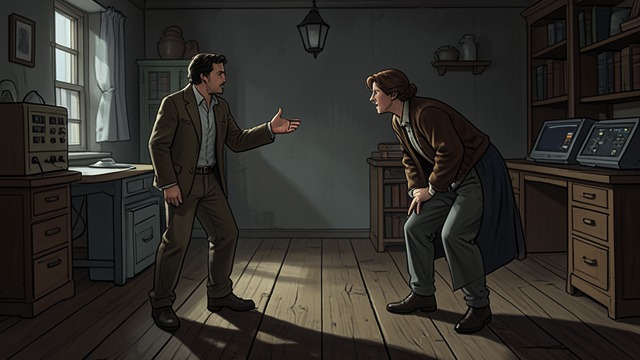
Debate Among the Lovers
Experience challenges theory
Silvano argues that passionate lovers cannot simply reason their way out of suffering. Polidora questions whether some complaints are more verbal than emotional, prompting him to defend the force of genuine attachment.
No simple resolution
The exchange allows different perspectives to coexist: experience insists on pain, while reflective discussion searches for distinctions and remedies. The novel makes debate part of its inquiry rather than supplying a universal answer.
The Potion as Counterargument

The Potion as Counterargument
Feeling altered by magic
Felicia’s potion appears to answer the problem of ungovernable love by changing its object or removing its force. Sireno’s grief disappears, while Selvagia and Silvano become mutually attached.
Freedom carries ambiguity
The cure offers relief but does not result from reasoned choice. The magical resolution therefore complicates Felicia’s earlier account: passion can be transformed, but the story leaves open what is lost when love is removed rather than understood.
during the first evening at Felicia’s house
during Felicia’s explanation
at the close of Felicia’s account
later that evening
the morning after the debate
