
Marriage, Consent, and Obligation
DianaThis thread traces how marriage operates as both a social constraint and a hoped-for resolution across the novel’s romantic histories.
increasing Bearing strength in each event
 decreasing
Bearing strength in each eventdecreasingDiana’s Marriage Under Pressure

Diana’s Marriage Under Pressure
A bond altered by marriage
Diana marries Delio while Sireno is away, ending the possibility of an uncomplicated return to their former relationship. The account connects her choice to changing circumstances and the authority of family.
Marriage does not guarantee contentment
Her later jealousy and sorrow show that a formal union can coexist with emotional dissatisfaction. The novel distinguishes social settlement from the happiness lovers imagine.
The Danger of Loving a Married Woman

The Danger of Loving a Married Woman
A moral and emotional limit
Sireno describes the suffering of loving a married woman, including jealousy that cannot be openly expressed without risking reputation. His argument shows that marriage changes the ethical conditions of desire.
Release replaces pursuit
After Felicia’s cure, he no longer seeks to disrupt Diana’s marriage. The story’s resolution favors the end of impossible longing rather than a violation of her existing bond.
Abindarráez and Jarifa’s Secret Vows

Abindarráez and Jarifa’s Secret Vows
Marriage chosen together
Abindarráez and Jarifa agree to marry without her father’s permission. Their choice expresses mutual commitment but exposes them to family and political consequences.
Love takes responsibility
Abindarráez does not use his release to escape those consequences. His return with Jarifa makes their marriage an act for which both are willing to answer.
A Father’s Forgiveness

A Father’s Forgiveness
Authority reconsidered
Jarifa’s father is ordered to forgive the marriage and receives the lovers with courtesy. He eventually acknowledges that Jarifa has chosen a worthy husband.
Private choice gains recognition
The union moves from secrecy to family acceptance through Narváez’s mediation. The episode presents reconciliation, rather than coercion, as the means by which marriage becomes socially secure.
The Final Marriages
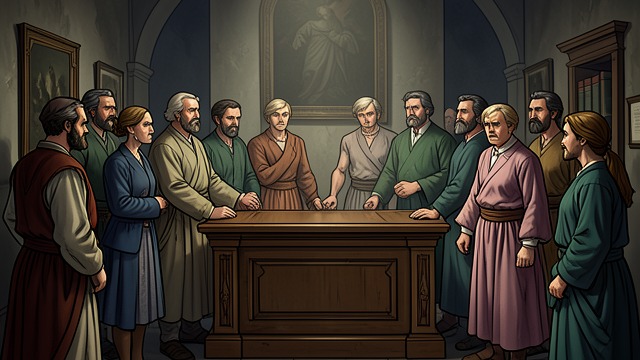
The Final Marriages
Reciprocal affection formalized
Several couples marry at Diana’s temple, making mutual attachment publicly recognizable. The ceremony provides the pastoral stories with a collective social form.
Not every bond is restored
Diana remains in an unhappy marriage, and Sireno’s future is deferred. The ending presents marriage as a resolution for some characters, not a universal cure for loss.
during Sireno’s absence
after Sireno learns Diana is married
before Abindarráez is captured
after Narváez appeals to Granada’s king
at the end of the seventh book
