Alfeo and Belisa's Hostile Relationship
DianaAlfeo and Belisa’s hostile relationship turns unrequited desire into calculated deception. Belisa rejects Alfeo, but he uses his knowledge of her love for Arsileo to stage the apparent deaths of Arsileo and his father, Arsenio, driving her from home and into prolonged grief before the truth is revealed.
Unequal Desire and Antagonism
Alfeo had loved Belisa before Arsenio began courting her. Belisa, however, could not bear to see Alfeo; even hearing him spoken of caused her distress. Arsileo’s account presents their relationship as sharply unequal: Alfeo knows that Belisa loves Arsileo and is pained by her indifference to him, while Belisa’s affections are directed elsewhere. His resentment is not merely a response to a rival’s success; he turns that imbalance into a plan intended to wound Belisa through the people she loves.
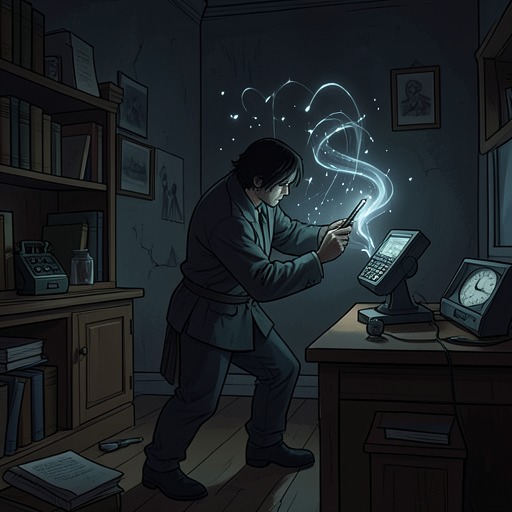
Alfeo is described as a reputed necromancer whose dealings are with demons and spirits. Belisa later explains that he can make them assume whatever forms he chooses, so that people may believe they are speaking with someone they know. This reputation gives the deception its mechanism: Alfeo does not confront Belisa openly but manipulates what she sees, making an apparent scene of loss do the work of his hostility.
The Staged Deaths
Alfeo learns of an arranged meeting between Arsileo and Belisa at a mulberry tree in a garden. He sends two spirits in borrowed forms: one takes Arsileo’s likeness and goes to the meeting; the other appears as Arsenio and shoots the figure Belisa believes to be Arsileo. The spirit disguised as Arsenio then pretends to recognize that he has killed his son and kills himself in apparent grief. The staged scene is designed to make Belisa believe both Arsileo and Arsenio are dead.
Arsileo’s account attributes a deliberate purpose to the deception. Alfeo hopes Belisa will kill herself when confronted with the apparent deaths, or at least suffer the despair that follows. The plan succeeds in its immediate aim of destroying her sense of security: believing she has witnessed the deaths herself, Belisa leaves home in desperation, and her whereabouts remain unknown for a time. The false scene thus turns Alfeo’s personal grievance into a rupture between Belisa and the life she had known.
Exposure and Belisa’s Recovery
The truth emerges through two connected tellings. Arsileo recounts Alfeo’s scheme to Amarilida, and Felismena recognizes that the shepherd before her is the Arsileo whom she had believed dead. Later, Polidora finds Belisa in the forest with Cintia and Dorida and asks whether she is certain that Arsenio and Arsileo died. Belisa insists that she is certain because she saw the apparent deaths with her own eyes. Polidora then identifies Alfeo’s sorcery as the cause of the error and tells Belisa that Arsileo himself has confirmed that both men are alive.
Belisa initially struggles to believe the news, but Polidora offers to take her to Arsileo. She goes with Polidora, Cintia, and Dorida toward the place where he is waiting. The revelation reverses the despair produced by Alfeo’s deception and makes possible Belisa’s reunion with Arsileo. The account records the exposure and its immediate promise of reunion, but does not describe a later confrontation between Belisa and Alfeo or what becomes of him.
Narrative Significance
The hostility between Alfeo and Belisa is enacted through a counterfeit performance: spirits imitate familiar people, and a staged killing is mistaken for reality. Belisa’s certainty rests on sight, yet sight is precisely what Alfeo has corrupted. Her later recovery depends not on discovering the trick alone but on information carried to her by Polidora and the prospect of seeing Arsileo alive.
Alfeo’s scheme also makes the consequences of his unreturned desire concrete. Belisa’s rejection becomes, in his hands, a motive for turning her love against her: the apparent loss of Arsileo and Arsenio is meant to make her suffer, not to win her affection. The eventual revelation restores the truth about the men she mourns, while leaving Alfeo’s own fate outside the account.