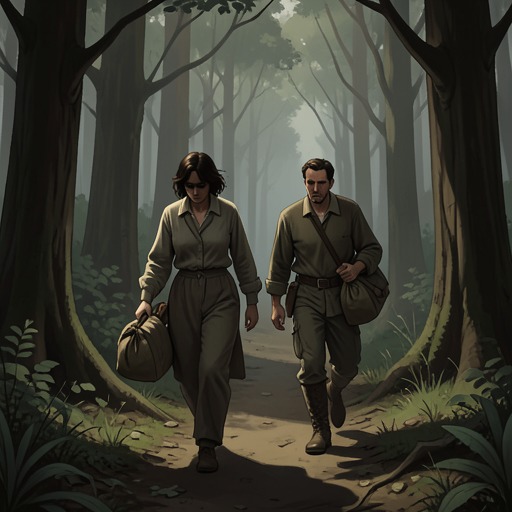
Arsenio's Courtship of Belisa
DianaArsenio’s Courtship of Belisa is a conflicted suit that runs parallel to the mutual love between Belisa and Arsileo, Arsenio’s son. Arsenio pursues Belisa with messages and gifts; she neither dismisses his attentions nor returns them in the same way she loves Arsileo. The relationship’s most consequential turn comes from a fatal mistake: Arsenio, unaware that the man he sees with Belisa is his son, shoots Arsileo and then kills himself. Belisa’s later account makes clear that Arsenio’s courtship was not simply unwelcome, even as its outcome becomes inseparable from her grief and self-reproach.
The Courtship Beside Arsileo’s
Belisa describes Arsenio as importuning her with messages and presents while her love for Arsileo was growing. The two attachments developed at once, but she insists they were not of the same kind: as she became more devoted to Arsileo, her affection for his father also increased, though not equally or in the same manner. She says that this overlap left her without a clear way to refuse Arsenio or stop receiving his communications.
The contrast between the two suits is marked by their different forms. Arsileo spoke to Belisa repeatedly, wrote her letters, composed sonnets, and sang to her at night while accompanying himself on the harp. Their exchanges made them increasingly certain of their mutual love. Arsenio’s suit, as Belisa recounts it, appears through the repeated messages and gifts that pressed upon her while she was already attached to his son. The competing attentions therefore did not amount to an open contest between father and son: Arsenio did not recognize Arsileo at the window when the fatal encounter occurred.
Belisa’s Mixed Response
Belisa’s difficulty in turning Arsenio away is more than a matter of receiving unwanted gifts. Looking back after the tragedy, she acknowledges his goodness, the sincerity and decency of his affection, and the sleepless nights he spent because of her. She says that the death of his son does not prevent her from grieving Arsenio as well. Her account gives his love emotional weight without suggesting that it displaced her love for Arsileo.
Belisa also makes a striking retrospective admission: had Arsileo not come to that land, she says, she would by then have been married to Arsenio. She adds that a woman who understands she is truly loved will feel some measure of love in return, even if she does not show it in the same way. This qualifies her earlier description of being unable to refuse Arsenio. Her response was neither a fully mutual courtship on the terms of her relationship with Arsileo nor a simple rejection; it involved real, though differently situated, affection and a possible marriage that never came to pass.
The Fatal Mistake
Belisa and Arsileo arranged to meet at night in her father’s garden. Arsileo climbed a mulberry tree opposite the window of her room so they could speak. Arsenio, who often made his rounds near Belisa’s house, saw her at the window but did not realize that his son was in the tree. In anger, he went to fetch a crossbow fitted with a poisoned arrow and returned to shoot at the man beside her. The arrow struck Arsileo in the heart, and he fell from the tree.
Arsileo’s voice revealed who he was. Arsenio recognized his son too late, declared himself the cause of the young man’s death, and stabbed himself through the heart with his sword. The courtship thus ends not in a choice between father and son but in the destruction of both: Arsenio’s attempt to act on what he has seen turns his own unknowing mistake into a double death.
Aftermath and Significance
Belisa presents the deaths as the ruin of both loves and as the consequence of a danger she had feared but failed to prevent. She recalls that she knew Arsenio might discover her relationship with Arsileo, and says that even banishment would have been easier to endure than the deaths that followed. Her grief extends to Arsenio as well as to Arsileo, because she remembers the father’s affection and the care he had shown her.
After witnessing the deaths, Belisa leaves her parents’ house and withdraws into the wilderness. She says she has spent six months there without seeing or speaking to anyone. Her account preserves the unresolved complexity of Arsenio’s suit: he was both the man who sought her affection and the father whose mistaken act killed the man she loved. Belisa’s confession that she might have married him makes the catastrophe more than a tragic interruption of an unwanted pursuit; it destroys a relationship that had held a genuine, if secondary and unrealized, possibility for her.