Belisa's Self-Exile and Seclusion
DianaBelisa’s self-exile turns a presumed double death into six months of deliberate isolation: she leaves her parents’ home, withdraws from human company, and makes a lonely place her refuge for grief. Her eventual consent to join Dorida and the others marks the first break in that retreat, which rests on a truth she does not yet know—that Arsileo and Arsenio are alive.
The Flight into Seclusion
Belisa’s withdrawal begins after she witnesses what she believes to be a terrible accident. Arsileo comes to meet her at their appointed time, but his father Arsenio has been watching the street. Seeing Belisa at the window, Arsenio does not recognize his son in the mulberry tree; in anger, he fetches a crossbow and shoots Arsileo through the heart. Recognizing his son’s voice only after the shot, Arsenio then kills himself with his own sword. Belisa understands herself as the cause of both deaths, and the scene leaves her with no time to distinguish what she has seen from what has happened.
Six Months of Grief
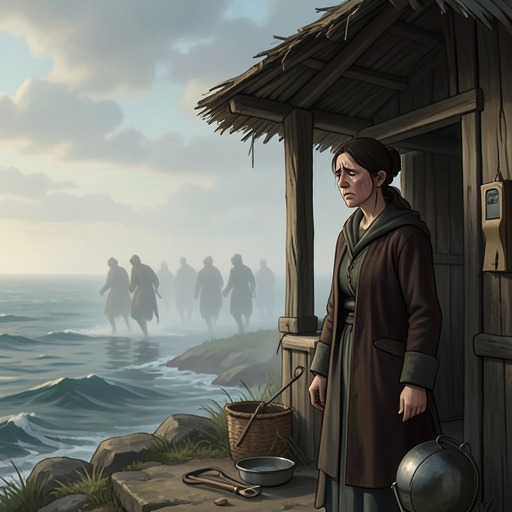
After the deaths she believed she had witnessed, Belisa left her parents’ home and came to the lonely place where she remained for six months. She saw and spoke with no one, and made no attempt to seek anyone out. Her retreat was not simply distance from ordinary company: she describes it as a place to bring her complaints to the sky, give the air her sighs, curse the death that had so quickly taught her to endure its blows, and weep until grief seemed capable of ending her life. The isolation gave her sorrow a setting, but no remedy; she expected to live only so long as time spared her further injuries.
When Belisa tells her story to the Nymphs and the shepherds, grief becomes speech before it becomes relief. She mourns Arsileo, but also refuses to let her sorrow for Arsenio be mistaken for indifference: his steady love, goodness, and the care with which he had loved her make his death painful in its own right. She admits that, had Arsileo never come to the land, she might have married Arsenio. Her confession complicates her account of herself as merely the cause of disaster: she had loved Arsileo, yet she also recognizes the affection and devotion Arsenio had shown her. The circumstances she once feared had come to pass, but, as she tells it, she had dreaded discovery only because she imagined Arsenio might separate the lovers; exile, she says, would have been a misfortune time could heal. The deaths she believes she saw instead leave her with a grief she cannot resolve by assigning blame.
Belisa’s recollection moves those listening to tears, though the Nymphs, untouched by love, feel her suffering as women without fully understanding its particular force. Dorida does not claim that words can console her. Instead, she urges Belisa not to spend her life in a place chosen for mourning and offers a practical alternative: join their company, where Belisa may choose whom she wishes and no one will prevent her. Belisa initially calls the lonely place suitable for weeping and dying, but accepts Dorida’s invitation without reservation, placing her wishes in the company’s hands. Her seclusion thus ends not through an inward recovery but through the first decision to leave it with others; at this point, however, she still believes the deaths that produced her isolation to be real.
The False Death and the Return of Hope
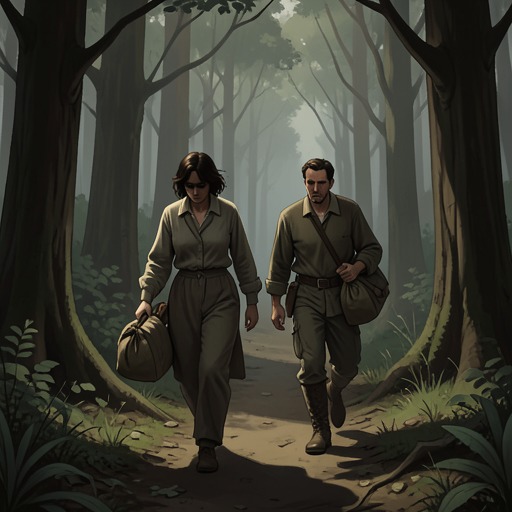
After Belisa has joined the company, the belief that had shaped her seclusion is finally challenged. In the thick forest, Polidora comes upon her walking with Cintia and Dorida. The nymphs are alarmed by Polidora’s hurried approach until they see the joy in her face; she goes straight to Belisa and embraces her. Belisa answers that no news can restore the happiness she has lost, since the person who might have given her the greatest comfort is no longer among the living. Polidora insists that she brings hope, then asks whether Belisa is certain that Arsileo and Arsenio died.
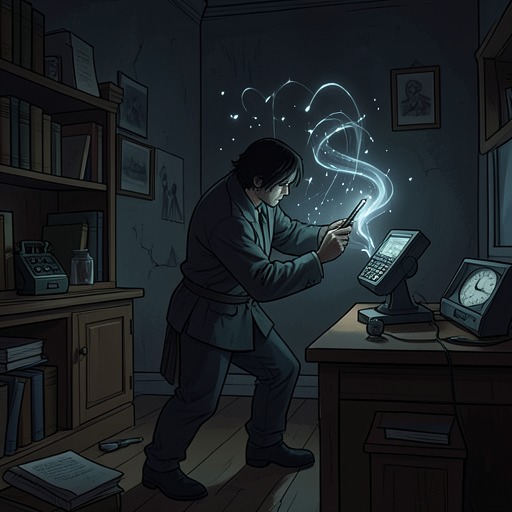
Belisa’s certainty rests on what she believes she saw: Arsileo pierced by an arrow and Arsenio killing himself with his sword. Polidora tells her that both men are alive and well. The apparent deaths, she explains, were staged by Alfeo, a magician who could make spirits assume familiar forms. Knowing that Arsileo was to meet Belisa, he arranged for two spirits to appear as Arsileo and his father, so Belisa would believe she had witnessed their deaths and be driven to despair. The explanation recasts the six months of isolation not as mourning after an actual double death, but as the consequence of an illusion deliberately made to look like an eyewitness truth.
Belisa is so overwhelmed that for a while she cannot answer. Grief also makes the news difficult to trust: she wonders whether Polidora is reviving her sorrow by making sport of it, and asks who could know that the dead men are alive. Polidora names Arsileo himself as her source. Belisa then turns from disbelief to urgent hope, asking Polidora to take her to him. Polidora leads her by the hand, with Cintia and Dorida accompanying them toward three nearby trees where Arsileo is waiting. Before they reach him, a mild breeze carries his familiar singing to Belisa. Her secluded mourning has given way to movement toward the very person she had believed irretrievably lost, though the news reaches her first as a voice heard on the way.
The Limits of Seclusion
Belisa’s retreat is therefore a pause in the story, not a settled ending: it lasts six months, but its cause remains hidden from her until Polidora interrupts the isolation with news. What seemed to her the most conclusive evidence—the sight of two deaths—was an appearance engineered by Alfeo, while Arsileo’s singing now offers a different kind of proof, carried to her before she can see him. The movement from solitary grief toward companionship does not erase the months she spent believing herself responsible; it changes what that grief can mean. At the close of this episode, Belisa is on her way to Arsileo, guided by Polidora and accompanied by Cintia and Dorida, but their meeting has not yet occurred. Her seclusion ends at the threshold of recognition.