Selvagia's Heartbreak After Alanio Betrays Her
DianaSelvagia’s heartbreak is the cost of a love that begins in mistaken identity and survives even after Alanio turns away from her. Ismenia’s deception brings the two together; later, Ismenia’s calculated change of allegiance draws Alanio back, leaving Selvagia faithful to someone who no longer returns her feeling. Her response is not simply grief at losing him: it is a sustained refusal to forget, set against the reversals of the other shepherds.
The Deception That Begins the Attachment
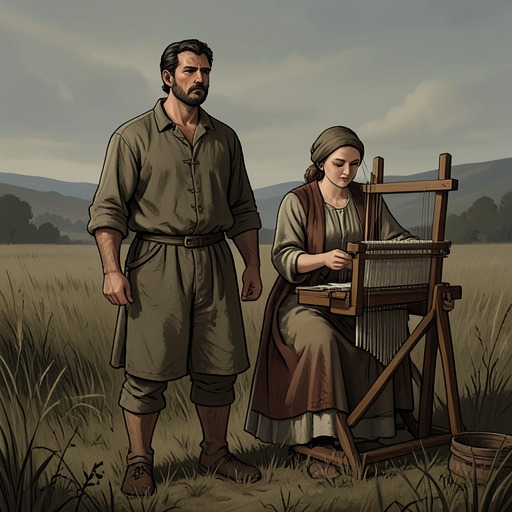
At a meeting in the temple, Ismenia deceives Selvagia by presenting herself as a male shepherd named Alanio. Selvagia believes the disguise and becomes enamored of the supposed shepherd. The deception is personal as well as comic: Ismenia has a cousin actually named Alanio, whom she loves more than herself, and whose face and appearance resemble her so closely that people might take one for the other. When Ismenia later tells her cousin what happened, she recounts Selvagia’s mistake in detail, and the two laugh over it.
Eight days later, the real Alanio comes to Selvagia’s village and positions himself where she will see him as she passes with other young women on the way to the fountain. Recognizing him as the person she had met in the temple, Selvagia signals for him to join her. They speak together at the fountain, and her love, already founded on mistaken identity, becomes more firmly attached to the real man. Alanio, she believes, also comes to love her, though he shows his affection less openly than she thinks he should. For a time they conduct their relationship as secretly as possible.
Ismenia eventually learns of their attachment and recognizes her own part in causing it: her deception had led Selvagia to Alanio, and her account of the encounter had helped Alanio become interested in Selvagia. She writes to Selvagia to undo the falsehood. But disclosure does not dissolve the feeling. Selvagia says that learning the truth made her love Alanio more, not less. The revelation changes the grounds of their attachment without ending it: what began in confusion becomes, for her, a deliberate and enduring choice.
The Reversal That Leaves Selvagia Behind
Ismenia tries to recover Alanio by feigning love for Montano, a shepherd who had long courted her and with whom Alanio is on bad terms. Her sudden apparent preference is meant to make Alanio feel the loss of something he had taken for granted. Montano responds with joy and serves her devotedly; Ismenia, in turn, comes to love him genuinely and firmly. What begins as a stratagem therefore produces a real attachment, while drawing the original lovers into a new imbalance.
Alanio is distressed to see Ismenia favoring his rival, but his attachment to Selvagia does not keep him steadily at her side. He starts visiting her village less publicly and less often, partly to conceal his conduct from Ismenia. His absence, together with Ismenia’s presence, redirects his affections: he returns to his former interest in Ismenia, while Selvagia is left deceived in her hopes. She insists that this change is not hers; only death, she says, could turn her from her purpose. Alanio’s desire proves more changeable. His efforts to win Ismenia back cannot move her from Montano, so Selvagia’s abandonment does not even restore the earlier relationship between the other two.
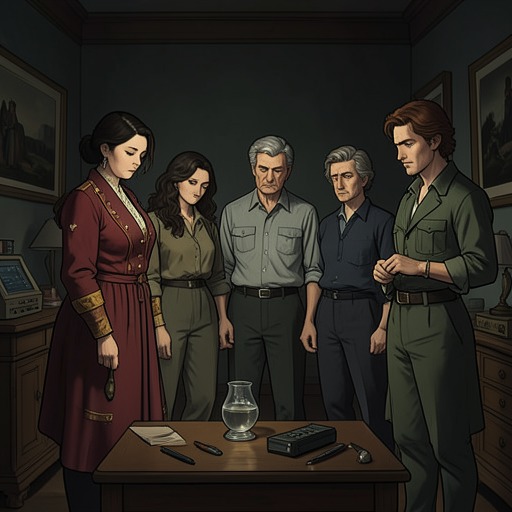
The resulting pattern is a chain of unreciprocated pursuit: Selvagia loves Alanio, Alanio loves Ismenia, and Ismenia loves Montano. Montano, for his part, comes to love Selvagia, producing another reversal rather than a remedy. In the forest between the two villages, the four are drawn into the same space, each desire directed toward someone other than the person who desires them. Their repeated calls of longing make the arrangement almost formally visible: every attachment points onward, and none returns neatly to its source.
Witnessing Alanio’s Change of Heart
Selvagia’s distress sharpens when she sees Alanio before her, lost in love for Ismenia and forgetful of her. As he finishes his song, she says she could have wished her life to end then, because her misfortune could hardly be greater than watching the man she loved more than herself love another. She conceals her reaction in the moment, noting that she is not the only one suffering: Ismenia, with her eyes fixed on Montano, is about to sing as well. The scene places Selvagia’s private injury inside the group’s shared spectacle of frustrated desire, but it does not make her pain interchangeable with theirs.
Montano’s attention offers no escape from the heartbreak. He wants Selvagia to satisfy herself by looking at him while imagining his rival Alanio, as though one man could serve as a substitute for another. Selvagia rejects that consolation. She takes up her zampoña and begins a song that, she says, will show how she has conducted herself in love better than anyone else present. Its opening declares that she cannot rest even at the cost of being blamed, and asks God to preserve her from forgetting. The song makes memory and fidelity the terms on which she understands her own conduct: she will not trade Alanio for Montano merely to ease the pain of rejection.
Constancy Amid the Entanglement
Selvagia’s heartbreak is shaped by a marked contrast between her persistence and the changing attachments around her. Ismenia’s initial disguise sets the plot in motion; her later attempt to provoke Alanio helps redirect it. Alanio’s retreat leaves Selvagia bereft, while Montano’s love cannot displace the person she still wants. Her account gives her the clearest voice in this shifting arrangement: she identifies the changes, distinguishes her own constancy from Alanio’s inconstancy, and refuses to describe a substitute as a cure.
The evidence presents no reconciliation between Selvagia and Alanio. Instead, her song leaves her at the point where feeling remains active despite its lack of reward. The heartbreak is therefore not only a consequence of the tangled courtship but also a test of the value Selvagia places on fidelity. Others’ loves move from one object to another; hers endures, and that endurance is both her claim to having loved well and the source of her continuing unrest.