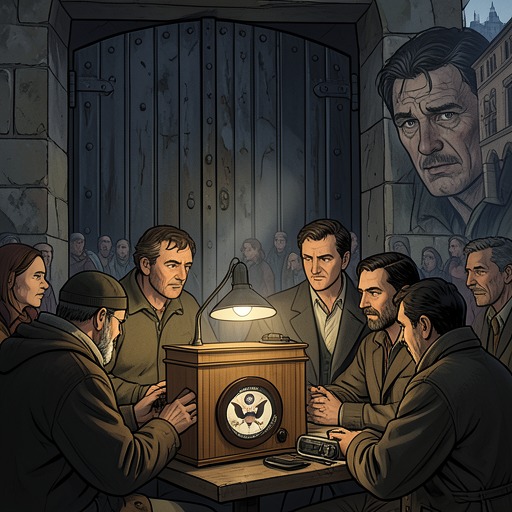
20 July plot
Diary of Anne FrankThe 20 July plot is not described in the supplied passages from Anne Frank’s diary. The available evidence places it in the wider setting of Nazi persecution and wartime uncertainty while showing how Anne’s diary became a deliberately shaped account of life under occupation, rather than a record that could reveal this particular event.
Historical Setting
After the German occupation of the Netherlands, anti-Jewish decrees progressively restricted Jewish life. The rules specified where Jews could shop and travel, when they could be outside, which schools they could attend, and which public facilities and activities were forbidden. Anne recorded these constraints as a succession of prohibitions that narrowed ordinary life without stopping it altogether.
The persecution described in the diary extended beyond restrictions. Anne learned from Fritz Pfeffer that people were being taken from their homes at night, sometimes after the authorities checked lists, and that families and children were separated. In another entry, she described reports of people being removed with few possessions and of households being sealed after their occupants were gone. These accounts convey the frightening news reaching those in hiding, but they do not recount the 20 July plot or connect it to the residents’ immediate circumstances.
The Diary as a Record
Anne kept a diary from June 12, 1942, to August 1, 1944. She initially wrote for herself. In 1944, after hearing a radio appeal by Gerrit Bolkestein of the Dutch government in exile for postwar eyewitness accounts, Anne decided to prepare a book based on her diary. She revised and edited entries, omitting some material and adding recollections, while continuing her original diary. The two forms are distinguished in the scholarly edition as version a, the original, and version b, Anne’s edited version.
That editorial process matters when considering what the diary can establish about a specific historical event. Anne’s writing offers a situated record of the restrictions, fears, and news encountered by people in hiding; it is not presented as a comprehensive chronicle of wartime political and military events. The supplied passages contain no account of the 20 July plot, so they do not establish its participants, course, or consequences.
Arrest and Publication
The diary’s last entry is dated August 1, 1944. On August 4, the eight people hiding in the Secret Annex were arrested. Miep Gies and Bep Voskuijl found Anne’s diaries on the floor and put them away for safekeeping; after the war, when Anne’s death was known, Miep gave the manuscripts unread to Otto Frank.
Otto selected material from Anne’s original and revised diaries for the first published version. His choices were shaped by the intended length of the book, the conventions of its 1947 publication, and his wish to omit unflattering passages about his wife and the other residents. A later scholarly edition presented the versions in full alongside an investigation of the diary’s authenticity and its documentary materials. Mirjam Pressler’s expanded edition added passages from Anne’s earlier versions, offering readers more of the diary’s changing record. This history clarifies the limits of treating the published diary as a complete account of events it does not describe, including the 20 July plot.