Antisemitism
Diary of Anne FrankAntisemitism in Anne Frank’s diary is presented not as an abstraction but as a force that governs movement, separates families, and makes Jewish identity a target of law and suspicion. The diary also records a harder question: whether prejudice might survive even among people who oppose the occupation. Anne’s reflections move between the rules imposed on Jews, the reports of persecution reaching the Secret Annex, and her hope that the Netherlands can remain a home.
From family anxiety to legal exclusion
The threat predates the family’s life in hiding. Anne recalls that relatives in Germany suffered under Hitler’s anti-Jewish laws. After the 1938 pogroms, her mother’s two brothers fled to North America, while her seventy-three-year-old grandmother came to live with the family. These recollections place the persecution Anne experiences in the Netherlands within a longer family history of displacement and danger.
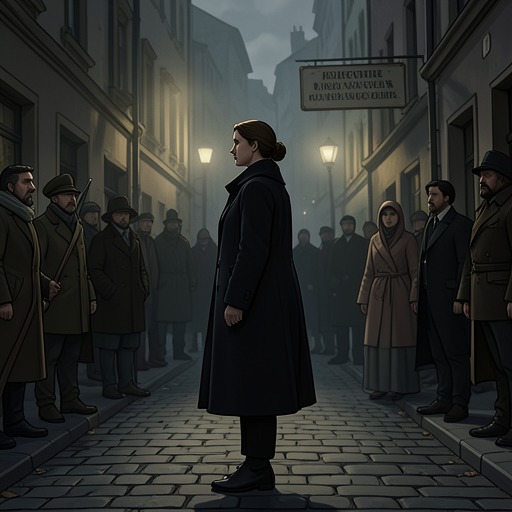
After the German occupation of the Netherlands, restrictions narrowed the family’s ordinary life through a growing list of prohibitions and requirements. Jews had to wear a yellow star and surrender their bicycles; they could not use streetcars or cars, and were limited to shopping between three and five in the afternoon. They were barred from public entertainment and sports facilities, forbidden to visit Christians at home, and required to attend Jewish schools. A curfew prohibited them from being on the streets from eight at night until six in the morning. Anne’s recollection that a friend no longer dared do anything for fear it might be forbidden captures how regulations could turn everyday choices into uncertainties.
The diary sets these rules beside moments of Jewish practice that persist under constraint. When Hanukkah and St. Nicholas Day nearly coincided, the residents marked Hanukkah with small gifts and candles, burning them for only ten minutes because candles were scarce. Mr. van Daan made a wooden menorah. The scene does not erase the restrictions surrounding them; it shows the residents maintaining a religious observance in the narrowed space available to them.
Persecution beyond the Annex
Reports from outside the hiding place make the consequences of antisemitism more immediate. After Mr. Dussel joins the residents, he tells them that friends and acquaintances have been taken away. Anne records what she has heard about military vehicles going from door to door, asking whether Jews live in each house. Some searches use lists, and people who are found are removed with their families. The diary explicitly distinguishes the residents’ relative safety from the fate of those they cannot help: their fear for loved ones makes the separation from the outside world unbearable.
A later entry describes people being taken from their homes with permission to carry only a knapsack and a little cash, which could then be stolen. Families are divided; children return from school to find their parents gone, and women come back from shopping to find their homes sealed. Anne also notes that Christians in the Netherlands are afraid because their sons are being sent to Germany. That observation widens the picture of wartime fear without equating the groups’ situations: the diary’s focus remains on Jews subjected to persecution and removal.
The news of deportations also sharpens Anne’s awareness of her own refuge. She recognizes that the Annex is quiet and comparatively safe, while people outside are being taken away. The contrast produces unease about looking forward to life after the war when so many others suffer. Antisemitism therefore enters the diary not only through what the residents endure but through the moral pressure of knowing that concealment cannot protect everyone.
Suspicion, blame, and conditional belonging
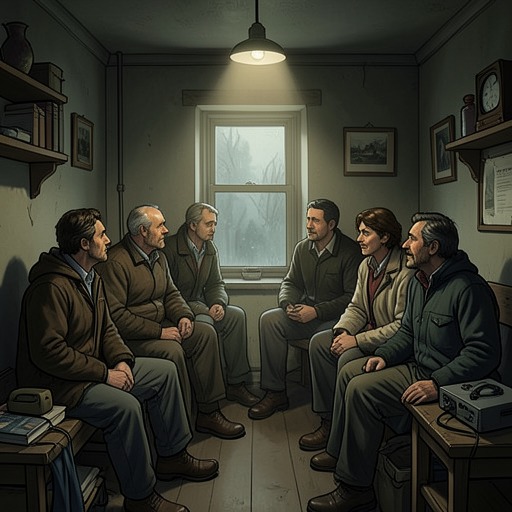
In May 1944, Anne writes that news of renewed antisemitism has reached the residents. She has been told that prejudice has appeared even in circles where it once seemed unthinkable. The suspicion, as she understands it, is that Jews reveal secrets to the Germans and expose the people helping them. Anne acknowledges that Jews have in fact denounced their helpers under German pressure, but insists that the accusation cannot be judged without considering the coercion behind such acts. She asks whether Christians, placed in the same circumstances, could be expected to remain silent.
The diary then records a related dispute about belonging. In underground circles, Anne hears that German Jews who had immigrated to the Netherlands before the war and were later sent to Poland should not be allowed to return. Although they had received asylum in the Netherlands, some now argued that they should go back to Germany once Hitler was gone. For Anne, this position exposes a contradiction in claims that the war is being fought for freedom, truth, and justice: even before it has ended, Jews are being treated as lesser beings and their refuge is being questioned.
She is especially troubled by the collective judgment imposed on Jews. A wrongdoing by one Jew, she observes, is made to reflect on all Jews, while the same collective standard is not applied to Christians. Anne says she cannot understand how the Dutch, whom she considers good and upright, can judge the Jewish population in this way. Her hope is that the antisemitism is temporary and that the Dutch will ultimately act according to what they know to be just. That hope is conditional, not complacent: if the threat to exclude Jews is carried out, she writes, the few Jews still left in the Netherlands will have to leave.
Identity, faith, and the wish for a homeland
The diary presents Jewish identity as both imposed from outside and affirmed from within. In a reflection prompted by the residents’ confinement and lack of rights, Anne describes Jews as chained to one place, burdened with obligations, and required to put their feelings aside. Yet she frames endurance as a responsibility and expresses trust that the war will end. Her hope of becoming people again, rather than being defined only as Jews, stands alongside her insistence that Jews will remain Jews and that, in time, they will want to do so. The paired ideas preserve a tension between rejecting the dehumanizing reduction of people to a persecuted category and affirming a shared identity under attack.
Her references to God and Jewish survival give that tension a religious dimension. Anne wonders why Jews have been set apart and made to suffer, but also imagines that Jewish faith might teach goodness to the world. She writes of Jews having endured across the centuries and surviving through strength. These reflections do not make persecution meaningful or just; they register an effort to find grounds for courage while the outcome remains uncertain.
The Netherlands is central to this sense of belonging. Anne writes that she loves the country and had hoped it would become a homeland after she had lost her own; despite the reports of exclusion, she still hopes it will. Her attachment makes the threat of being forced to leave more than a question of residence. It challenges the promise of refuge and the possibility of belonging where her family has made its life.
The diary as a record of changing prejudice
The diary’s account of antisemitism is grounded in what Anne encounters and hears as a Jewish girl in hiding, rather than presented as an omniscient survey of Dutch opinion. Its evidence ranges from remembered laws and family history to reports from Mr. Dussel and the residents’ helpers, and finally to the May 1944 discussion of suspicion and asylum. Anne’s judgments emerge within that limited, pressured perspective: she records claims she considers understandable in their circumstances without accepting them as right, and criticizes prejudice without abandoning her hope in the Dutch people.
The text’s transmission adds another dimension to how this testimony reached readers. In 1944, after hearing Gerrit Bolkestein call for eyewitness accounts of suffering under German occupation, Anne decided to prepare her diary for possible publication. She revised it, omitted some passages, added others from memory, and continued keeping her original diary. Her father later combined material from the original and revised versions for publication, omitting some passages for reasons that included the conventions of the intended series and the time’s reluctance to publish frank writing about sexuality. The definitive edition restores additional material from Anne’s versions. These editorial stages do not alter the substance of the antisemitism she describes, but they matter to the form in which her observations and arguments became available to readers.
The diary’s account ends not with a resolution of the question of belonging but with an unresolved hope: Anne still loves the Netherlands and hopes it will become a homeland. The persecution recorded elsewhere in the diary makes that hope precarious. Her writing holds together the restrictions and removals inflicted on Jews, the prejudice she hears emerging among people who oppose the occupation, and her insistence that Jewish identity should not be reduced to the accusation or exclusion directed at it.