Coming of age
Diary of Anne FrankComing of age in The Diary of a Young Girl is not a smooth passage from childhood to adulthood but a shifting self-portrait: Anne Frank records bodily curiosity, emotional volatility, family conflict, intellectual ambition, and a growing claim to independence while living in hiding. The Definitive Edition makes that development especially legible by restoring passages omitted from the earlier published selection and showing Anne as a teenager still trying to understand who she is.
Identity and development
Anne began keeping her diary at thirteen and was fifteen when she had to stop writing. The surviving pages thus follow a formative span of adolescence, but not under ordinary circumstances: she and her family were confined in the Secret Annex, estranged from the outside world and living amid hunger, boredom, friction, and the threat of discovery. Her observations register both the usual uncertainties of growing up and the pressure of an environment that sharply limited her privacy and freedom.
The diary presents change as uneven. The book’s foreword describes Anne moving between a child’s carefree impulses and an adult’s sorrow; the restored material likewise brings together self-confidence and embarrassment, excitement and loneliness. Rather than smoothing those contradictions into a finished portrait, the entries preserve a young person testing out ideas about herself while she is still changing.
The body and private knowledge
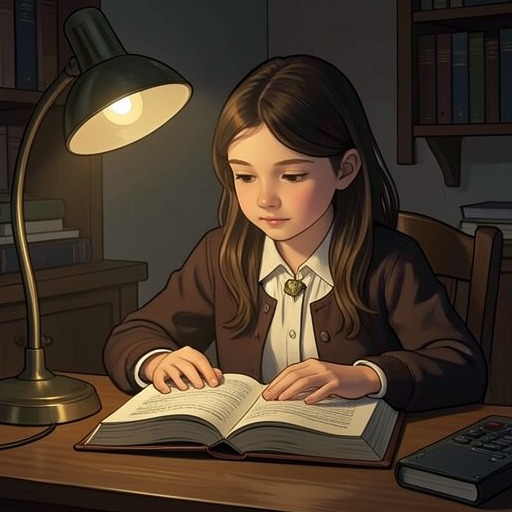
Anne’s interest in adult books becomes one route into questions she cannot comfortably discuss with others. Reading Eva’s Youth, she notes its treatment of menstruation and her own eagerness for her period, which she associates with becoming grown up. In a postscript, she reports that she thinks it may begin soon, mentions her mother’s prediction, and describes the practical difficulty of obtaining sanitary products during wartime scarcity. The ordinary milestone is inseparable from the constraints of life in hiding.
Looking back on that writing about a year and a half later, Anne is startled by her earlier innocence and openness. She says that she could not write so candidly about those subjects anymore and finds some of the pages embarrassing to reread. This later comment gives the diary a second time scale: the reader encounters the younger Anne’s anticipation and the older Anne’s retrospective distance from it, evidence not merely of change in the body but of a changed sense of what can be written and shared.
In another reflection, Anne describes puberty as involving inward as well as outward change. She says that the feelings and changes are wonderful, that she does not discuss them with others, and that menstruation can feel like a private secret despite its discomfort. She also recognizes a growing sense of herself as an individual with her own ideas, thoughts, and habits. Her account makes self-knowledge something both intimate and difficult to communicate: the diary becomes the place where she can give words to experiences she keeps to herself.
Independence and family conflict
Anne’s developing independence is tested most directly in her relationship with her mother. In one account of a quarrel, Anne describes crying after her mother reported her faults to her father and tells him she loves him more than her mother. She acknowledges the severity of her dislike and the effort it takes not to answer sharply. Her writing is not a settled judgment from adulthood: it records an intense, partial feeling, together with the awareness that she hopes her mother will never read it.
At fourteen, Anne frames the conflict as a mismatch between how the girls are treated and how grown-up they feel inwardly. She and Margot recognize that little remains of the close, harmonious family they remember from home. Anne insists that she has her own opinions, ideas, and principles, and considers herself capable of judging right and wrong; at the same time, she resents being treated as a child in external matters. Her claim to independence is therefore both intellectual and relational: she wants her own judgment to be taken seriously, especially by the adults around her.
That confidence coexists with a desire for affection and recognition. Anne writes that she needs consolation, often feels weak, and wants encouragement from someone who loves her. She turns repeatedly to Kitty because the diary offers a patient listener when other people misinterpret her intentions. Coming of age here does not mean simply rejecting dependence; it means trying to reconcile a strong wish to direct her own life with an equally strong need to be understood.
Memory, revision, and the published Anne
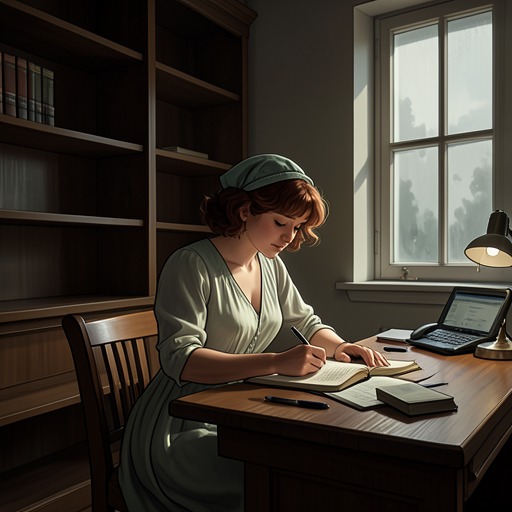
The diary’s own publication history adds another dimension to its account of growing up. Anne first wrote for herself. After hearing Gerrit Bolkestein speak on the BBC about collecting eyewitness accounts of the occupation, including letters and diaries, she began rewriting her entries with a future book in mind. She edited the material, removed passages she considered uninteresting, and added recollections, while continuing to keep her original diary. The two processes preserve different relationships to the self: immediate private record and later deliberate narration.
After Anne’s arrest, Miep Gies and Bep Voskuijl found the diaries scattered on the floor and kept them safe. When Otto Frank learned after the war that his daughter had died, Miep gave the unread manuscripts to him. Otto selected material from Anne’s original and rewritten versions to create the shorter published text. He had to fit the book to a Dutch publisher’s series, and in 1947 he omitted passages about sexuality as well as unflattering remarks about his wife and the other residents of the Secret Annex. Those editorial choices shaped the Anne first encountered by many readers.
The later editions made that shaping process more visible. After Otto’s death, he left the manuscripts to the Netherlands State Institute for War Documentation, which commissioned an investigation into the diary’s authenticity and published the text with the results of its study. The Anne Frank-Fonds then commissioned Mirjam Pressler to prepare an expanded edition for general readers, supplementing Otto’s selection with passages from Anne’s first and second versions. The Definitive Edition contains approximately 30 percent more material, including writing that makes Anne’s changing sense of her body, her disagreements with her mother, and her uneven movement between childhood and adulthood more apparent.
The expanded text does not replace the earlier edition; it lets readers see more clearly how the public image of Anne was made. Anne herself revised her diary, Otto made a selection shaped by the conventions and practical limits of publication, and Pressler restored passages for a broader account of Anne’s inner life. The resulting portrait is not of a flawless symbol who has completed her development, but of a young writer whose candid, sometimes changing account preserves the unfinished work of becoming herself.