Deteriorating relations among the Annex residents
Diary of Anne FrankDeteriorating relations among the Secret Annex residents are not a single rupture but an accumulating strain on people compelled to share food, rooms, work, and danger. Anne’s diary traces the movement from tense meals and disputes over provisions to tears, exhaustion, and the fear that the group may no longer be able to live together amicably. It also records a counter-movement: Anne gradually questions her own family’s account of the quarrels and tries to understand how their conduct helped sustain them.
Shared Life Under Pressure
Anne frames conflict as a condition of daily life in the Annex. By September 1943, mealtimes have become so fraught that the residents scarcely dare speak, except to take a bite; almost any remark, she says, is liable to be resented or misunderstood. The table, a shared necessity, has become a place where words are tested for offense rather than exchanged freely.
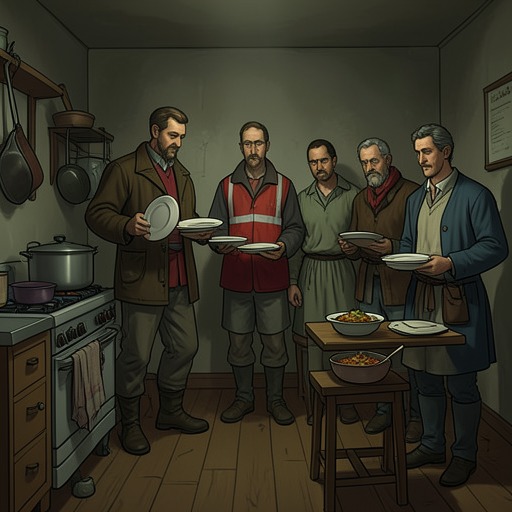
The arguments are rooted in practical matters as well as temperament. A large dispute begins with discussion of van Maaren and widens into a general quarrel ending in tears. Food becomes an especially persistent source of suspicion. Anne reports that Otto Frank is furious because the van Daans are holding back meat and other provisions, and she fears another confrontation is about to erupt. The conflict is not simply about what is served: it concerns whether scarce supplies are being divided fairly, and whether one household can trust another to keep to a common arrangement.
That pressure is visible in the Annex’s repeated efforts to allocate provisions. Later, the residents divide the potatoes as well as fats and oils, after Auguste van Pels proposes frying fewer potatoes in the morning and saving them for later, a plan Edith Frank and the others reject. Anne lists the accumulated divisions: meat, soup, potatoes, extras, and now the fried potatoes. The recurring accounting turns meals into a record of grievances; her wish that they could “split up completely” exposes how far the desire for relief has diverged from the practical impossibility of separating their lives.
Quarrels, Reconciliation, and Their Costs
Conflict also develops through personal dealings. Fritz Pfeffer complains to Edith Frank that he is being treated like a leper, that no one is friendly to him, and that he has done nothing to deserve it. Edith responds that the others are disappointed in him and that he has repeatedly been a source of annoyance. He promises to change, but Anne doubts that his assurances will lead to action. The scene shows how a grievance can prompt conciliatory words without restoring confidence.
The strains extend beyond one dispute. Anne senses trouble brewing with the van Daans and describes the residents as driving one another crazy. In a later inventory of the household’s distress, she writes that Otto walks with pressed lips and looks up in alarm whenever he hears his name, as if expecting to be asked to settle another delicate problem. Edith is so agitated that her cheeks are blotched; Margot complains of headaches; Pfeffer cannot sleep; Auguste frets and fumes; Anne says she has gone completely round the bend. She sometimes loses track of who is at odds with whom. Studying becomes her way of taking her mind off the arguments, a private retreat from a conflict that seems to occupy the whole household.
Reconciliation does occur, but it does not erase the underlying disputes. After a row over clothes and money, Auguste and Hermann van Pels return to affectionate terms, a stage Anne describes as “oh, my sweet Putti” and “darling Kerli.” The contrast between the pet names and the serious disagreement over the fur coat, household upkeep, and the sale of possessions gives their reconciliation a provisional quality: tenderness returns, but the material pressures that provoked the fight remain.
Scarcity and the Work of Living Together
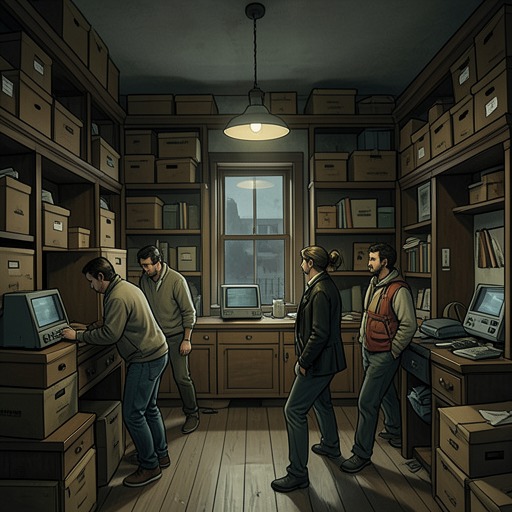
The household’s problems are sharpened by the work required to maintain everyday life in hiding. The diary’s account of a sample day describes the residents separating into chores and routines: Otto brushes the rug on his hands and knees; Pfeffer makes the beds while whistling the same Beethoven violin concerto; Edith hangs washing; Hermann goes downstairs, often followed by Peter and Mouschi; Auguste carries laundry; Anne and Margot do the dishes and straighten the room. The schedule depends on shared space and coordinated labor, yet that coordination also assigns roles and creates further occasions for dissatisfaction.
Food shortages make those arrangements still more consequential. When the people supplying the residents with food coupons are arrested, the household is left with five black-market ration books but no coupons, fats, or oils. Because Miep and Johannes Kleiman are ill and Bep cannot manage the shopping, the food is poor and the work of obtaining it falls under additional strain. The meal of mashed potatoes and old pickled kale is so unpleasant that Anne presses a handkerchief scented with prewar perfume to her nose and mouth. Even the potatoes are unreliable: about half of each bucket is thrown away because of disease. Such details make scarcity more than a background condition; it enters the kitchen, the division of labor, and the residents’ judgments of one another.
The diary’s comic details do not cancel the strain; they show how closely laughter and resentment coexist. In an earlier effort to store provisions, the residents buy three hundred pounds of beans, including supplies for the office staff. The sacks split while Peter carries them upstairs, sending roughly fifty pounds of beans bouncing down the stairs with enough noise to make those below think the house is collapsing. Anne stands amid the beans as they lap at her ankles, and she and Peter begin gathering them. Afterward, the residents search the corners and holes for stray beans to bring to Auguste. The episode briefly turns a storage problem into shared labor and laughter, but even the joke is shaped by the need to preserve food and make the stores last.
Anne’s Reassessment
Anne’s account changes as she examines the family loyalties that had shaped her view. She admits that she had been convinced the van Daans were entirely to blame. Looking again, she recognizes that the fault was largely her family’s, even though she still believes her family was right on the subject matter. The distinction matters: being right about an issue, she concludes, does not excuse failing to understand how to deal with other people.
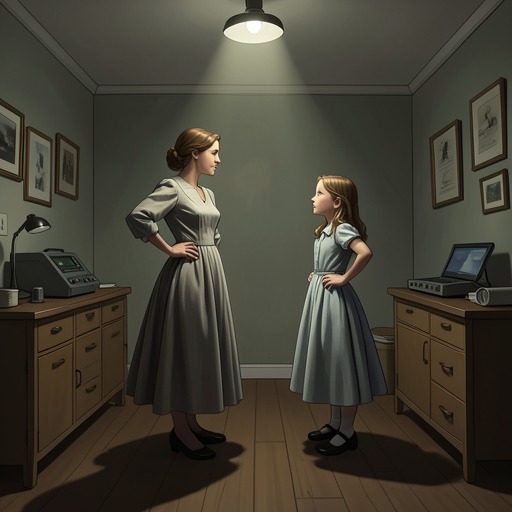
Her reassessment is particularly focused on Edith and Auguste. Anne does not idealize Auguste, whom she considers selfish, stingy, and underhanded, but observes that she can be spoken to and may back down if she is approached patiently rather than provoked. Anne also recognizes that Edith’s responses to difficult subjects helped turn disagreements into larger conflicts. She imagines that disputes over upbringing, food, and whether children should be pampered might have taken a different course if the families had remained open and on friendly terms instead of assuming the worst of one another.
This shift does not mean that Anne abandons her own judgment or excuses every action. She plans to speak openly with Auguste about their differences, offer an impartial opinion, and stop gossiping, while continuing to defend her family if others criticize it. The effort is tentative: she hopes she has acquired some insight and will have an opportunity to use it. Her recognition that the quarrels were partly produced by her own side transforms the diary from a catalogue of complaints into an account of self-correction.
The Pressure of Confinement
The worsening relations are inseparable from the residents’ inability to leave the shared situation. Anne’s writing repeatedly returns to the wish to get away from the skirmishes, while the household must continue dividing meals, managing chores, and negotiating grievances in close quarters. The same space that makes cooperation necessary also makes withdrawal difficult; even a quarrel over a particular food or task reverberates through the group’s daily routine.
By the time the drains clog again, the material conditions have become another source of dependence and apprehension. The residents can draw only a trickle of water, cannot flush the toilet, must use a toilet brush, and store dirty water in a large earthenware jar. Anne says they can manage for the day but worries about what will happen if the plumber cannot repair the problem; the Sanitation Department cannot come until Tuesday. In the same entry, Miep sends raisin bread marked “Happy Pentecost,” a cheerful greeting at odds with the residents’ mood. The contrast condenses the diary’s account of life together: help and small kindnesses persist, but they arrive within an environment where discomfort, scarcity, and uncertainty steadily wear down the relationships that survival depends on.