Gestapo
Diary of Anne FrankThe Gestapo appears in Anne Frank’s diary not as a distant institution but as a force that enters homes, streets, and the daily calculations of people in hiding. Its searches and arrests make the threat of discovery immediate; its reprisals extend that danger to helpers and innocent bystanders. Anne’s account also traces how persecution presses on identity: the people hunted as Jews are forced to weigh survival, obligation, and belonging under conditions they did not choose.
Identity and Reach
Anne depicts the Gestapo as an instrument of the German occupation and the organized persecution of Jews. Its power is visible in the restrictions that reshape ordinary life: Jews must wear the yellow star, surrender bicycles, shop only during prescribed hours, and attend Jewish schools, while being barred from public entertainment and many shared spaces. The prohibitions accumulate into a daily pattern of exclusion, until even a friend’s fear of doing something forbidden becomes part of the record.
The diary distinguishes between what Anne observes directly and what reaches her through other people. She hears from Miep about deportations to Westerbork and about an elderly, disabled Jewish woman whom the Gestapo left on Miep’s doorstep while they went to find a car. The woman was frightened by searchlights and gunfire overhead, but Miep did not dare shelter her. In Anne’s telling, the danger does not end at the threshold: a person who tries to help can be exposed to punishment as well.
Searches, Deportations, and Reprisals
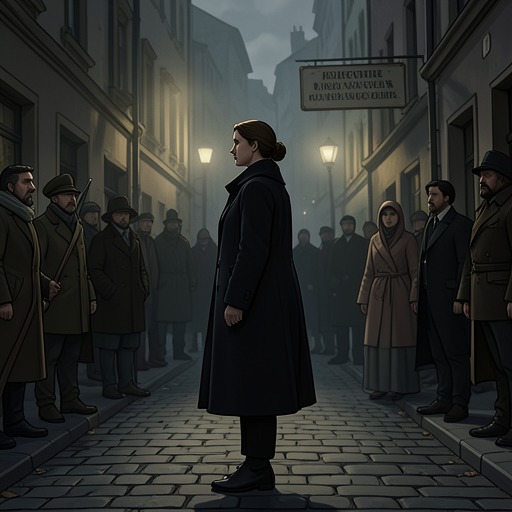
The account of raids makes the machinery of persecution brutally concrete. Anne writes that military vehicles move through the streets at night, that searchers knock on doors to ask whether Jews live there, and that families found at home are taken away. Sometimes, she reports, the searches are guided by lists; sometimes a bounty is offered for each person captured. These details reach her through information from Dr. Dussel, rather than through an on-page scene of a raid, and the diary preserves that mediated perspective while conveying the terror of the reports.
Anne also records the hostage system used in retaliation for sabotage. If the Gestapo cannot locate the person responsible, she writes, it may seize five hostages and line them up for execution. Their deaths are then presented in newspaper notices as “fatal accidents.” The phrase captures a second violence beyond killing: the public language conceals the deliberate punishment of people Anne describes as innocent. The threat makes the occupation’s coercion reach beyond those directly targeted and into the wider population.
The Secret Annex Under Threat
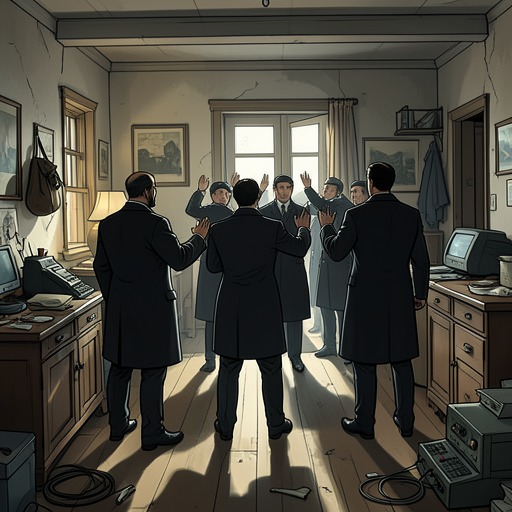
For the people in the Secret Annex, Gestapo power is felt as the possibility that the hidden entrance will be found. During a break-in, footsteps approach the bookcase concealing the entrance. Anne imagines that everyone will be dragged away by the Gestapo that night; the intruders rattle the bookcase, then retreat. The danger passes for the moment, but the pause does not restore security. A light remains shining on the landing in front of the bookcase, leaving the residents unsure whether the searchers found the entrance suspicious or might return.
The incident changes the Annex’s routines. Dr. Dussel is assigned to work in the bathroom, Peter must patrol the house in the evening, and he may no longer open his window after it was noticed from outside. The residents are told not to flush the toilet late at night. A night watchman is hired, and a carpenter from the underground is expected to construct a barricade from the residents’ white bedsteads. These practical measures show how fear governs space, noise, movement, and even the use of a toilet. The Gestapo need not be physically present for its anticipated arrival to reorganize the household.
During the night of the search, Anne and the others prepare for the possibility of capture. She is given clothes in the middle of the night and spends hours shivering and imagining the police’s return. Her imagined alternatives—trusting decent officers or trying to bribe Nazi sympathizers—reveal the narrow and uncertain terms on which she thinks survival might depend. The diary records not an outcome for this particular threat but the residents’ effort to think and act while the threat remains unresolved.
Jewish Identity and the Diary’s Perspective
The pressure of persecution also shapes Anne’s reflections on who the hunted are allowed to be. After the Annex scare, she describes Jews as chained to one place, without rights but burdened with obligations. Her response is both a practical call for courage and a statement of collective survival: Jews, she writes, will continue to be Jews, and one day will again be people rather than only Jews. In this passage, the Gestapo’s violence has a significance beyond arrest: it forces Jewish identity into the foreground even as Anne asserts that her community’s life and faith will outlast the persecution.
That hope exists alongside anger and uncertainty. Anne reports that hostility toward Jews has appeared even in circles where it had once seemed unthinkable, and that some people argue German Jewish refugees sent to Poland should not be permitted to return to the Netherlands after Hitler is gone. She connects this debate to the promise that the war is being fought for freedom, truth, and justice, and finds the renewed treatment of Jews as lesser beings a painful contradiction. Her account therefore places the Gestapo’s immediate violence within a wider climate in which Jewish safety and belonging remain contested, even beyond the moment of a raid.
Anne’s diary does not offer an institutional history of the Gestapo or a complete account of its operations. It offers something narrower and revealing: the view of a young Jewish diarist who hears reports of deportation from people she trusts, records a terrifying search at the concealed entrance, and watches precaution become a way of life. The Gestapo’s narrative presence lies in that combination of overt violence and anticipated violence. Its power is measured not only in the people taken, but in the doors left unopened, the movements curtailed, and the hidden household’s daily life arranged around the fear of discovery.