Inner self and outer mask
Diary of Anne FrankThe contrast between Anne Frank’s outwardly cheerful, attention-commanding persona and her private, often lonely self is one of the diary’s central records of growing up. Anne first looks back on the popular schoolgirl she used to be, then follows the losses and discoveries that made that public image inadequate: the joking and confidence remain available to her, but they no longer tell the whole truth. In hiding, the gap hardens into a mask she deliberately maintains, even as writing and her conversations with Peter offer ways for her inner life to be recognized.
The admired girl and the person she remembers
Anne recalls her school reputation as the class comedian and habitual ringleader, always laughing and apparently never a crybaby. Other children wanted to bicycle to school with her or do her small favors; in Peter’s recollection, she was surrounded by girls and boys and stood at the center of attention. Anne accepts his description, but looks at that former self from a distance: the girl seems pleasant and amusing, yet superficial, and almost unrelated to who she now understands herself to be.
The distance does not mean that the outward persona has vanished. Anne says that she can still laugh, make cutting remarks, flirt, and entertain when she chooses. What has changed is her appetite for the life those abilities once seemed to promise. She would like to revisit its apparent carefreeness for an evening or a few days, but expects that by the end of a week she would be exhausted and eager for a meaningful conversation. She wants friends, not admirers: people who value her character and actions rather than a flattering smile. A smaller circle would be welcome if its members were sincere.
How the carefree surface breaks down
Anne describes her prewar happiness as real but incomplete. Even in 1942 she often felt deserted; keeping busy helped her avoid dwelling on that feeling, and she consciously or unconsciously filled the void with jokes. In retrospect, the old schooldays have ended for good. She does not simply mourn them: she feels she has outgrown them, because the serious part of herself can no longer be set aside for joking.
The change came abruptly in the middle of 1942, when life at home turned into quarrels and accusations. Caught off guard, Anne says that talking back was the only way she knew to keep her bearings. The first half of 1943 brought crying spells and loneliness, along with a growing awareness of what she regarded as her many faults. She tried to draw Pim closer and failed; left to face the task of changing herself, she was also deeply disheartened by the reproaches she heard from others.
In the second half of 1943, being treated more like a grown-up helped her begin to think and write stories. She concluded that other people could not keep swinging her back and forth like a pendulum: she wanted to change on her own terms. This is not a return to effortless cheerfulness. It is an effort to claim authority over her own development, rather than allowing other people’s judgments to define which version of her is real.
The mask in hiding
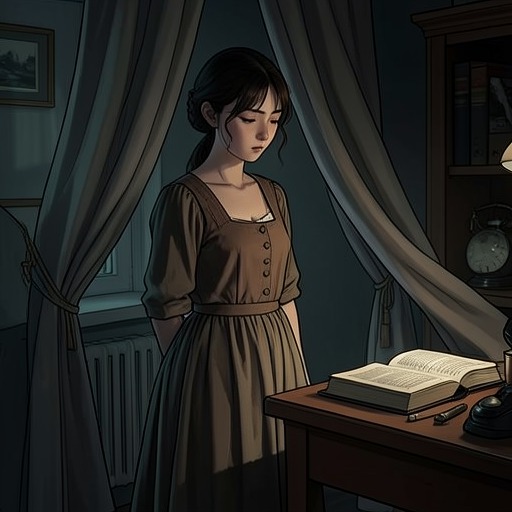
In the Secret Annex, the difference between appearance and inward feeling becomes a daily defense. Anne is rarely alone in the room she shares with Dussel and retreats to the attic for space; there, or in writing to Kitty, she can be herself for a while. At the same time, she says she does not want merely to complain and wants to be brave. Her public composure is not proof that she feels no distress. It is something she works to preserve while her private thoughts remain in turmoil.
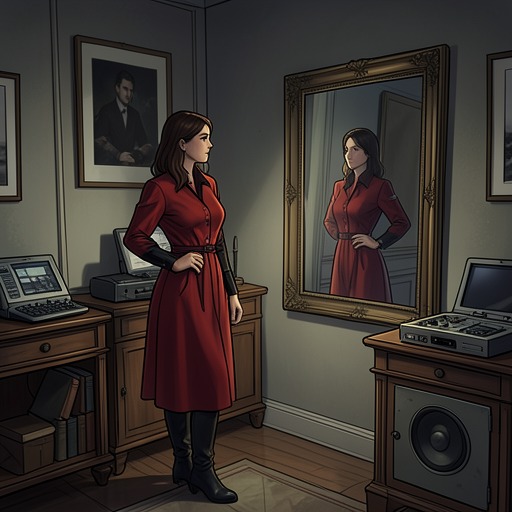
Anne notices that the others do not see the feelings she keeps inside. She describes becoming cooler and more contemptuous toward her mother, less affectionate toward her father, and less willing to share anything with Margot. She calls herself closed up tight and insists on maintaining an air of confidence; nobody, she writes, must know that her heart and mind are constantly at war. Reason has so far prevailed over emotion, though she sometimes fears—and more often hopes—that her feelings will take the upper hand. The mask therefore conceals not a settled inner self but an active conflict over what she can feel, show, and choose.
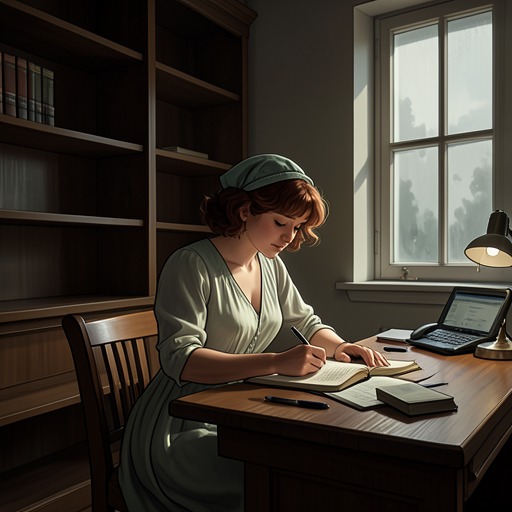
Her reflections on her parents make the limits of intimacy especially painful. Anne realizes she can manage without her mother, and that independence hurts; still more painful is the realization that she will never be able to confide in her father. At this point she says she trusts no one but herself. The diary supplies an alternative to speech: writing down her thoughts and feelings keeps her from feeling that she would otherwise suffocate, while allowing her to address Kitty with a candor she cannot yet sustain with the people around her.
Peter and the possibility of recognition
Anne’s hope for recognition gradually turns toward Peter. After New Year, she describes discovering a longing not for a girlfriend but for a boyfriend, and an inner happiness beneath her superficial, cheerful exterior. She says that she now lives for Peter, while acknowledging that what happens to her depends largely on him. Her longing is not simply to attract him; she wonders whether he could recognize the inward person rather than love only the lively outer Anne he has known.
That uncertainty makes approaching him difficult. Anne thinks Peter must begin the conversation, yet admits that she herself does not know how to start. During the day, she struggles to act as if what she has said and done in her dreams had never happened. She wonders whether Peter has guessed anything of her inner life, whether he can endure her bustle when he loves peace and quiet, and whether he will be the first person to see beneath her granite mask. Writing lets her rehearse these questions, even when speaking aloud feels impossible.
A conversation with Peter offers a tentative change. When Anne asks how he can manage a difficulty, he answers, “By being cheerful.” She values this as the nicest thing he said that evening, but the exchange goes beyond a reassuring remark: Peter tells her he no longer minds her coming to his room as he once did and now likes it. They talk about doing things their own way, loneliness, the diary, and the difference between everyone’s inner and outer selves. Anne explains that pet names and occasional kisses from her parents do not automatically create trust. The conversation makes room for distinctions her cheerful public image had obscured.
Anne concludes that Peter may have come to love her as a friend, and that for the present this is enough. She feels grateful and happy, and has the sense that they share a secret. The diary does not claim that the mask has disappeared or that every private conflict is resolved. Instead, its movement is from being surrounded by admirers to hoping for one sincere friend, and from guarding an inaccessible inner life to testing whether another person can meet it.