Jewish Lyceum
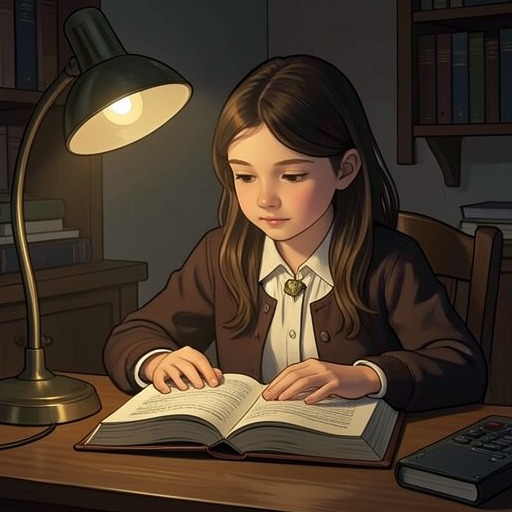
Diary of Anne FrankThe Jewish Lyceum was the Amsterdam school Anne Frank attended under the German occupation, when Jewish children were required to go to Jewish schools. In her diary it is at once a place of education, friendship, and adolescence, and a concrete sign of how anti-Jewish rules redirected ordinary life. Anne’s arrival followed a tearful farewell to her previous school; at the Lyceum, she formed a close friendship with Jacqueline van Maarsen and continued school life amid restrictions that increasingly defined her as Jewish first.
Education and Transfer
Anne’s school career began at the Montessori nursery school, where she remained until she was six and then entered first grade. In sixth grade she was taught by Mrs. Kuperus, the school’s principal. At the end of the year, teacher and pupil were both in tears as they said goodbye: Anne had been accepted at the Jewish Lyceum, where her older sister, Margot Frank, also studied.
The transfer was shaped by a new requirement that Jewish children attend Jewish schools. Anne’s acceptance was not automatic. She had been expected to remain in seventh grade at the Montessori School, but after considerable persuasion Mr. Elte agreed to admit her and Lies Goslar on a conditional basis. Lies passed the year but still had to repeat her geometry examination. The circumstances make the Lyceum more than a school choice: it was an institution Anne entered because occupation policy narrowed the choices available to Jewish pupils.
School Life and Friendships
The Lyceum became the setting for Anne’s changing circle of school friends. She had known Hanneli Goslar and Sanne Ledermann as close friends, and classmates once described the three together as “There goes Anne, Hanne and Sanne.” Anne met Jacqueline van Maarsen when she started at the Jewish Lyceum; by the time of her birthday, she described Jacqueline as her best friend. Hanneli and Jacqueline were in the same class as Anne, and they, along with Ilse Wagner, came home with her after gym.
School remained a setting for ordinary pleasures and limits. On her birthday, Anne shared cookies with her teachers and classmates during recess, then went to gym with the rest of the class. She was not allowed to participate because her shoulders and hips tended to become dislocated, but, as the birthday girl, she chose volleyball for the others to play. Her classmates later danced in a circle around her and sang “Happy Birthday.” Such details preserve the texture of student life even as the school’s separate status reflected a coercive division beyond the classroom.
Segregation and the Wider Context
The Lyceum’s role was inseparable from the successive restrictions imposed on Jews in the Netherlands. After the German occupation in May 1940, anti-Jewish decrees required Jews to wear a yellow star and limited where they could shop, travel, study, and spend their time. The school rule that directed Jewish children to Jewish schools belonged to this wider system. Anne’s friend Jacque summed up the atmosphere by saying, “I don't dare do anything anymore, 'cause I'm afraid it's not allowed.”
That enforced separation did not erase the range of Jewish life Anne recorded. In the hiding place later, the residents marked Hanukkah with a few small gifts and candles, kept lit for only ten minutes because candles were scarce; Mr. van Daan made a wooden menorah. The diary’s account of such observances sits alongside its record of school segregation and persecution. In another entry, Anne reflected that Jews were treated as people “without any rights, but with a thousand obligations,” while insisting on the hope that they would again be people and not only Jews. The Lyceum therefore belongs to a larger story in which an externally imposed category shaped education and daily life, while personal, cultural, and national belonging remained more complex.
From Schooling to Exile
Anne’s later reflections connect Jewish identity and schooling to questions of home and belonging. She wrote that some people in underground circles argued that German Jews who had immigrated to the Netherlands before the war, and were then sent to Poland, should not be allowed to return after Hitler was gone. The prospect troubled her because the Netherlands had once offered refuge to her family. She affirmed her love for Holland and her continuing hope that it might become a fatherland, despite fears that Jews would again be forced to leave.
The diary’s broader history gives the school years their grave endpoint without making the Lyceum itself the site of that later fate. On August 4, 1944, the eight people hiding in the Secret Annex were arrested; they were taken first to a prison in Amsterdam and then to Westerbork. They were deported on September 3 in the last transport to leave the camp and arrived three days later in Auschwitz. Against that outcome, the Lyceum remains a record of an earlier, still recognizable phase of Anne’s life: classes, examinations, teachers, birthday rituals, and friendships lived within a system that progressively denied Jewish children the right to share ordinary public institutions.