Jewish identity and collective survival
Diary of Anne FrankJewish identity and collective survival in Anne Frank’s diary are shaped by a stark contradiction: the Nazi authorities and other hostile voices define Jews as a separate, rightless group, while Anne increasingly insists on the dignity, persistence, and belonging of that group. Her reflections connect imposed legal status to family memory and daily practice, then turn toward a hope that survival will make Jewish identity a source of strength rather than a sentence of exclusion.
Identity Made Visible by Persecution
Anne’s account begins this history before the family’s life in hiding. Relatives in Germany were already suffering under Hitler’s anti-Jewish laws; after the 1938 pogroms, her two maternal uncles fled to North America, and her seventy-three-year-old grandmother came to live with the family. Persecution is therefore not an abstract political development arriving suddenly in the diary: it has already altered the family’s geography and brought danger into domestic life.
After the German occupation of the Netherlands in May 1940, restrictions steadily marked Jews as a population apart. They had to wear a yellow star, surrender bicycles, shop only during designated hours, attend Jewish schools, and avoid public transport, entertainment, sports facilities, and visits to Christian homes. The accumulation mattered as much as any single prohibition. Everyday movement and choice narrowed until ordinary life was organized by what Jews could no longer do. Anne records the restrictions as a repeated pattern of prohibition, while also noting that life continued within their limits.
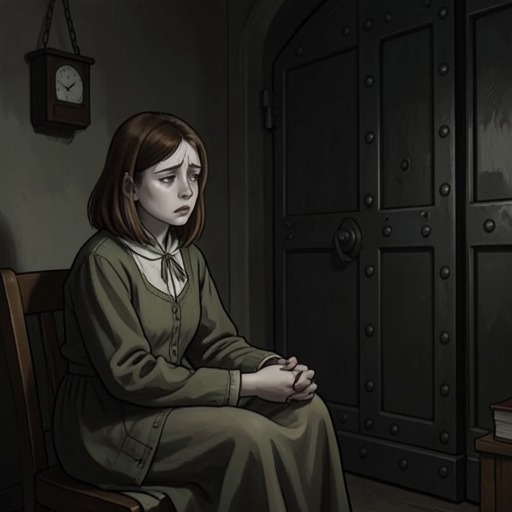
The rules did not merely regulate conduct; they made Jewish identity a public classification with direct consequences. In hiding, Anne describes the residents as Jews “in chains,” confined to one place, without rights and burdened with obligations. The phrase expresses the gap between the language of duty and the reality of coercion: they are expected to endure and obey while denied the protections and freedoms associated with ordinary citizenship.
Family Memory and Religious Practice
The diary’s account of identity includes household customs as well as political restrictions. When Hanukkah and St. Nicholas Day fell only a day apart, the residents marked both. Hanukkah was observed modestly: they exchanged a few small gifts and lit candles for only ten minutes because candles were scarce. Mr. van Daan made a wooden menorah. The limited celebration shows how a familiar religious observance could persist within the practical constraints of hiding.
Religious belonging is not presented as a simple or uniform state of belief. Anne records reading prayers in German at her mother’s urging, while questioning why she is being asked to act religious and devout. In another entry, she describes her grandmother’s candle being lit at a birthday celebration intended to make up for earlier birthdays marked by illness and war. The detail joins remembrance of a dead family member to a ritual occasion without turning either into a formal declaration of doctrine.
Anne’s reflections on God likewise hold uncertainty and belief together. She asks why Jews have been set apart and made to suffer, yet also writes that God made them as they are and may lift them up again. Religious language becomes a way of thinking through collective danger, not evidence that her doubts have disappeared. The diary preserves the tension between questioning the meaning of suffering and seeking strength in a religious history that has endured it.
Survival as Collective Continuity
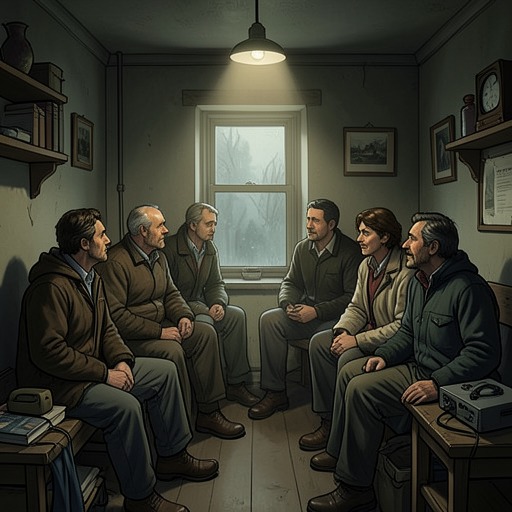
The threat that gives these reflections their urgency is not confined to discriminatory rules. Mr. Dussel brings news of friends and acquaintances taken away, and Anne describes the searches for Jews, the use of lists, and the removal of whole families. From her position in hiding, she sees the contrast between the relative safety of the Annex and the persecution of people outside it. That distance produces guilt as well as fear: she is troubled by sleeping safely while people she loves may be suffering, and knows that she cannot help them.
Against this knowledge, Anne imagines Jewish survival as a collective answer to the attempt to erase the group. She writes that if Jews remain after their suffering, they may be held up as an example, and wonders whether their religion might teach goodness. This is not a claim that persecution is justified; it is an effort to imagine a meaning and future beyond the violence. Her insistence that Jews will continue to be Jews, and will want to be, turns an identity imposed by hostile power into one she can affirm.
That affirmation is bound to endurance across generations. Anne recalls that Jews have suffered through the ages and continued living, and urges courage and the performance of duty without complaint. Her language of strength and survival addresses a community under immediate threat, while placing the present danger within a longer history. The diary does not make survival certain; it records hope as an act of resolve under conditions in which the outcome remains unknown.
Jewishness and Dutch Belonging
Anne’s sense of collective identity does not cancel her attachment to the country where she has grown up. In May 1944, she writes that reports of anti-Semitism among people who had previously seemed unlikely to express it have deeply affected the residents. She considers the accusation that Jews are informing on Germans and causing Christians to suffer, and argues that judgment should take account of the pressure under which anyone might be forced to act. Her concern is not that wrongdoing should be ignored, but that a whole people should not be blamed for the actions attributed to individuals.
The same conflict appears in the reported proposal that German Jews who had immigrated to the Netherlands before the war and were sent to Poland should not be permitted to return after Hitler’s defeat. Anne sees the proposal as a betrayal of asylum and of the professed struggle for freedom, truth, and justice. If the threat were carried out, she fears, the small number of Jews still in the Netherlands would have to leave. The possibility of expulsion makes belonging precarious even before the war has ended.
Yet Anne’s response is not to relinquish Dutch belonging. She says that she loves Holland and had hoped it would become her fatherland after she lost her own, adding that she still hopes it will. Her insistence holds two identities together: she cannot be only Dutch, but being Jewish does not make her love of the Netherlands false. The diary’s account of collective survival therefore ends not with an imagined choice between Jewishness and home, but with a demand that the country live up to the welcome and justice Anne still hopes it can offer.