Life in hiding
Diary of Anne FrankLife in hiding in the Secret Annex is at once refuge and confinement: a deliberate escape from Nazi persecution that replaces public freedom with strict routines, shared space, shortages, and the constant risk of discovery. Anne Frank’s diary renders this condition through the particulars of a hidden office building—its gray door, crowded rooms, workday silences, improvised beds, and dwindling provisions—and through the residents’ uneasy knowledge that safety for themselves meant helplessness toward others.
The decision to hide
By the time the Frank family considered going into hiding, their freedom had already been reduced by successive anti-Jewish decrees. Jews were ordered to wear the yellow star and surrender their bicycles; barred from streetcars, cars, public entertainment, sports facilities, and visits to Christians; and restricted in shopping hours and movement after dark. The accumulating prohibitions made ordinary life a narrowing field of permitted actions. As Anne records, her friend Jacque feared doing anything because it might no longer be allowed.
The decision to hide arose from both the threat of persecution and the family’s effort to prepare for it. During a walk around their neighborhood square, Otto Frank explained that for more than a year the family had been moving clothes, food, and furniture to other people. They did not want their belongings seized or to fall into German hands themselves; they would leave of their own accord rather than wait to be taken away. He also warned Anne that life cut off from the rest of the world would be difficult, though he urged her to enjoy her remaining carefree time.
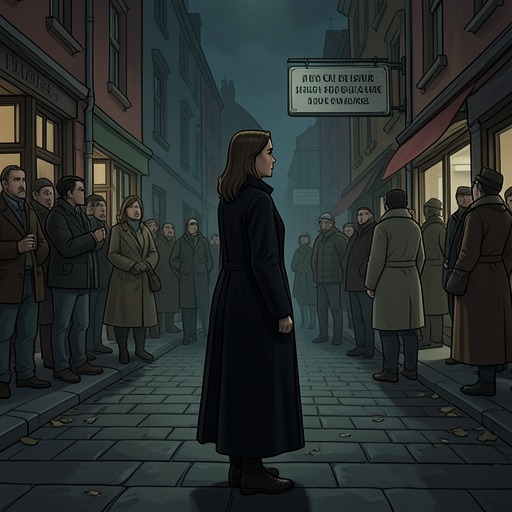
The plan was to enter hiding on July 16, but Margot’s call-up notice forced the family to advance its departure by ten days. The move therefore began sooner and with less orderly preparations than intended. Anne remembers the family setting out in pouring rain, each carrying a schoolbag and a shopping bag filled with a varied assortment of belongings. The yellow star on their clothing was visible to passersby, and the sympathetic looks of people on their way to work underscored both the danger that had driven them out and the help strangers could not safely offer.
The hidden building and its routines
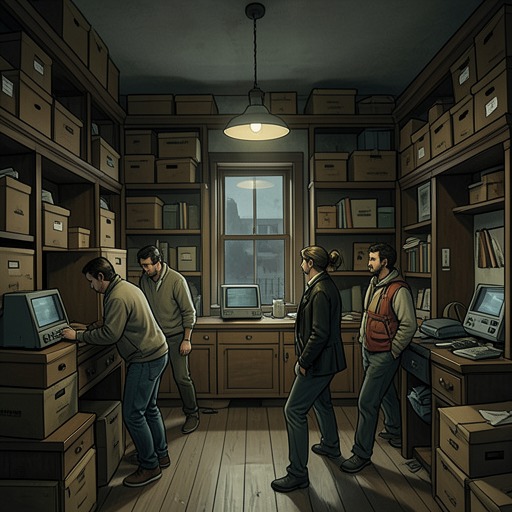
The hiding place was in the office building where Otto Frank had worked. Its arrangement made concealment possible through a separation between the busy warehouse and offices below and the rooms at the rear above. Only a small group of office colleagues knew that the family was coming; warehouse workers were not told. The entrance to the Secret Annex stood behind a plain gray door on the third-floor landing, a threshold that concealed several rooms in a building whose public-facing spaces continued to serve ordinary business.
The Annex offered a paradoxical kind of comfort. Anne initially found it hard to feel at home and compared the place to a strange pension, yet she also called it an unusually comfortable hiding place in Amsterdam and the Netherlands. Its residents could cook and listen to the radio in Otto’s office; books and games offered ways to occupy time, and supporters helped them preserve fruit. They pitted two crates of cherries for Mr. Kugler to can, planning to turn the empty crates into bookshelves. But they could not go outside or look out the windows, and during the day they had to keep quiet so people downstairs would not hear them. The rooms sheltered them by making their lives nearly invisible.
That invisibility depended on rules governing ordinary bodily needs. In the typewritten Prospectus and Guide to the Secret Annex, the van Pels family’s mock advertisement presents the refuge as a free, year-round accommodation for Jews and other dispossessed people, with rooms available furnished or unfurnished and with or without meals. Its joking offer of access by streetcar, car, bicycle, or on foot plays against the fact that German authorities had forbidden some of those forms of transport to Jews. The guide’s practical details, including scheduled mealtimes, turn the household’s restrictions into an invented institution: a comic public face for a life organized around concealment.
The rules became clearer when a new resident, Fritz Pfeffer, asked when the cleaning woman came, how the washroom was shared, and when he could use the toilet. During working hours, noise could carry downstairs; when the cleaning woman was present, extra caution was necessary. Anne patiently explained these arrangements, while observing that he repeatedly asked questions and struggled to remember the answers. Such details show that hiding was not a single act of concealment but an ongoing coordination of movement, sound, privacy, and time.
The diary makes that coordination visible by following a day through its repeated tasks. At night, the rooms had to be transformed for sleep: chairs shifted, beds pulled out, and blankets unfolded. Anne’s divan was only five feet long, so chairs had to extend it; the bedding stored on Fritz Pfeffer’s daytime bed had to be removed, while Margot’s folding bed creaked into place next door. In the midday routine, Otto brushed a rug on his hands and knees, Pfeffer made the beds while whistling the same Beethoven violin concerto, Edith hung washing in the attic, and Auguste van Pels carried laundry downstairs. Anne and Margot did the dishes and straightened the room. Repetition kept a crowded household functioning, but it also meant that privacy, rest, and space had to be continually borrowed from one another.
Danger, scarcity, and dependence
The Annex’s security could never be taken for granted. After a genuine break-in, Peter van Pels noticed at seven in the morning that both the warehouse door and the street door were open. He reported it to Otto, who went to the private office, tuned the radio to a German station, and locked the door before they returned upstairs. The residents followed emergency instructions: they did not wash or run water, kept quiet, dressed by eight, and avoided the bathroom. They had not heard the burglars during the night; once the danger was discovered, they could do little but wait for news from below.
The burglars had forced open the exterior and warehouse doors with a crowbar. Finding nothing worth stealing there, they tried the next floor and took two cashboxes containing forty guilders, blank checkbooks, and sugar coupons representing the Annex’s entire 330-pound allotment. The lost coupons made an already precarious food supply harder to maintain. The intrusion also revealed how close the concealed household was to the ordinary building below: a breach in the workplace could become a threat to the people hidden above it.
The wider world reached the residents through news brought by visitors and through the sounds and routines of occupation. Fritz Pfeffer described night after night of green and gray military vehicles moving through the streets, knocking on doors and taking Jewish families away. Some raids used lists; those carrying them out, Anne reports, could seek a large number of victims and receive a bounty for each person. The people marched away included the sick, the elderly, children, babies, and pregnant women. Against this account, Anne’s gratitude for the Annex’s relative safety is inseparable from guilt: she imagines friends collapsing from exhaustion or being beaten while she sleeps in a warm bed. The hiding place protected its residents from immediate removal but could not make them indifferent to those beyond its walls.
Protection also depended on helpers outside the Annex. The diary names colleagues who brought support and, in a later emergency, describes Jan Gies and others debating how to strengthen the refuge. After a security scare, new restrictions followed: Fritz Pfeffer was to work in the bathroom, Peter was assigned to patrol the house between eight-thirty and nine-thirty, his window had to remain closed after a worker noticed it open, and the toilet could no longer be flushed after nine-thirty at night. A night watchman, Sleegers, was hired, and a carpenter from the Dutch resistance was expected to construct a barricade from the white Frankfurt bedsteads. The residents also had to consider whether the watchman could be trusted and whether dogs would bark at sounds behind the door. Each added precaution addressed a particular vulnerability, but each also tightened the rules governing daily life.
Scarcity deepened as the hiding period continued. When the people who supplied food coupons were arrested, the household had only five black-market ration books and no coupons for fats or oils. With Miep Gies and Johannes Kleiman sick again, Bep Voskuijl could not manage the shopping. The residents faced the end of fat, butter, and margarine; fried potatoes at breakfast had been a way to save bread, so they switched to hot cereal. Lunch might be mashed potatoes and pickled kale. Anne pressed a handkerchief perfumed with prewar scent to her nose and mouth because the old kale smelled so strongly, while diseased potatoes meant that one bucket in two could end up in the garbage. The diary’s comic guesses about the potatoes’ ailments do not disguise how little control the residents had over what they ate.
The diary’s view of concealment
Anne does not present hiding as one unchanging ordeal. She pauses to describe an ordinary evening or a lunch break, itemizing the work that must be done and the moments when downstairs workers leave. These dated, domestic accounts make the condition legible through repeated particulars rather than through a single dramatic scene: a bed extended by chairs, a rug beaten clean, a toilet that cannot be flushed after a set hour, a meal shaped by ration books. The contrast between the guide’s playful language and the residents’ actual precautions sharpens the diary’s account of how necessity can turn a household into a system of schedules and rules.
The diary also makes clear that its account is personal and situated. Anne writes from within the Annex, recording what its residents could observe and what trusted visitors told them, not offering a complete survey of occupied life. Yet the narrowness of that vantage gives its details their force: broad restrictions become limits on a window, a streetcar, a shopping hour, a toilet, or a meal. In the final reckoning, the residents describe themselves as Jews in chains, confined to one place and without rights but burdened by obligations. Their hope that the war would end and that they would again be people, not only Jews, emerges from the same daily world that demanded silence, patience, courage, and trust. Hiding preserves life for a time, but the diary shows its price in continual vigilance, dependence on others, and awareness of suffering beyond the walls.