Netherlands
Diary of Anne FrankThe Netherlands occupies a divided place in Anne Frank’s diary: it is the country that took in her family and the hoped-for home she continued to love, but also a place under German occupation where anti-Jewish laws, deportations, scarcity, and the threat of discovery governed Jewish life. Anne’s account makes that history tangible through the changing conditions of an Amsterdam household, the family’s move into hiding, and the news and uncertainties that reached the Secret Annex. Her attachment to the country endured even as she feared that antisemitism could make it turn away from the people who had sought refuge there.
Migration and a hoped-for home
Anne’s family had roots in Germany, where her father, Otto Frank, immigrated to the Netherlands in 1933 because the family was Jewish. He became managing director of the Dutch Opekta Company; Edith Frank followed him in September, while Anne and her sister, Margot Frank, stayed with their grandmother in Aachen before joining their parents. Anne later recalled growing up in the Netherlands and attending school there, including the Jewish Lyceum. In her family’s experience, the country was not merely a destination but a possible home after the loss of the one they had left.
That sense of refuge existed alongside awareness of the danger facing Jewish relatives in Germany. After the 1938 pogroms, Anne’s maternal uncles fled to North America, while her elderly grandmother came to live with the family. The Netherlands therefore entered the diary both as a place of relative safety and as the setting in which European persecution increasingly shaped the family’s future.
Occupation and restrictions in daily life
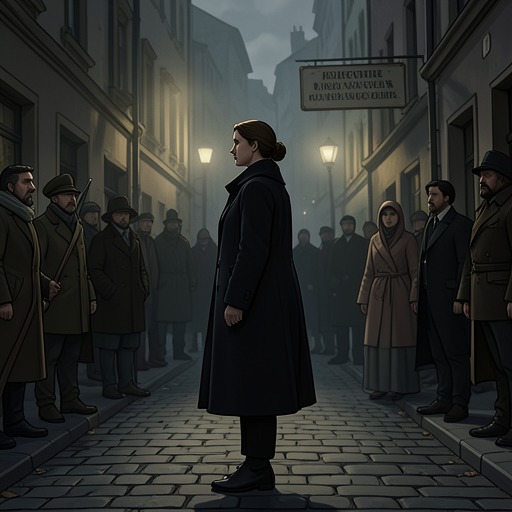
After Germany occupied the Netherlands in 1940, Anne described a rapid contraction of ordinary freedoms. Jews had to wear a yellow star and surrender their bicycles; they were barred from streetcars and cars, restricted to shopping between three and five in the afternoon, and forbidden to use many public facilities or attend entertainment. Curfews, limits on visiting Christians, and compulsory attendance at Jewish schools further narrowed daily life. The restrictions accumulated as a sequence of prohibitions: ordinary movement, recreation, and social contact became matters governed by law.
Anne recorded how those rules affected the young people around her. Her friend Jacque said she no longer dared do anything because she feared it might be forbidden. Yet Anne also noted the uneasy persistence of ordinary life under the decrees. The contrast matters: persecution did not arrive in her account only as a single dramatic rupture, but as rules that steadily reorganized where people could go, what they could do, and how they imagined the future.
Hiding in Amsterdam
The family’s move into hiding was planned for July 16, but Margot’s call-up notice brought the departure forward by ten days. Anne, her parents, and Margot left with bags in the rain, wearing the conspicuous yellow star, and learned the plan as they walked. Their hiding place was in Otto Frank’s office building in Amsterdam. The office staff who knew of their arrival included Mr. Kugler, Mr. Kleiman, Miep, and Bep Voskuijl; warehouse workers were not told.
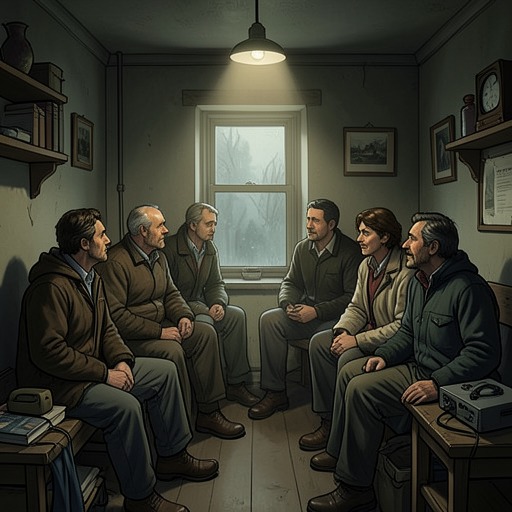
From the Annex, the Netherlands became both an immediate setting and a country largely inaccessible to its hidden residents. Their days depended on the building’s working routines and on avoiding notice. During a burglary, Peter went downstairs early and found the warehouse and street doors open; the residents followed strict precautions, keeping quiet and avoiding water use while they waited for news. The break-in exposed how a local threat could endanger the hidden household and disrupt its limited supplies: the burglars took cashboxes, blank checkbooks, and sugar coupons representing the group’s entire 330-pound allotment.
News brought in by people who could move outside enlarged Anne’s view beyond the Annex. After Dr. Dussel arrived, she wrote of friends and acquaintances being taken away, of military vehicles searching houses for Jews, and of families being removed. She understood that the hidden residents were comparatively protected, but that knowledge sharpened her distress over friends whom they could no longer help. Her diary thus records a situated witness’s account: the danger outside reaches the reader through reports, observation, and the anxieties of people confined within the building, not through an all-seeing national history.
Scarcity, invasion fears, and changing expectations
As the war continued, the diary connected conditions in the Netherlands with mounting material hardship. Anne described Dutch morale as low: people were hungry, a week’s ration could fail to last two days, men were being sent to Germany, and children were sick or undernourished. Worn clothing and shoes became part of the same landscape of deprivation; a new sole cost 7.50 guilders on the black market, and shoe repairs could require a four-month wait. Against this background, the hoped-for Allied invasion was both a prospect of change and a source of apprehension.
In February 1944, invasion news filled the papers and the residents’ conversations. Reports said German forces might flood parts of the country to resist a British landing in the Netherlands; maps showed potential flood areas, including large portions of Amsterdam. The Annex residents debated what they would do if the city were evacuated. Some imagined leaving with the population in disguise, while others insisted that remaining in place was safest. The exchanges reveal more than competing plans: the country’s possible future had become a practical question for people who could neither safely travel nor confidently predict what occupation authorities might do.
Their fears included the possibility that retreating Germans might take the population with them. When Jan Gies questioned whether there would be enough trains, the Annex residents answered that civilians might instead be forced to walk. Such conversations joined speculation to the residents’ knowledge of persecution. The Netherlands was not an abstract battlefield on a map; even imagined changes in control could mean evacuation, separation, or renewed exposure to danger.
Jewish identity and attachment to the country
The diary’s account of the Netherlands does not end with gratitude or disillusionment alone. Anne recognized that Jews were being judged collectively and treated as lesser even while the war was said to be fought for freedom, truth, and justice. She feared that antisemitism might persist after the fighting and that the small number of Jews left in the Netherlands could be forced to leave. Her imagined consequence was another departure from a country that had once welcomed her family.
Yet Anne still affirmed her attachment. She wrote that she loved the Netherlands and had hoped it would become her fatherland because she had lost her own; despite her doubts, she continued to hope. That tension gives the country its distinctive significance in the diary. It is at once a refuge, an occupied society, a terrain of restriction and uncertainty, and a home Anne could love without being able to trust that it would protect its Jewish inhabitants. After the arrest of the Annex residents, the survivors were taken first to a prison in Amsterdam and then to Westerbork; on September 3, 1944, they were deported in the last transport to leave the camp, arriving three days later in Auschwitz. The diary’s intimate record of life in the Netherlands thus stands alongside the wider history of persecution and deportation that brought the family’s hiding to an end.