Peter van Pels
Diary of Anne FrankPeter van Pels, known in Anne Frank’s diary and the published book by the pseudonym Peter van Daan, is introduced as an awkward, reserved teenager and becomes Anne’s closest companion in the Secret Annex. His arc moves from her dismissive first impression to a relationship shaped by shared confinement, affection, and courage; its private promise is ultimately overwhelmed by arrest and deportation.
Identity and Arrival
Peter was born on November 8, 1926. In the second, revised version of her diary, Anne assigned pseudonyms to people who would appear in her planned book. She called Peter and his parents Hans, Hermann, and Petronella van Daan there, while the manuscripts and the book use the names Peter, Hermann, and Petronella van Daan. The expanded edition restores the real names of the helpers but retains the established pseudonyms for other people; Peter is therefore identified here by his real name while his literary name remains important to the diary’s publication history.
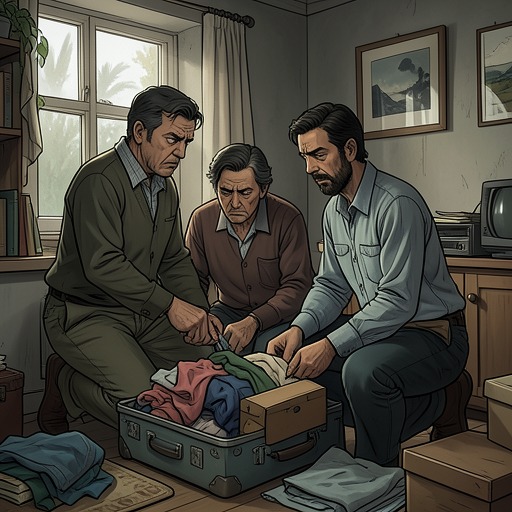
The van Pels family joined the Franks in hiding in the office building where Otto Frank worked. The family had expected them on July 14, but the issuing of German call-up notices led them to leave earlier. Peter arrived at nine-thirty in the morning while the Franks were still at breakfast; his parents followed half an hour later. Anne, nearly sixteen, described him as going on sixteen, shy, and awkward, and initially predicted that his company would not amount to much. That first judgment establishes the distance his later relationship with her must cross.
The hiding place was not a separate residence but rooms within an active business building, whose warehouse and work areas remained part of the surrounding premises. The residents depended on a small circle of informed office workers and helpers, while the danger of discovery shaped ordinary movement and routine. Peter’s life in the Annex thus began not in an independent household but in a crowded refuge sustained by secrecy and by other people’s assistance.
Life in the Annex
Peter’s early episodes reveal curiosity beneath his reserve. When the adults kept a book about women to themselves, he became intent on discovering its contents. He secretly carried it upstairs to the loft while his mother was downstairs; after his father caught him and confiscated it, Peter was not deterred but began considering how to read the rest. The incident shows him testing the boundaries imposed by the adults, and briefly punctures the quiet, monotonous routine of hiding.
The threat surrounding the residents was not abstract. During one break-in, Peter went down to the warehouse at seven in the morning, as usual, and found both the warehouse door and the street door open. He immediately reported the discovery to Otto Frank. The residents followed their security rules: they kept quiet, avoided washing or using water, dressed by eight, and did not go to the bathroom. The burglars had forced their way in with a crowbar and stolen cashboxes, blank checkbooks, and coupons for 330 pounds of sugar. The incident placed Peter’s routine work in the warehouse directly at the boundary between the hidden domestic space and the danger outside.
After a later near-discovery, security measures tightened further. Peter was assigned to patrol the house between eight-thirty and nine-thirty in the evening, and he was no longer allowed to open his window because someone from the nearby company had noticed it. The residents could not flush the toilet after nine-thirty. A night watchman was hired, and a carpenter from the underground was expected to build a barricade from the white Frankfurt bedsteads. These precautions show how the fear of discovery reorganized the Annex’s daily life and gave Peter a specific role in its protection.
Anne and Peter
Anne’s opinion of Peter changes gradually. She comes to wish that he is in love with her, partly because she believes mutual affection would make it easier for them to know one another. She notices his admiration and describes him as sweet; what had seemed like awkwardness becomes, in her eyes, one part of a more complex character. Her account does not reduce their bond to romance alone: she values being beside him, sharing silences, and discovering traits that the other residents do not see.
Anne’s affection is sharpened by her comparisons between Peter as he grows familiar to her and Petel, a figure from a dream whose cheek she remembers against her own. She treats the two as emotionally connected in her imagination, while also describing Peter through the details of his everyday behavior: he can seem childlike when he rests with his head on his arms, tender when he plays with Mouschi or talks about her, strong when carrying potatoes, and brave when watching gunfire or searching the dark house for burglars. These observations chart Anne’s changing attention: his ordinary gestures become evidence of qualities she admires.
The relationship develops under the pressure of other people’s opinions. Anne says that her mother believes Peter is in love with her and that her father remains detached from the silent conflict between mother and daughter. Anne resents the older residents’ interference and believes they do not understand the companionship she and Peter have formed. She hopes for a relationship with him while acknowledging that she conceals the intensity of her feelings. The constrained setting gives their time together unusual weight, but it also leaves their private attachment exposed to family judgment and the shared life of the Annex.
Danger, Trust, and Change
Peter’s role in a night of acute danger deepens Anne’s view of him. After the household has been shaken by a police presence near the bookcase, Anne and Peter meet in the early morning and go together to the front attic. The air-raid sirens begin, but they remain there; Peter puts his arm around her shoulder, and she puts hers around his. They sit quietly together until four o’clock, when Margot comes to fetch them for coffee. Later, Anne thanks Peter for having been the bravest of them all. The brief, wordless gesture of mutual comfort is inseparable from the danger that has made their hiding place feel precarious.
The scare changes the Annex’s procedures as well as Anne’s assessment of Peter. He is put on patrol, barred from opening his window, and drawn into the practical work of keeping the household safe. Otto Frank reproaches the residents for carelessness, while Jan Gies warns them not to go downstairs. The questions of whether the new night watchman can be trusted, whether dogs will bark, and how the barricade should be built make security a shared problem rather than a private worry. Peter’s courage and duties belong to this larger effort to endure in hiding.
Arrest and Death
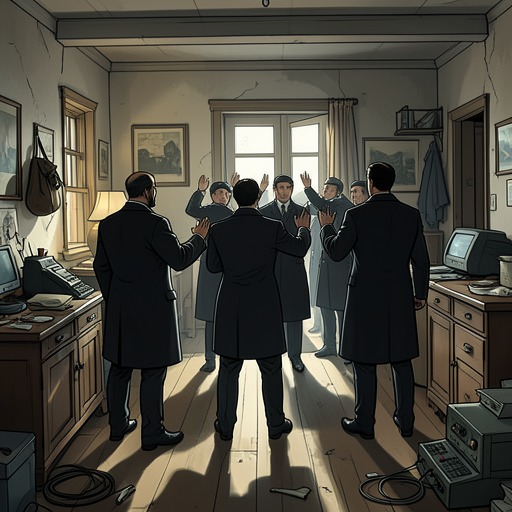
The diary’s record of Peter’s life in the Annex ends before the fate of its residents can be known to them. After the eight people hiding there were arrested, Peter was deported to Auschwitz. On January 16, 1945, he was forced to take part in a death march from Auschwitz to Mauthausen in Austria. He died there on May 5, 1945, three days before the camp was liberated.
That ending gives the relationship Anne records its historical limit. Her diary preserves Peter first as the boy she barely expected to like, then as a companion she admires and longs to know more fully, and finally as one of the people whose future was stolen by arrest and deportation. The contrast between their quiet hours together and his forced journey from Auschwitz to Mauthausen makes his personal story inseparable from the broader persecution that ended life in the Annex and carried its residents into the camps.