Threat of discovery and arrest
Diary of Anne FrankThe Threat of discovery and arrest is the defining pressure of life in the Secret Annex, where concealment offered refuge but never certainty. The danger is not a single incident: it accumulates through Nazi restrictions, the exposed routines of the helpers, burglaries, and the residents’ awareness that someone might discover them. Anne Frank records how this external risk becomes an interior condition, governing movement, ordinary bodily needs, and even the imagined future.
Origins and Conditions of Concealment
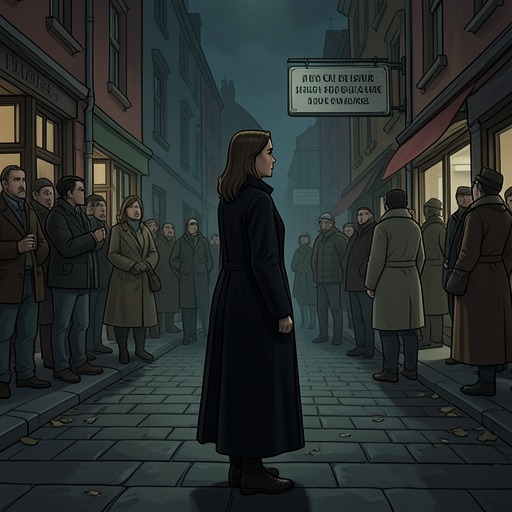
The threat begins in a world where anti-Jewish decrees have narrowed daily life. Jews were required to wear the yellow star and surrender their bicycles; they could not use streetcars or cars, shop except between three and five in the afternoon, or be outside between eight at night and six in the morning. They were excluded from entertainment and public sports, forbidden to visit Christians at home, and required to attend Jewish schools. These restrictions made ordinary movement conspicuous and limited, while the star made Jewish identity publicly visible. Concealment was not a freely chosen retreat from an otherwise safe life but a response to a system that steadily removed freedom and made exposure dangerous.
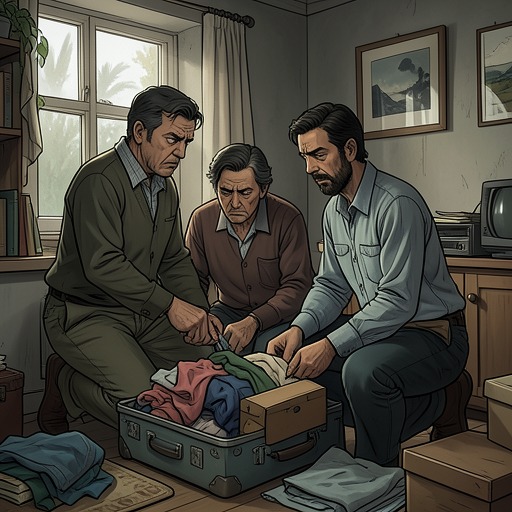
The plan to hide had been set for July 16, after months of moving furniture and clothes out of the apartment. Margot Frank’s call-up notice forced the family to bring the date forward by ten days, before the rooms could be put in order. As the family walked through pouring rain carrying schoolbags and shopping bags, sympathetic passersby noticed the yellow star, a visible sign of the danger from which the family was trying to escape. The hiding place was in Otto Frank’s office building. Only the office workers who had been informed knew the family was coming; warehouse workers and two assistants were kept unaware. This distinction between trusted knowledge and ordinary workplace routine was essential to the Annex’s concealment, but it also left the residents dependent on secrecy being maintained by others.
The building’s public face offered a sharp, precarious contrast to its hidden use. A mock advertisement described accommodation for Jews and other displaced people in wooded surroundings in the heart of Amsterdam, with rooms available free of charge and even a low-fat diet. It advertised access by streetcar, car, and bicycle, then added that those for whom German authorities had forbidden such transportation could come on foot. The joke converts the rules that confined Jews into the language of a lodging notice. Its wit depends on the reader’s knowledge that this apparent welcome cannot make the place safe or accessible in reality.
Suspicion in the Workplace
The Annex’s security depended on keeping its existence separate from the visible work of the office and warehouse. By November 1943, however, Mr. van Maaren, a warehouse employee, was growing suspicious. The helpers’ explanations placed them in different parts of the business: Miep Gies might say she was going to the laboratory, Bep Voskuijl to the file room, and Johannes Kleiman to the Opekta supplies. Victor Kugler claimed that the Annex belonged not to their building but to the one next door. The discrepancies that helped disguise access could also look suspicious to an attentive observer.
The residents feared Mr. van Maaren not simply because he might notice, but because he was regarded as unreliable, intensely curious, and unlikely to accept a flimsy excuse. That assessment gives the danger a human focus: concealment could be threatened by a person who was neither part of the household nor safely dismissible. When Victor Kugler came upstairs cautiously one day, Bep warned him on the landing that van Maaren was in the office. Kugler changed course, waited in the Annex, then removed his shoes and descended in stocking feet by another staircase, taking fifteen minutes to avoid creaking steps. The episode shows secrecy being maintained through improvised, minute adjustments to movement, sound, and timing.
Burglaries and Uncertain Intruders
A burglary made the residents’ security rules immediately tangible. When Peter van Pels went down to the warehouse at seven one morning, he found both the warehouse door and the street door open. He told Otto Frank, who went to the private office, tuned the radio to a German station, and locked the door before they returned upstairs. The household followed its emergency instructions: no washing or running water, quiet, dressed by eight, and no trips to the bathroom. Their discipline was complete, but they had not heard the break-in; the uncertainty came afterward, as they waited to learn what had happened below.
The burglars had forced the outside and warehouse doors with a crowbar. Finding nothing worth taking there, they went to the next floor and stole two cashboxes containing 40 guilders, blank checkbooks, and coupons for 330 pounds of sugar—the residents’ entire allotment. The loss joined physical vulnerability to material deprivation: an intruder had reached the office, and replacing the coupons would be difficult. Victor Kugler suspected that the burglar belonged to the same gang that had tried unsuccessfully six weeks earlier to open all three doors, suggesting that the danger might recur rather than end with one intrusion.
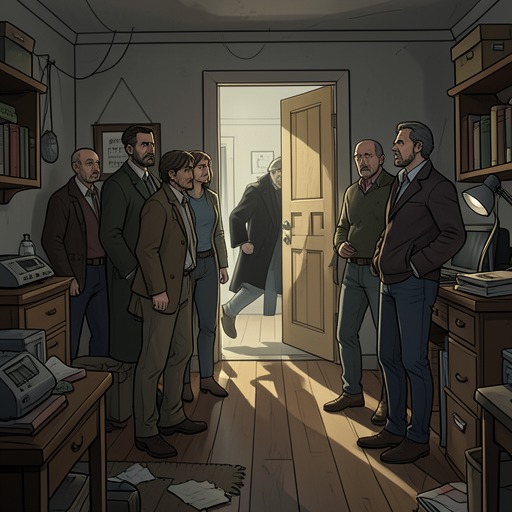
A later break-in was more disturbing because there were no signs of forced entry. Hermann van Pels found the glass and office doors open, as well as the doors to the alcove, and saw a mess in the front office. Peter later reported that the front door had been left wide open and that a projector and Victor Kugler’s new briefcase were missing. The residents concluded that the burglar must have had a duplicate key: he may have entered early, hidden when he heard van Pels, and fled after van Pels went upstairs, leaving the door open in his haste. But the explanation remained conjectural. They did not know who possessed a key, why the warehouse had been passed over, or whether the intruder was one of the warehouse employees and had seen or heard someone from the Annex.
The break-in therefore raised a question the earlier crowbar attack had not: whether someone with access could return, or identify the people hidden upstairs. Anne Frank describes the fear as unresolved—perhaps the burglar had been startled and would stay away; perhaps he might try again. Her request for a detective who could be trusted not to inform on people in hiding turns an ordinary crime-solving figure into a security problem in its own right. Even help would have to be screened for the possibility of betrayal.
Fear as a Daily and Inner Condition
The danger entered Anne’s body before she could reason it away. In a depressed mood on an evening when Bep was still in the Annex, the doorbell rang long and loudly. Anne turned white; her stomach churned and her heart raced. The bell did not itself reveal an intruder, but its sudden sound made the possibility of exposure feel immediate. She links these bodily reactions to the varied moods in which she writes and to the fear shared by the residents, not to a danger that can be neatly confined to a single episode.
At night, the threat expands into imagined scenes: Anne sees herself alone in a dungeon without Otto and Edith Frank, roaming the streets, watching the Annex burn, or hiding beneath her bed while people arrive in the middle of the night to take the residents away. She experiences these possibilities as though they were already happening, then fears that they may happen soon. The scene of a doorbell and the night visions work in different registers—the first begins with an actual sound, the second with anticipated catastrophe—but both show how vigilance carries danger into moments when no attack is taking place.
The contrast between the helpers’ apparent view and the residents’ experience sharpens this isolation. Miep Gies says she envies them for the peace and quiet of the Annex; Anne observes that this view overlooks their fear. Quiet is not proof of safety. It is also a condition the residents must protect by limiting water, footsteps, windows, and nighttime movement, while remaining alert to whatever the building’s ordinary sounds might mean. Their enclosure can look like shelter from outside and feel like permanent suspense from within.
Escalating Precautions and Meaning
As insecurity grows, precautions reach further into ordinary life. Following another alarming incident, the residents are told that Fritz Pfeffer must work in the bathroom and that Peter must patrol the house between eight-thirty and nine-thirty. Peter is forbidden to open his window after someone from the Keg Company noticed it standing open, and the toilet cannot be flushed after nine-thirty at night. Mr. Sleegers is hired as night watchman, and a carpenter from the Dutch resistance is expected to build a barricade from the white Frankfurt bedsteads. Victor Kugler reprimands the residents for carelessness, while Jan Gies warns them never to go downstairs. The household must also determine whether Sleegers can be trusted and whether dogs will bark if they hear someone behind the door.
These arrangements show the cost of trying to make a hidden home secure: work moves into a bathroom, Peter’s time becomes a patrol, an open window becomes a potential clue, and even flushing the toilet is governed by the danger of being heard. The barricade is to be built from beds already associated with domestic life, turning familiar furnishings into a defense. Yet each measure answers only part of the problem. The residents still cannot know whether the night watchman is trustworthy, what a dog might do, or how an intruder might behave.
Anne’s account finally gives this practical confinement a wider meaning. She describes Jews as chained to one spot, without rights but burdened with obligations, and insists that they must put their feelings aside, endure discomfort, and remain brave. Her hope that the war will end and that Jews will once again be people rather than only Jews stands beside her awareness that the residents are living under threat, not outside it. The recurring alarm, the suspicious employee, the open doors, the missing sugar coupons, and the barricade are distinct pressures, but together they make discovery a condition of every day: refuge is possible, while safety remains provisional.