Victor Kugler
Diary of Anne FrankVictor Kugler, one of the employees in Otto Frank’s office, was among the small circle who knew that the Frank family was going into hiding and helped sustain the Secret Annex. In Anne Frank’s account, his importance lies not in a single dramatic act but in a continuing, precarious responsibility: protecting the hidden residents while maintaining the ordinary routines of a working office under occupation. He helped conceal the entrance, supported the decision to shelter an eighth person, and devised ways to move through the building when suspicion made even a staircase dangerous. After the arrest of the Annex residents, Kugler was imprisoned and sent toward forced labor in Germany; he escaped during the transfer in March 1945.
Identity and Place in the Office
Kugler was part of the small staff around Otto Frank’s business. Anne lists him alongside Johannes Kleiman, Miep Gies, and Bep Voskuijl as one of the people in the office who had been told that the family would come into hiding. The warehouse employees, by contrast, were not all informed. This difference mattered: the Annex depended on a narrow circle of trusted helpers, while daily business continued in spaces adjacent to the concealed household.
The layout of the building made that arrangement both possible and perilous. Kugler occupied the small, dark back office, reached from the hallway through a glass door that could be opened from the inside but was difficult to open from outside. Beyond it lay the private office and the kitchen; above, a door from the third-floor landing led to the Annex at the rear of the building. Kugler’s workplace therefore sat within the route between public business and hidden domestic life. Its doors and passageways were not mere architecture: the residents’ safety depended on who could enter, what could be seen, and whether movement would be noticed.
Helping Establish and Protect the Annex
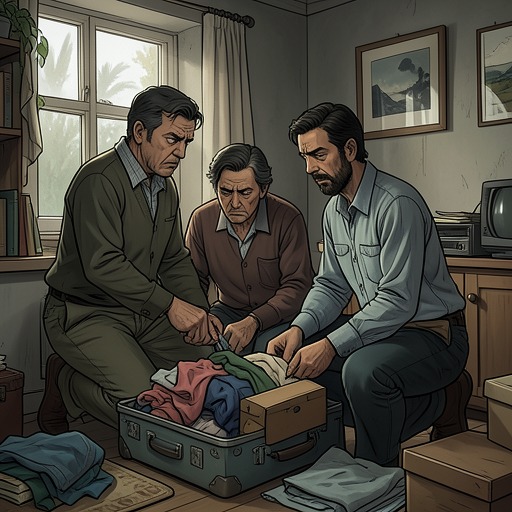
As German anti-Jewish decrees narrowed Jewish people’s freedom, Otto Frank’s family prepared to leave their home rather than wait to be seized. Their plan had been to enter hiding on July 16, but Margot’s call-up notice forced them to move the date forward by ten days. They carried their belongings through the rain to the hiding place in Otto Frank’s office building. Kugler was among the people there who had been informed in advance and helped make the building serve as a refuge.
The concealed quarters needed protection not only from discovery by the authorities but from the ordinary risks of a commercial building. When searches for hidden bicycles made the existing entrance seem unsafe, Kugler proposed having a bookcase built in front of the hiding-place entrance. Mr. Voskuijl did the carpentry; the bookcase swung on hinges and opened like a door. The device turned a passage into an apparently ordinary piece of office furniture, giving physical form to the distinction between the visible workplace and the life hidden behind it.
Kugler also helped extend that refuge. As reports of violence against Jews worsened, Otto Frank asked Kugler and Kleiman whether another person could be admitted. They agreed, judging that it was no more dangerous to shelter eight people than seven. The group then selected Alfred Dussel, a dentist known to them as quiet and refined. Their decision increased the demands on the Annex and its helpers, but it also shows that Kugler’s role was not limited to guarding a fixed arrangement: he participated in considering how the household might respond to the worsening persecution.
Caution, Improvisation, and Daily Risk
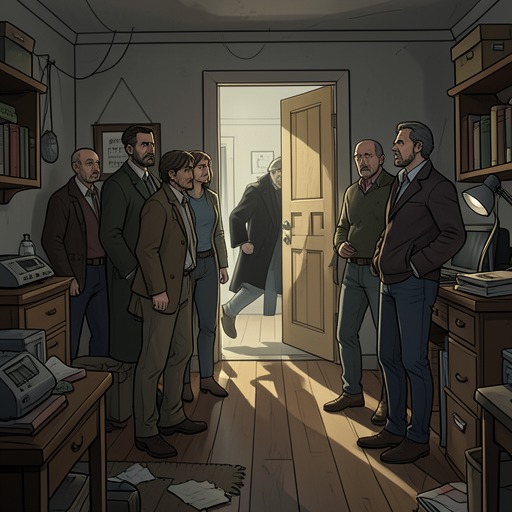
The diary repeatedly makes security visible through small, exact procedures. When Peter discovered that the warehouse door and the street door had been left open, he reported it to Pim, who went to the private office, tuned the radio to a German station, and locked the door. The residents followed their emergency rules: they did not wash or run water, kept quiet, dressed by eight, and avoided the bathroom. Kugler later learned that burglars had forced open the outside and warehouse doors with a crowbar, then searched the next floor when they found nothing worth taking. They stole cashboxes, blank checkbooks, and sugar coupons for 330 pounds—the Annex’s entire allotment. The break-in was not simply a threat to property; it exposed how easily intrusion into the business premises could endanger the people concealed above.
Suspicion within the building created a different kind of danger. Anne describes the warehouse worker Mr. van Maaren as curious and unreliable, and records that the office staff’s explanations for their movements might have attracted his attention. On one occasion Kugler arranged a brief visit to the Annex, but as he prepared to leave, Bep warned him that van Maaren was in the office. Kugler turned back and remained with the residents until half past one. He then removed his shoes and, despite having a cold, went in stockinged feet through the front attic and down the other staircase, taking each step slowly to avoid creaking boards. The detour took fifteen minutes. He reached the office from outside, while Bep had already removed van Maaren from the immediate situation. The episode shows how an ordinary visit could become a calculated escape route, with silence and timing serving as safeguards.
The pressure of maintaining that routine fell unevenly on the helpers. When Kugler was called up for a six-day work detail, the residents hoped he could obtain a medical certificate from a reliable doctor and present it to the City Hall in Hilversum. His absence threatened to leave Bep alone in the office; if she too had to stay home, the door would remain locked, and the Annex residents would have to be quiet enough not to be heard by the Keg Company. Jan was expected to visit briefly to check on them. The episode reveals how the safety of the hidden household depended on helpers’ health, work obligations, and ability to appear in public—not only on the strength of the concealed entrance.
Responsibility and the Weight of Hiding
By the residents’ second year in hiding, the diary distinguishes the helpers’ pressures from the residents’ unbroken confinement without diminishing either. Anne says that Miep bore the greatest burden through everything she did, while Kugler carried enormous responsibility for all eight people in the Annex. At times the strain was so severe that he could hardly speak. Kleiman and Bep also cared for the residents, but their own lives still included health worries, engagements, visits, and occasional outings; even brief intervals in ordinary life could relieve their tension. For the Annex residents, Anne emphasizes, the pressure had never lifted during their two years inside.
That burden became especially tangible after another security crisis prompted tighter rules. Dussel was assigned to work in the bathroom, Peter was to patrol the house between half past eight and half past nine, and he could no longer open his window after a Keg Company employee noticed it. The residents were told not to flush the toilet after half past nine. Kugler reproached them for carelessness, while Jan warned them not to go downstairs. A night watchman, Mr. Sleegers, was hired, and a carpenter from the underground was expected to turn the residents’ white Frankfurt bedsteads into a barricade. The group still had to determine whether Sleegers could be trusted, whether dogs would bark at a sound behind the door, and how to make the barricade. Kugler’s reprimand belongs to this wider pattern of constant adjustment: protection required vigilance from the helpers as well as obedience from those in hiding.
Arrest and Escape
The arrangement ended with the arrest of the eight people hiding in the Annex and two of their helpers, Kugler and Kleiman. Miep Gies and Elisabeth (Bep) Voskuijl were not arrested. The authorities took valuables and cash from the Annex, and Kugler and Kleiman were sent to a prison in Amsterdam. On September 11, 1944, they were transferred without trial to a camp in Amersfoort. Kleiman was released on September 18 because of his poor health and remained in Amsterdam until his death in 1959.
Kugler’s imprisonment continued into 1945. On March 28, as he and fellow prisoners were being sent to Germany as forced laborers, he managed to escape. The diary’s earlier scenes of hushed footsteps, locked doors, and improvised routes make that later escape resonate without making it seem inevitable: throughout the hiding period, survival had depended on finding a passage through danger, but no passage could guarantee safety. Kugler immigrated to Canada in 1955 and died in Toronto in 1989. His arc in the account links the concealed household’s daily survival to the outside world, while showing the cost borne by a helper who had to keep that connection open under mounting threat.