Christmas
Die, My LoveChristmas functions in the novel as a charged temporal marker rather than a comforting celebration. It gathers the family around food, domestic custom, and inherited expectations, yet repeatedly becomes associated with bodily danger, death, psychiatric crisis, and the Narrator’s alienation from the role of wife and mother. The holiday’s social promise of renewal is thus inverted: Christmas makes the household more visible, but it does not make that household safer.
Family Ritual and Seasonal Pressure
Christmas first appears against the practical rhythms of rural domestic life. The Narrator observes the family preparing for winter, with wood being chopped and ordinary people behaving like animals as they ready themselves for the cold season. The holiday therefore sits inside a broader seasonal logic of preservation and repetition: clothes are hung out, food is prepared, children are cared for, and the family performs the habits expected of a normal household. Yet the Narrator experiences these habits as a trap. She is educated and self-consciously detached from the local world, but she also sees herself as more animalistic than the foxes whose faces are stained red and held open by sticks. Christmas intensifies this contradiction between social respectability and instinctive violence.
The holiday also carries a grotesque association with inherited self-destruction. The Narrator recalls that her neighbour Frank fired the father-in-law's rifle into his own buttocks the previous Christmas, following what she describes as a family tradition extending through four generations. The incident is presented with cruel comic exaggeration, but its underlying structure is grave: Christmas becomes the occasion on which familial repetition reaches its most obscene form. A season conventionally linked with birth and continuity is shadowed by a lineage of suicide, while the Narrator wonders whether she herself belongs to a normal family or is instead an eccentric and deviant mother whose pregnancy may already be becoming another source of danger.
Christmas During Pregnancy
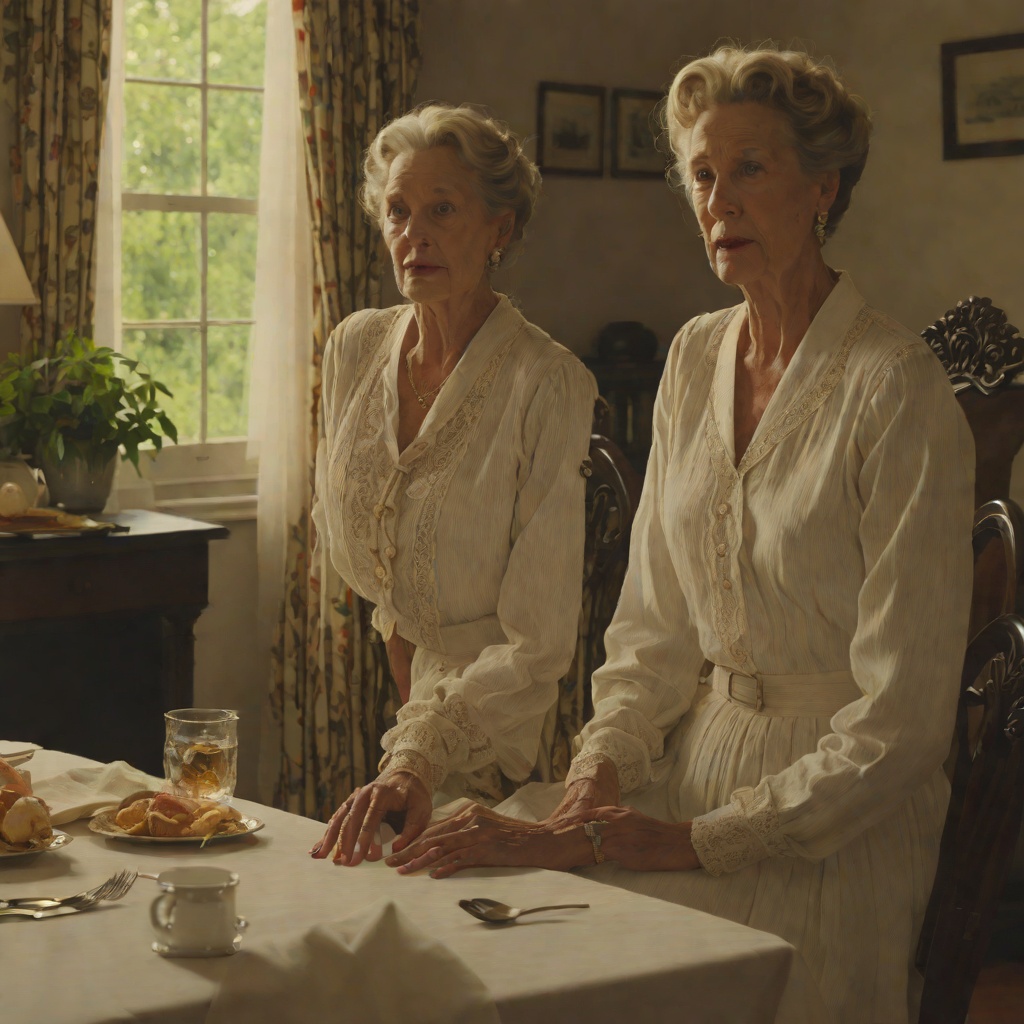
The Narrator’s clearest Christmas recollection is also her last memory of pregnancy. The Husband’s entire family has arrived from towns even more remote than the one where the household lives. Her stomach churns, the baby moves at an abnormal speed, and the assembled relatives silently hope that she will not need to be taken to the hospital before they finish their turkey-and-apple dinner. The ordinary meal becomes a measure of the family’s priorities: her distress is acknowledged chiefly as a possible interruption to their celebration.
She stands before the fire while containing an increasingly desperate internal motion. When someone offers her a seat and a glass of cool water, the gesture is treated as if it might neutralize her desire to die. The family’s response is caring in form but inadequate in substance. Water, seating, and supervision cannot reach the crisis beneath her body. Her bitterness expands into fantasies of escape from the family’s provincial environment, including a wish for artists such as Egon Schiele, Lucian Freud, and Francis Bacon as neighbours so that her son might learn there is more to life than sealed skylights and domestic routine.
The father-in-law's presence gives the Christmas gathering another layer of menace. Beneath the snow, he cuts the grass with his new green tractor; later he checks supermarket receipts, records each price, and verifies the total with a calculator. The Narrator sees in these actions the image of an average man convinced of his own exceptionality. His bedroom contains the father-in-law's rifle and cartridges, and he explains that he will load the gun and fire at the feet if trouble comes. The weapon transforms the family home from a festive refuge into a place organized around vigilance, masculine authority, and the possibility of sudden death.
The Mother-in-Law watches the Narrator throughout the day, unsure what else to do. At dawn she enters timidly with another glass of water and a green-and-white pill, but the Narrator throws the pill into the fire because she rejects its side effects and the prospect of antidepressant treatment. Christmas consequently reveals a family that responds to psychic suffering through small acts of management—food, water, medication, observation—without understanding the violence of the crisis. The Narrator can do little except embrace her womb and wait, turning pregnancy itself into both the source of obligation and the last enclosure of her endangered identity.
Death Inside the Celebration
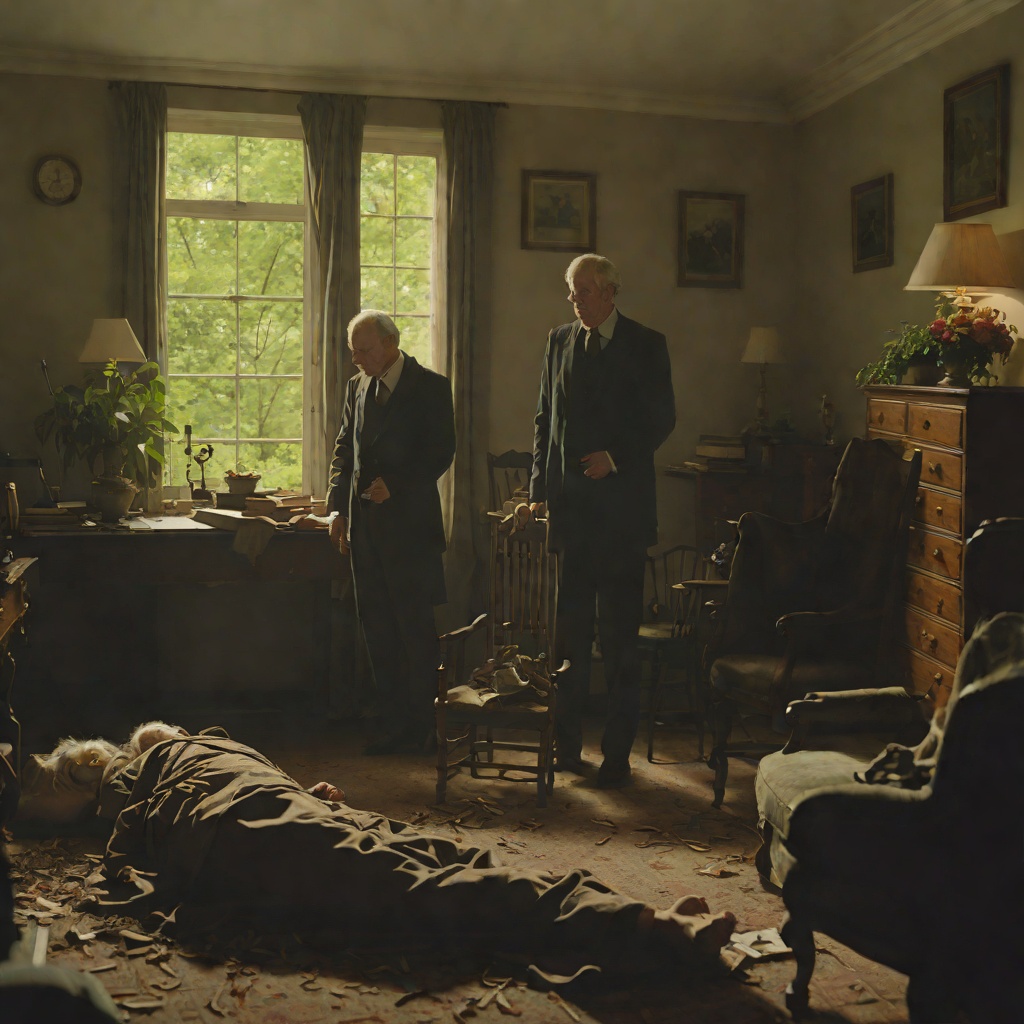
The holiday’s most decisive reversal occurs when the father-in-law dies in his sleep. Before going to bed, he tells the family that his grandson will follow in his footsteps; the statement is intended as a sweeping platitude, but after his death it becomes unbearable. The Narrator stands before his grave and remembers not an idealized patriarch but the exact image of his teeth, always hurting or being picked clean as he spoke. Death strips away the social fiction of the average man and leaves behind the stubborn physical details of a body.
At the funeral, some mourners cry while others maintain the respectful distance expected around a corpse. The Narrator embraces the Husband as their baby smiles at the graves, an incongruous response that collapses the boundary between family celebration, burial, and childhood innocence. She imagines the Mother-in-Law reopening the house, discarding her husband’s spectacles, smelling him in the rocking chair, cooking alone with the pans used for his fried eggs and porridge, and giving his socks to neighbours with the same size feet. These domestic details make widowhood an extension of Christmas labor rather than a clean break from it.
The Narrator’s imagined images of the Mother-in-Law are intimate and bodily: the old woman moves from bathroom to bed, hears the dead man’s voice, cough, and snore, and clings to his bedpan while struggling for breath after sliding a door shut or closing a skylight. The Mother-in-Law claims that her husband squeezed her hand just before dying, although the doctor identifies the movement as a reflex. Paradoxically, the father-in-law's death brings the two women emotionally closer for the first time. Christmas thus produces an unexpected relation through shared exposure to mortality, even as it confirms the household’s inability to keep death outside its rituals.
Christmas and Psychiatric Confinement
The period surrounding Christmas continues to govern the Narrator’s later breakdown. At the house, she sits apart from the others while leftovers from the Christmas holidays are served and the family gathers around the fire. She hears forks entering mouths and food being swallowed as she begins to lose her mind, though even the status of that loss remains uncertain to her, her man, and the doctors. The holiday meal is repeated as evidence of communal normality, but her exclusion from the table shows that the family can preserve its ritual only by leaving her outside it.
Her perception fills the house with death. It seems present in the fire, carpet, curtains, old furniture, silverware, flowerless vase, and umbrellas piled near the door. The baby is so small that he becomes lost among the sheets, like a tiny fish, while she imagines that everyone, even the children, will wear black. The sky becomes a velvet stage curtain concealing what lies beyond it. In this atmosphere, Christmas no longer marks a stable point in time; it becomes a suspended scene in which birth, burial, and anticipated mourning coexist.
The Narrator’s subsequent hospitalization makes the holiday’s social language even more starkly ironic. In the institution, reports circulate of a father killing his daughter during the Christmas holidays, while the Narrator is confined among male patients and surrounded by shaved heads, smoking, coughs, and heavy voices. Her Husband has shut her away with men, and the institution’s seasonal associations are stripped of domestic warmth. Christmas is now connected not only to the death of the father-in-law and the Narrator’s prenatal crisis but also to crimes that repeat the family’s underlying pattern of violence toward children and vulnerable bodies.
Narrative and Thematic Significance
Christmas compresses the novel’s central oppositions into one recurring temporal frame. It promises family unity but produces isolation; it celebrates birth while recalling suicide and death; it invokes generosity while exposing the limits of practical care; and it organizes communal memory while the Narrator experiences time as stagnation and descent. Its repetitions resemble a ritual that cannot restore order. Each return to the holiday brings not reconciliation but another disclosure of what the family’s rituals conceal.
The holiday also sharpens the novel’s critique of normality. The family eats together, prepares for winter, monitors the pregnant woman, mourns the dead, and maintains inherited customs. From outside, these actions could constitute an ordinary domestic tableau. From within the Narrator’s fractured perspective, however, they become signs of mechanized love and social coercion. Christmas makes the normal family most sinister precisely because its forms remain intact while despair, weaponry, death, and psychiatric collapse occupy the same rooms.
As a narrative device, Christmas joins delayed memory to immediate crisis. The Narrator recalls the last Christmas of her pregnancy only after later events have given those scenes their full weight; the remembered meal, the rifle, the glass of water, the pill, and the father-in-law's final words acquire meaning retrospectively. The holiday therefore functions as a wound that returns through images and repetitions rather than through orderly explanation. Its significance lies in this unstable return: Christmas is the family’s official season of continuity, but in the Narrator’s account it becomes the clearest recurring emblem of continuity’s failure.