Crashing through the glass door
Die, My LoveCrashing through the glass door is the novel's central act of self-destruction and rebirth, the moment the narrator's accumulated rage and despair finally erupt into physical violence against herself. It is the event that transforms her from a woman who merely fantasizes about cutting herself to one who actually does, sending her through the patio door of her rural home and into the hospital, where she is treated for dozens of small cuts. The crash is both a literal breaking of the barrier between her inner world and the outside, and the symbolic shattering of the 'normal family' life she can no longer sustain. It marks the point of no return in her descent into madness, yet it also becomes the hinge on which her story turns, leading to her institutionalization and eventual release.
The Fantasy of the Knife
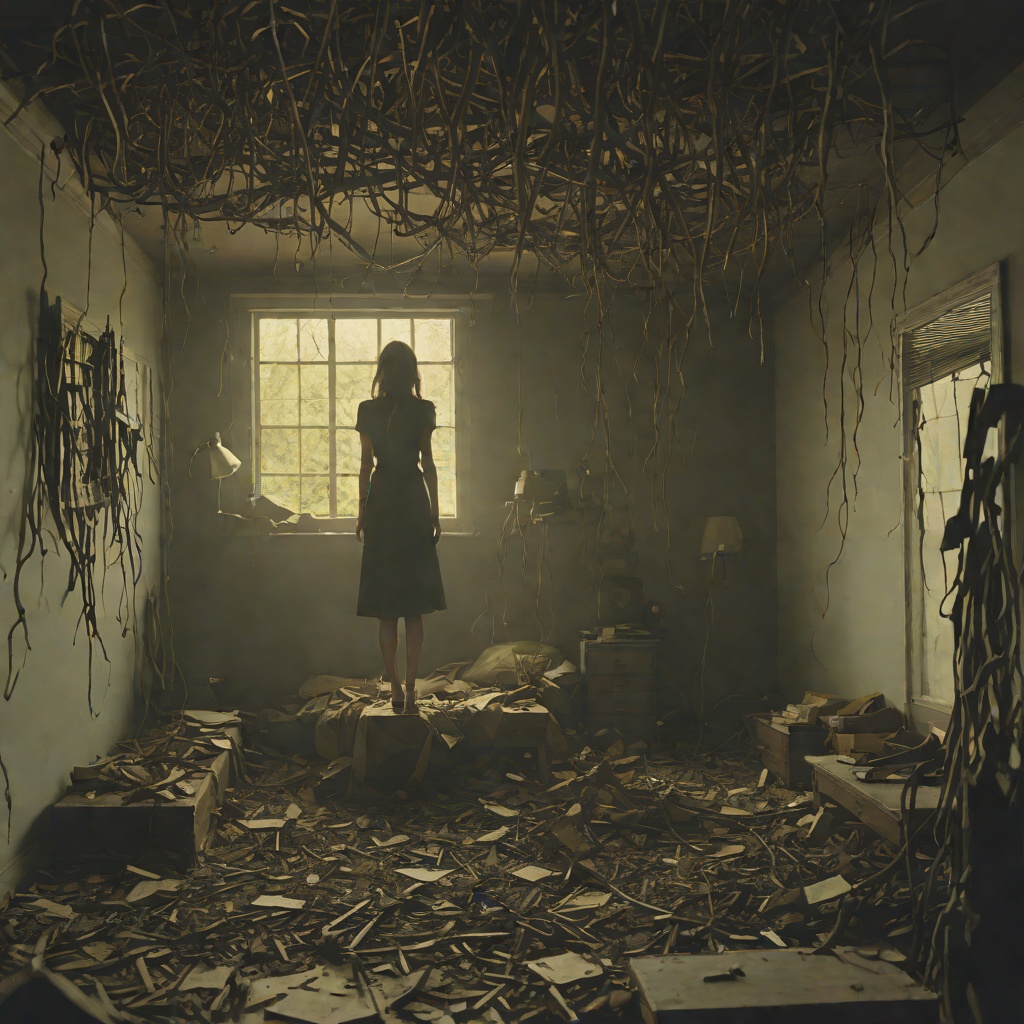
Long before she ever touches the glass, the narrator is haunted by the image of cutting herself. Lying in the grass among fallen trees, with the sun on her palm, she imagines it feels like a knife she could use to bleed herself dry with one swift cut to the jugular. This fantasy is not an isolated thought but a recurring obsession. In her son's room, lit by a faint blue light, she watches her nipple satisfy the baby and thinks of Isadora Duncan, the dancer who was strangled by her own scarf. She toys constantly with the idea of going right through the glass of the patio doors and cutting every inch of her body, always aiming to pass through her own shadow. The glass door becomes the physical threshold of her self-destruction, the object she approaches again and again, stopping herself just before impact. The knife she dreams of is the same instrument she will later see reflected in her hand after her release from the institution, a dagger that appears whenever she thinks of the punishment she endured instead of the medical care she needed.
The First Crash
The first time she actually crashes through the glass is not a calculated act but an eruption of pure rage. It happens after a violent confrontation with her husband, who has been interrogating her about the radiologist, the man with black hair who has 'poisoned' her. The argument escalates from the boring speech about jealousy into kicks, blows, and banal insults: idiot, piece of shit, crazy bitch. She runs outside, and for the very first time, she crashes straight through the glass. Red all over, she crosses the pastures as though they were a park, trampling on rabbits and barn owls as she goes, or perhaps they are trampling on her. She lies down in her kennel, her cave among the pruned trees, and remains sprawled on the ground with wet socks and cold, dried blood stuck to her body. The long night begins, looking at the graves until there is sun in the sky, brushing her hair and sleeping under the reflection of the tombstones, reading the names of dead people she never knew. This is the moment she declares she has been dead all along, since forever and since even before being born, and for the whole time her husband has been shouting with jealous rage.
The Hospital and the Shards
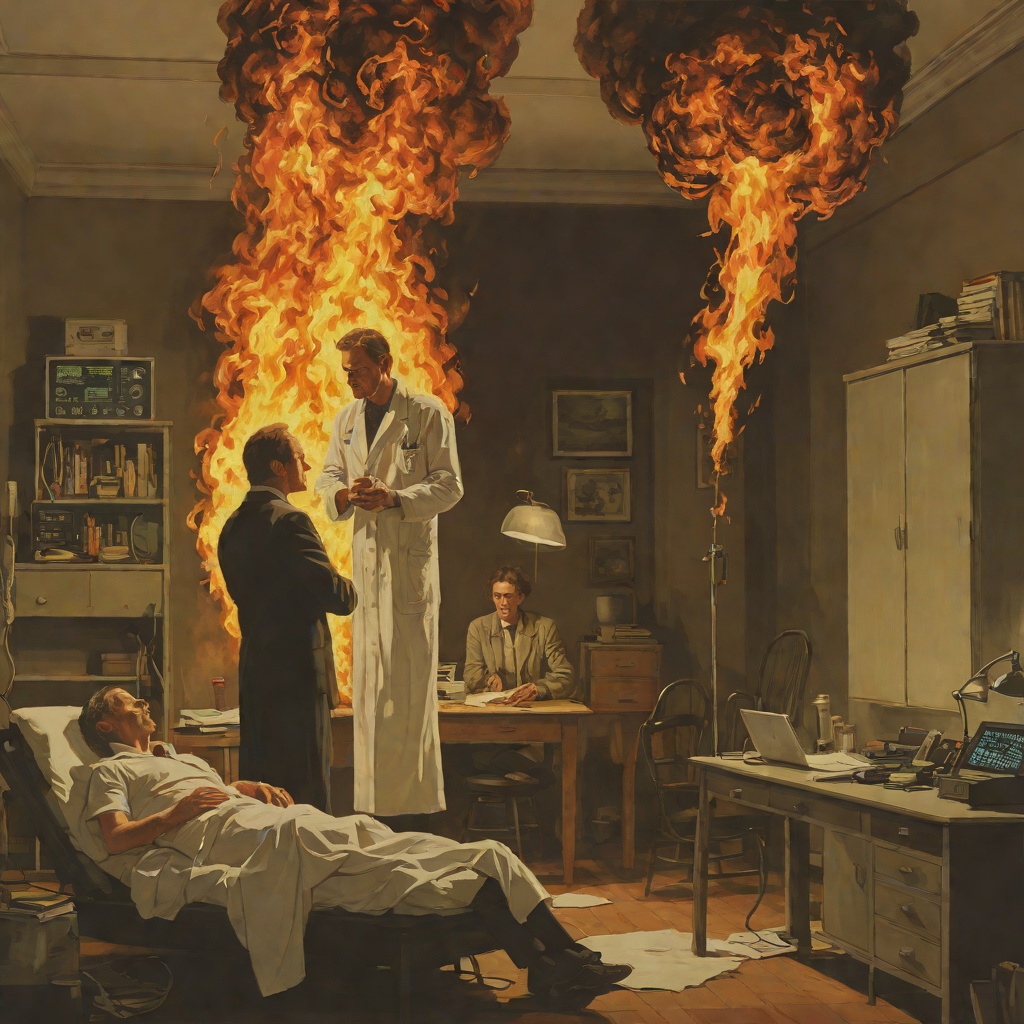
After the crash, the narrator is brought to the hospital straight from the field, unconscious. It is the first time she has fainted and been lost to the world. For days, the nurses treat her cuts, which cover her shoulder blades, her chest, her belly, and her neck. They are only small cuts, but every new nurse stands still for thirty seconds and stares at her, making sure she notices. She insists it is not what they think, but it does not matter. They shine a light on her lying on the hospital bed and remove tiny shards, bits of blades, splinters, pieces of crystal, tiny mirrors, petals, and slivers of glass from her body. First a small ulcer appears, and the next day, or the day after, a tiny sparkle emerges. They disinfect her and give her painkillers. She is told to walk slowly, to avoid running at all costs, and to keep her feet raised when she can, so that she will have the instep of a zebra. The nurses warn her not to pull open her scabs, because many patients pick at their wounds. Her husband comes in saying knock knock and pretends to hide behind the flowers. He kisses her, avoiding the gashes on her face that will not form scabs. She can only think to say that she did not touch him, not a hair on his head, and he replies that he does not know what she is talking about. When he reaches out to stroke her, his hand falls exactly, precisely, on the cut along her neck.
The Aftermath and the Return
The crash leaves permanent marks on the narrator's body and mind. After her release from the institution, she returns to the house and sits on the sofa facing the fireplace, where the reflection of the first knife she ever dreamt of is in her hand again. She reflects that if instead of being punished she had been admitted on medical grounds, if instead of a place to rest it had been a real mental asylum, she would not have this dagger in her hand. Scared, she moves towards the glass door she once crashed through, which now has a mosquito mesh on it. She opens the door and runs outside to look for the stag, needing to see the tips of its antlers. The glass door, once the barrier she shattered, is now repaired and screened, but the memory of the crash remains. The incident also echoes in her later violence, as when she throws a wooden chair at the mirror, wrenches the door off the wardrobe, and tears the shutters off the window in a fit of rage, her cuts pulling tight as she runs spastically. The crash is the origin of these scars, the physical proof of her breakdown that she carries with her even as she tries to return to the life of a mother and wife.
The Symbolic Significance
The glass door crash is the novel's most powerful symbol of the narrator's condition. It is the moment when her internal suffering becomes external, when the fantasy of the knife becomes the reality of the shards. The glass itself is a barrier between her and the world, between the 'normal family' she is supposed to inhabit and the madness she feels inside. By crashing through it, she breaks that barrier, but she also wounds herself in the process. The shards that remain in her body, the tiny mirrors and petals and slivers of glass that the nurses must remove, are the physical remnants of her shattered self. The crash is also a form of communication, a desperate act that finally forces her husband and the medical system to pay attention to her pain, even if they misunderstand it. It is the event that leads to her institutionalization, her 'punishment' as she calls it, and ultimately to her release. The glass door, repaired and fitted with a mosquito mesh, stands as a reminder of what she did and what she became, the threshold she crossed and can never fully return from.