Fox
Die, My LoveFox is not presented as an individualized animal character but as a recurring nonhuman presence through which the novel unsettles the distinction between human reason and animal instinct. In The Narrator’s rural surroundings, foxes appear as damaged, half-dead creatures, while the Radiologist turns the fox into an image of his own uncontrolled pursuit. The animal therefore occupies two linked positions: an actual presence within a harsh countryside and a figure through which human beings recognize the violence, appetite, and instability they prefer to call merely animal.
Appearance in The Narrator’s Rural World
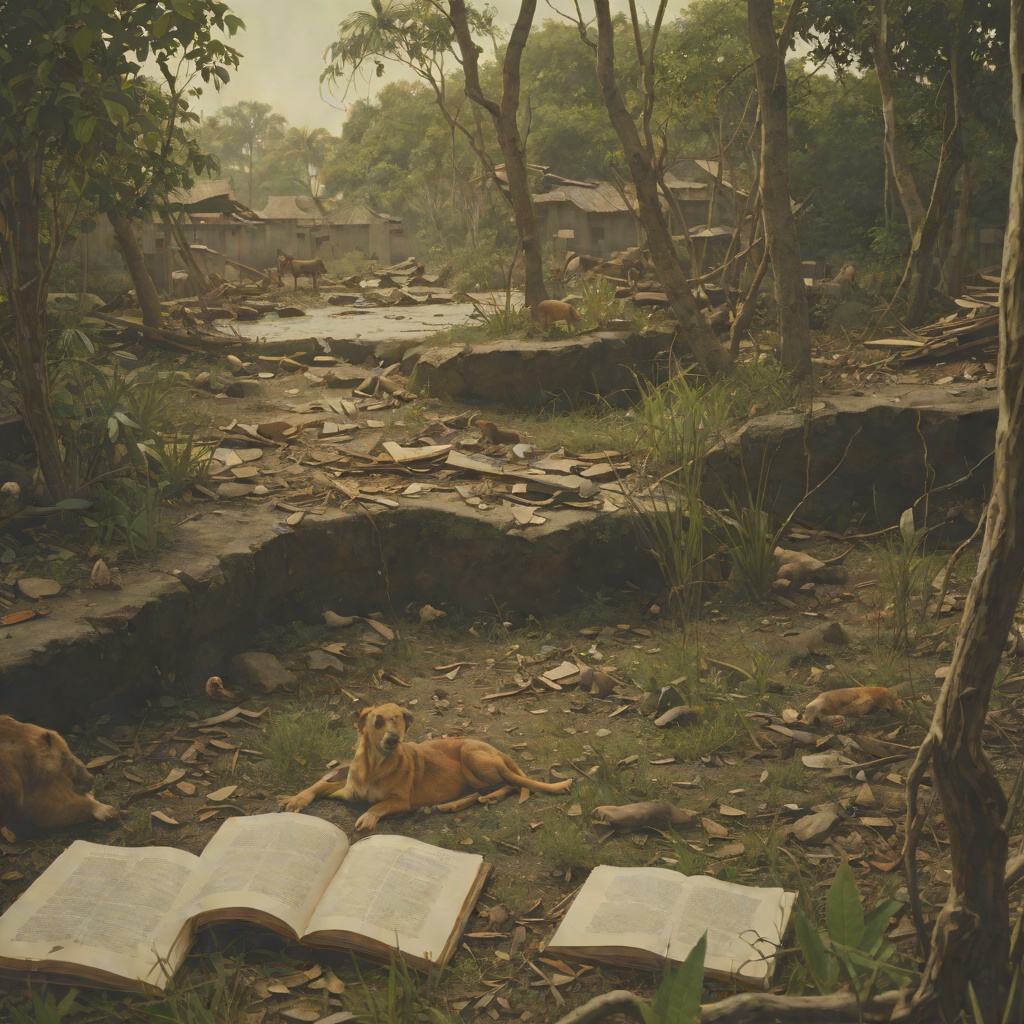
The Narrator encounters foxes while hiding among fallen trees and the underbrush near the house. Her view is unsentimental and grotesque: the foxes are described as “half-dead,” with faces stained red and sticks propping their mouths wide open. The image belongs to the same landscape as woodcutting, livestock, farm equipment, poultry houses, and hunting dogs, a world in which people prepare for winter and live close to animal life. Yet the foxes are not safely contained as scenery. Their damaged bodies become evidence of a violent environment in which death and survival coexist without moral explanation.
The Narrator immediately folds this sight into a judgment about humanity. She contrasts herself as an educated university graduate with the rural animals, only to conclude that she is “more of an animal than those half-dead foxes.” The comparison reverses the customary hierarchy in which education, domestic responsibility, and social respectability distinguish a person from instinctive nature. Foxes thus function less as a simple symbol of savagery than as a challenge to the idea that civilization has made the human subject coherent or morally superior.
Animality and Self-Recognition
The fox image appears while The Narrator is struggling with violent thoughts toward The Husband and The Son. She has imagined using the knife to bleed herself dry, watched the two naked family members playing in the paddling pool, and then dropped the knife before returning to household work. Against this sequence of murderous fantasy, laundry, baking duties, and maternal obligation, the foxes give animality a material form. Their exposed mouths and blood-marked faces externalize a world of bodily danger that The Narrator simultaneously fears, inhabits, and claims as her own.
The force of the comparison lies in its paradox. The Narrator does not say that the foxes are more vicious than she is; she says that her supposedly cultivated identity fails to protect her from animal impulse. Her university education and position as the person responsible for The Son’s upbringing stand beside images of blood, sex, hunger, and self-destruction. The foxes make that contradiction visible without resolving it. They are not granted an independent speaking consciousness, but neither are they reduced to a comforting emblem of innocence. Their damaged physicality remains stubbornly concrete, and the human interpretation grows out of that disturbing concreteness.
The Radiologist as a “Crazy Fox”
The fox returns through the Radiologist’s account of his fixation on The Narrator. He is a married radiologist, a university graduate, a father caring for a disabled daughter, and, by his own description, an easy-going man of the house. He lives within the routines of marriage, work, childcare, and domestic order. Nevertheless, the sight of The Narrator near her front gate produces an intrusive desire that follows him home, into the presence of his wife and daughter, and even into acts of caregiving.
On the roadside, after pulling over with the hazard lights on, the Radiologist imagines himself as “a crazy fox on the roadside.” The phrase converts desire into pursuit and makes the rural animal world the language of his loss of control. The fox is not simply a predator in this passage; it is a creature caught at the edge of the road, displaced from an orderly route and driven by an appetite that the Radiologist can neither domesticate nor ethically integrate. His desire is described as an image that grows inside him, causes chaos, and poisons him, so the fox becomes the shape taken by an obsession that has crossed from fantasy into bodily compulsion.
Desire Beyond Civilized Roles
The Radiologist’s fox comparison gains force from the contrast between his public identity and his private imagery. He presents himself as a man who touches his wife’s hair, makes love slowly, respects her moods and menstrual cycle, and waits until their daughter is asleep. These details establish a controlled, considerate version of masculinity. Against it comes the roadside vision of The Narrator among thorns, the “crazy fox,” and the wish to possess her body with violent intensity. The animal image exposes the inadequacy of the respectable self-description: social roles can organize conduct, but they do not eliminate desire’s disruptive force.
The two fox images also mirror one another across the alternating perspectives. The Narrator sees herself as more animal than the dying foxes because domestic normality cannot contain her thoughts of the knife and her resentment of motherhood. The Radiologist sees himself as a fox because marital respectability cannot contain his fixation on a woman he barely knows. In both cases, animality is not an opposite of humanity waiting outside the social world. It is what surfaces inside educated, married, parental subjects when language, duty, and self-command fail to master the body.
Narrative and Thematic Significance
Foxes help create the book’s blurred boundary between human beings and other living creatures. The Narrator observes that people preparing for winter resemble animals, and the comparison turns the countryside into a shared habitat rather than a stage reserved for human drama. At the same time, the foxes’ mutilated appearance and the Radiologist’s self-image as a roadside animal show that this shared world is not pastoral. It is structured by exposure, appetite, injury, and the possibility of sudden violence.
The animal is therefore both literal and figurative without being exhausted by either function. The foxes remain bodies in the landscape, marked by blood and near death; they also become figures through which the novel tests the limits of family identity, education, marriage, and medical professionalism. Their recurrence links The Narrator’s self-loathing to the Radiologist’s obsession, revealing a common instability beneath their different lives. Fox signifies not a fixed essence but the point at which supposedly civilized people recognize that their identities are porous, bodily, and vulnerable to forces they cannot fully name.