I'm a mother, full stop. And I regret it
Die, My Love“I'm a mother, full stop. And I regret it” is both a declaration and its immediate undoing. The first clause accepts motherhood as an unavoidable fact; the second rejects the emotional and moral story that is supposed to accompany it. Spoken from inside relentless childcare, the expression names the narrator’s crisis as a conflict between being responsible for a child and being unable to experience that responsibility as love, fulfillment, or even tolerable daily life.
Identity and Form
The expression is built from two sharply opposed movements. “I'm a mother” sounds like a statement of identity, while “full stop” gives it the force of a verdict: there is no qualification, appeal, or continuation. Yet “And I regret it” immediately reveals that the finality belongs less to pride than to entrapment. The phrase therefore performs a contradiction. It makes motherhood sound settled and absolute while exposing the speaker’s inability to inhabit the role as a stable self.
Its syntax also dramatizes the narrator’s struggle with language. She can formulate the thought internally, but she cannot openly direct it toward anyone. The regret exists as a prohibited sentence, one that has no acceptable addressee and therefore remains trapped within the maternal scene itself. The expression is not a public manifesto; it is a private act of self-recognition that the surrounding family order cannot safely receive.
Immediate Domestic Context
The phrase arises while the narrator is caring for The Son through an episode of escalating physical need. She has needed to use the toilet since lunchtime, but The Son’s crying, whining, clucking, and grousing prevent her from leaving him. He sits on her lap, reaches into her plate of cold leftovers, plays with a chicken bone, and fills her mouth with saliva and crumbs when she tries to manage him. When he chokes after being given another biscuit too quickly, the ordinary routines of feeding and soothing become charged with danger and guilt.
Her language reduces motherhood to mechanical continuation. She reports that she is a mother “on autopilot,” lifting The Son and producing a fake smile while clenching her teeth. The bodily details make the role less sentimental than invasive: The Son hangs from her shoulder, attaches something viscous to her bellybutton, removes his nappy, unbuttons her shoes, and chews the leather straps. The narrator’s regret is thus tied to the collapse of bodily boundaries. Motherhood has made her body available to another person’s hunger, weight, saliva, noise, and unpredictable actions, while leaving her unable to perform even the smallest private act.
Maternal Identity and Isolation
The expression becomes more severe because the narrator cannot say it to The Son, who is the person most directly implicated, and cannot imagine another sympathetic listener. She has brought him into the world and considers that fact, by itself, the extent of what she owes him. This is a deliberately stripped-down account of maternal obligation: birth establishes responsibility, but it does not generate the emotional attachment that cultural expectations presume.
Her attempt to summon The Husband confirms the isolation behind the phrase. She calls for immediate reinforcement and insists that he must come home because she cannot continue until night, but he responds as though her emergency were something that could be postponed or misunderstood. After hanging up, she remains near the telephone with The Son, still hoping he might call back. The expression therefore records not only regret about motherhood but also the absence of a dependable adult structure around it. The narrator is left alone with a child she cannot relinquish and a partner who does not recognize the urgency of her distress.
Bodily Crisis and Recurring Violence
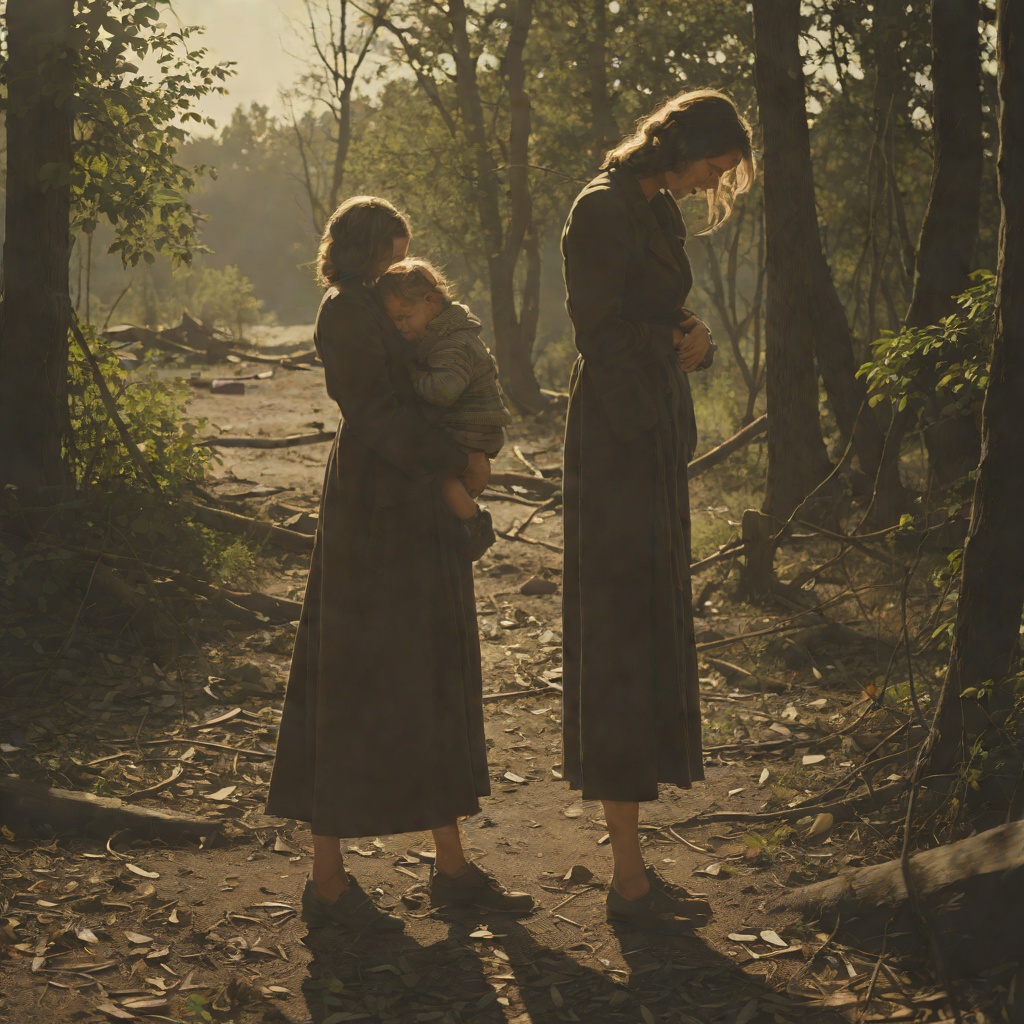
The statement belongs to a larger pattern in which maternal life is represented through abjection, injury, and unstable bodily matter. Earlier, the narrator hides in underbrush while The Son and The Husband splash naked in a paddling pool, imagining a knife that could open her jugular. She does not kill them, drops the knife, and performs domestic normality by hanging their socks and shirts on the washing line. The contrast between violent fantasy and carefully pegged laundry shows how the maternal and wifely role is maintained as an outward performance even when the inner self is disintegrating.
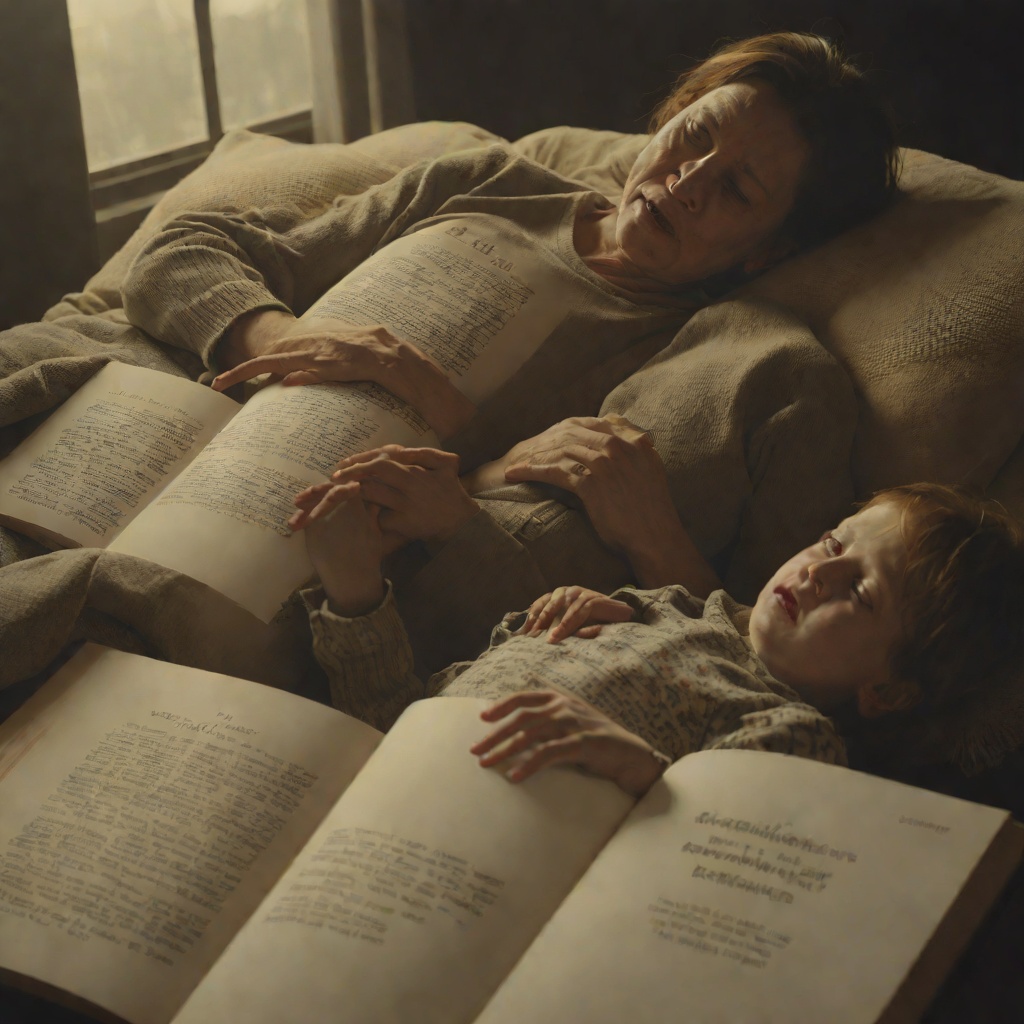
In another episode, she breastfeeds The Son in his room and watches him become heavy and inert after burping. Milk is described as carrying air from her chest and insides, turning nourishment into an exchange that passes through her body and exhausts it. She then repeatedly imagines crashing through the sliding glass door and cutting herself. The maternal body here is simultaneously a source of life and a surface threatened by fragmentation; the wish to escape through glass echoes the sense that the self has become physically permeable and no longer wholly its own.
That crisis later becomes literal injury. The narrator is brought to the hospital unconscious from a field, with small cuts across her shoulder blades, chest, belly, and neck. Nurses remove shards, splinters, pieces of crystal, tiny mirrors, petals, and slivers of glass from her body. The imagery transforms emotional division into a material condition: the body carries reflective fragments, as though the self has been broken into hostile surfaces. When The Husband visits and asks about the condoms found elsewhere and his repeated trips to McDonald's, the injured body also becomes the site of marital accusation. Maternal regret cannot be separated from sexual resentment, jealousy, and the suspicion that domestic abandonment has helped produce the collapse.
The Child, the Family, and the Meaning of Regret
The narrator’s relationship with The Son is not simply defined by rejection. She watches him closely, recognizes his vulnerability, and worries about choking, yet she also describes him as a “tiny conscienceless body” and “tiny ignorant mind.” When The Husband cuts wood beside The Son’s buggy, The Son watches the falling pieces and smiles at the particles in the air, mistaking them for flakes of dark snow. The narrator sees this innocent pleasure while feeling that she herself is coming apart, creating a painful asymmetry between the child’s uncomprehending contentment and the mother’s awareness of the family’s violence and falseness.
The phrase also stands against the family’s demand for normality. The narrator imagines The Son expecting a normal mother whose first kindergarten drawings will be received by her, even as she believes she is too far away from him to occupy that image. In the same world, her father-in-law’s death makes every domestic object seem saturated with mortality, and the family gathers around meals, fires, graves, and inherited roles that are supposed to preserve continuity. Her maternal declaration breaks that continuity from within. It admits that the family role exists, but refuses to claim that existence as a blessing.
Narrative Significance
As an expression, “I'm a mother, full stop. And I regret it” condenses the book’s tension between social labels and lived experience. The phrase is unusually direct amid a narrative that moves through hallucinated images, bodily metamorphosis, violent impulses, and abrupt shifts between domestic routine and catastrophe. Its plainness is part of its force: after the grotesque details, the sentence offers no symbolic shelter. It identifies the role and then states the forbidden consequence.
The expression is also a form of speech that acts upon the narrator’s identity. By naming herself as a mother and immediately naming regret, she refuses the idea that motherhood automatically supplies a coherent self, moral innocence, or emotional fulfillment. The words do not solve her predicament; they sharpen it. They leave her still responsible for The Son, still unable to escape the house or obtain help, but no longer able to pretend that the prescribed identity explains what she feels. In that sense, the full stop is both a boundary and a failure of closure: the sentence ends, while the maternal crisis continues.