Imprisonment
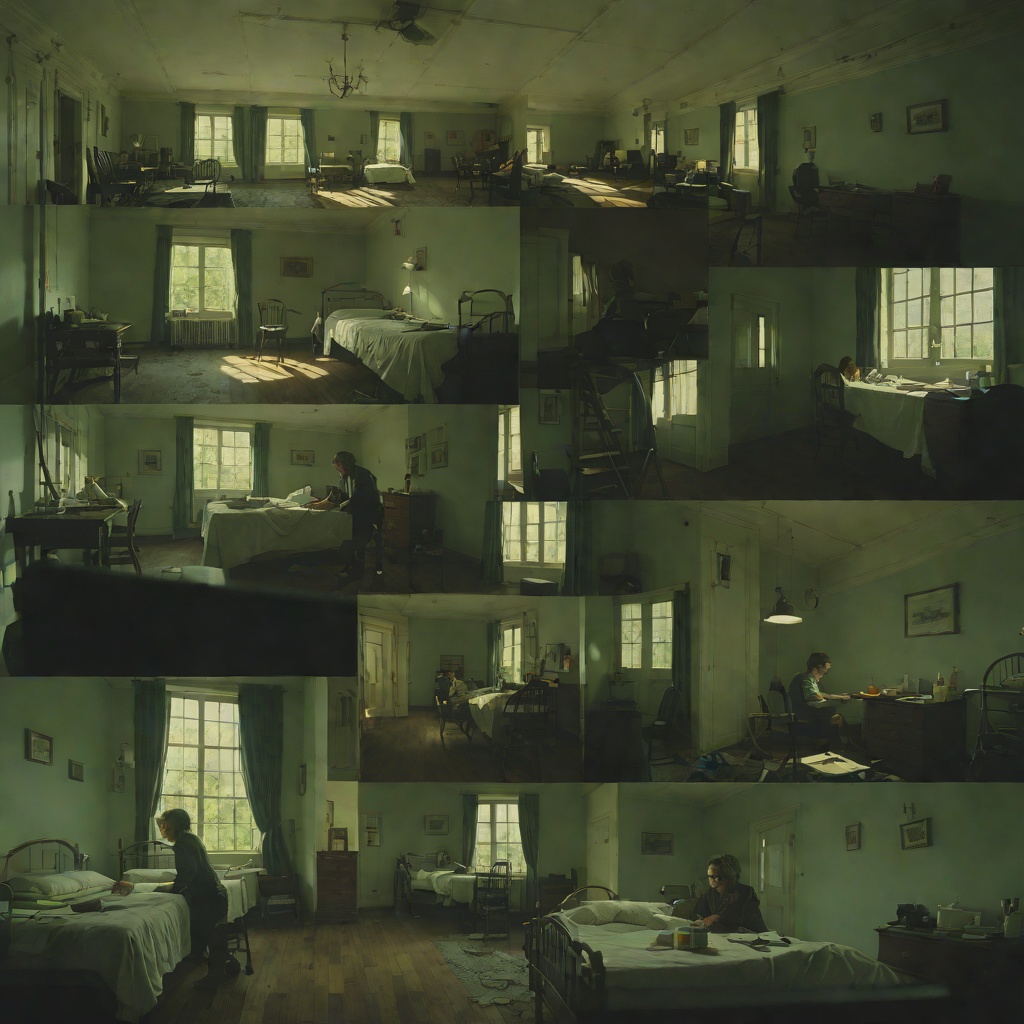
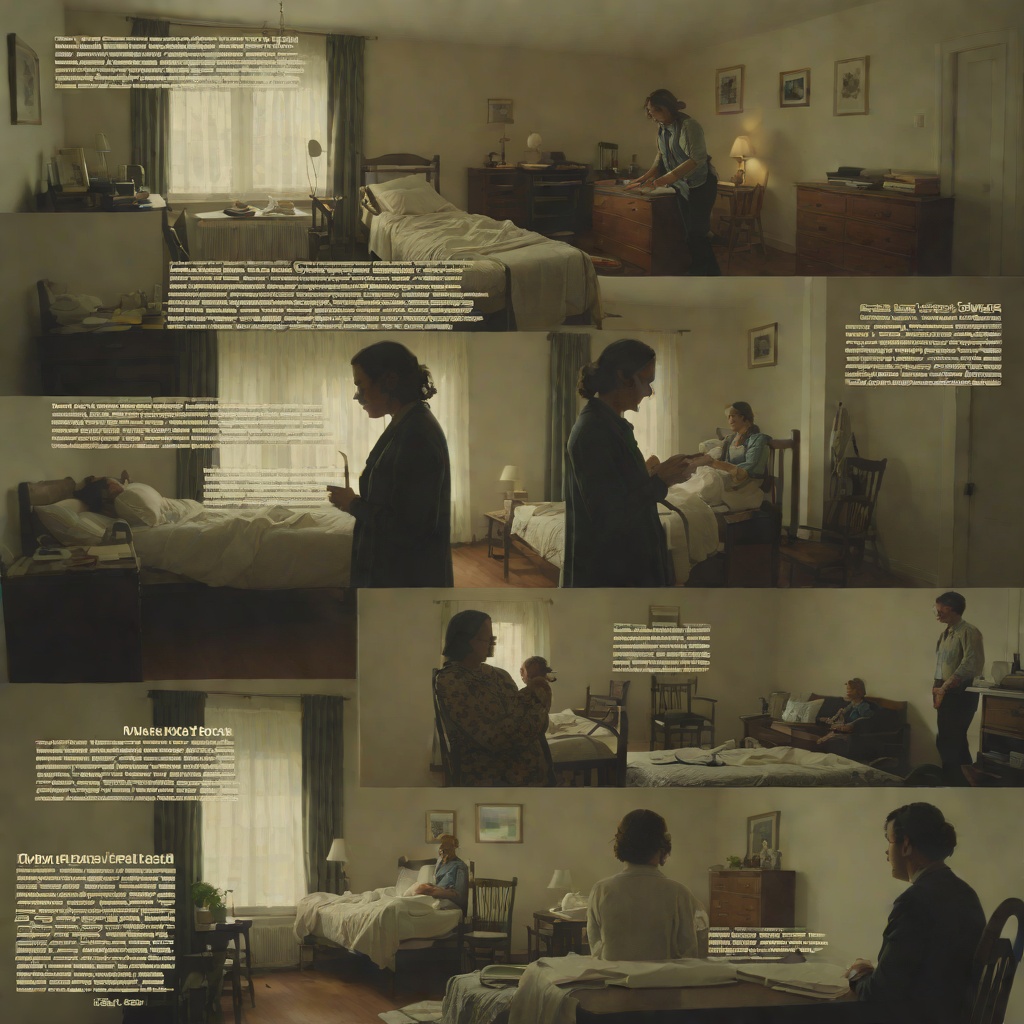
Die, My LoveImprisonment in the novel is not limited to locked doors or psychiatric admission. It names the condition in which the Narrator experiences domestic life, motherhood, marriage, language, and even her own body as forms of enclosure. The psychiatric institution makes that condition visible by giving it an architectural form, but the narrative repeatedly shows that confinement began outside it and survives after institutional release.
Domestic and Bodily Confinement
The earliest form of imprisonment is the family scene that is supposed to represent ordinary happiness. Hidden in the underbrush near the house, the Narrator watches the Husband and the Son naked in a heated paddling pool while she imagines a knife capable of bleeding her dry. She asks how a weak and perverse woman who dreams of violence can be the mother and wife of these two people, then drops the knife and hangs out their socks, underwear, and shirts as though nothing has happened. The laundry becomes a performance of normality: domestic work conceals a crisis that the family cannot see.
The pressure of motherhood is made physical through feeding, cleaning, and bodily exposure. In the Son’s room, the Narrator watches her nipple satisfy him while the Husband smokes outside at regular intervals. The baby chokes on her milk, and she burps him, swaddles him in her scarf, and lays him down as a dead weight. Air circulates through milk, chest, and insides, turning care into an image of involuntary entrapment within the maternal body. She repeatedly considers crashing through the glass and cutting herself, yet stops before impact and slides the door open instead. The threshold remains available, but crossing it does not free her: outside, the Husband urinates beside the house and invites her to look at the stars, returning her to an intimacy she cannot inhabit.
The Narrator’s imprisonment also appears as a failure of language. She walks along a dry, dirty-green riverbed trying to translate her state of imprisonment, turning over a thousand words without finding the right one. The effort is dismissed by the domestic demand to exercise, stay busy, and perform useful activity. Her Mother-in-Law measures her condition through movement and routine, while the Narrator experiences it as a problem of consciousness that no vocabulary can adequately contain. The contrast establishes two incompatible definitions of captivity: one imposed by the body’s surroundings and one endured within the mind.
Institutional Confinement
The psychiatric institution converts an already diffuse condition into an official placement. The Husband and the Son drive the Narrator through the hills to a building described as a pile of uneven stones with a chimney, where she imagines toast with plum jam made by disturbed inpatients, work in a vegetable garden, craft workshops, narrow mattresses, nightmares, and half-smoked cigarettes. Her imagination turns the institution into a strange honeymoon and a settlement among people in freefall, but the arrival abruptly strips away that fantasy. Staff seize her arms, push her forward, and shut her away in a hallway lined with closed doors while the Husband and the Son drive off, waving goodbye.
The institution presents itself as freedom under supervision. A doctor tells the Narrator that she may do as she pleases and is free to leave whenever she wishes, describing the place as merely calmer than other places. Yet the surrounding circumstances contradict this language. The Husband has paid for her to be there, the institution controls the terms of her stay, and the family’s departure leaves her in a space whose open permissions cannot cancel its practical isolation. The promise of voluntary freedom therefore becomes one of the novel’s sharpest institutional ironies: confinement is most effective when it describes itself as care.
The Narrator’s body is inspected and managed within the hospital system before and around this institutional experience. Nurses treat cuts across her shoulder blades, chest, belly, and neck, remove shards of crystal and glass, disinfect the wounds, administer painkillers, and instruct her not to pick at the scabs. She has been brought in unconscious from a field and is told to walk slowly, avoid running, and keep her feet raised. Medical treatment stabilizes the body while also making it an object for repeated observation; each new nurse stands still and stares at her for thirty seconds to ensure that she notices. Her wounds are treated as evidence of abnormality, while her account of them remains difficult for others to accept.
Surveillance, Discipline, and the Family
Institutional control continues through professional interpretation. After a counselling session with the Husband, a professional tells the Narrator that the Husband feels powerless before an unknown man who resembles a bulldozer, that the atmosphere in the house is becoming foul, and that the Husband wants her to remain another week. These decisions have been discussed behind her back. The Narrator calls the arrangement being grounded, a phrase that joins psychiatric admission to childhood discipline and removes any pretense that the institution is merely a neutral refuge.
Her response exposes the unstable boundary between self-control and coercion. She walks through the institution with a loaded gun, raises it as she passes along the hallway, and uses her index finger to mime pulling the trigger. The professional follows her through glass doors, asks her into his office, and locks the door behind her. She sees inpatients chasing ducks behind a beige curtain while he urges her to acknowledge responsibility and reconsider her role as wife and mother. In the encounter, the institution answers psychic extremity with procedure, confinement, counselling, and the demand for confession. The Narrator briefly agrees to stay another week and lets her hand return from the shape of a revolver to its ordinary five-fingered form, but this apparent compliance is a performance rather than a settled transformation.
Family life remains the institution’s external counterpart. While confined, the Narrator imagines the Husband and the Son naked in the pool, playing with a hose, pulling vegetables from the garden, eating ice cream beneath the moon, and naming stars together. She imagines the Father teaching the Son while the Son points and the Father pushes him on a swing. The fantasy is tender in its details but devastating in its conclusion: she sees them gradually forgetting her that night and the next. The institution thus intensifies rather than creates her exile, because separation allows the normal family to appear as a closed unit from which she has been removed.
Injury, Rage, and the Limits of Release
The Narrator’s confinement is repeatedly expressed through violent contact with barriers. After lying on the lawn and yanking out grass, she destroys a bedroom mirror, tears a wardrobe door from its hinges, and removes the shutters from the window. Blood runs down her legs, and she interprets the clot not as another pregnancy but as the remains of her body. Nearby, the Husband cuts wood beside the buggy while the Son watches the falling pieces and smiles at what he takes to be dark snow. The scene places the child’s innocent attention beside the mother’s disintegration and makes the family setting itself feel like a mechanism that cannot register her collapse.
The crisis continues as a struggle against every available form of containment. A cushion offered by the Husband cannot help; red boxing gloves from his adolescence are likewise rejected. The Narrator does not want protective equipment or a ring but wants her hands to become bones firing in every direction. Sexual contact follows, yet desire is explicitly absent from her cries. The baby remains in the buggy beside the chopped wood, reaching toward the chainsaw, while the Husband opens her legs and the Narrator longs instead for a white room with sea air. Her body is simultaneously the site of marital access, maternal responsibility, injury, and imagined escape, so that no single action can be separated from imprisonment’s wider structure.
The hospital scene makes this bodily enclosure literal. Tiny shards emerge from ulcers and scabs as if the Narrator’s skin has become a container for glass, mirrors, petals, and splinters. The treated body is not simply injured; it is made strange to itself, impossible to see whole, and turned into a surface on which others inspect their assumptions. The medical staff’s instructions may prevent further harm, but they also reduce freedom of movement and place the Narrator under continuous discipline. Treatment therefore offers survival without resolving the conditions that made survival feel intolerable.
Release and the Return of Confinement
When the Narrator is released, the journey home is staged as a celebratory return. The Husband and the Son greet her, the Son has grown older and learned new words, and the Husband jokes that her departure will finally allow the family to live in peace. They drive along the river, open the convertible roof, and let the Son throw stones into the water while the Narrator warns that the wind could carry him away. The landscape that once separated her from the family now becomes part of a carefully managed homecoming, but the danger remains visible in the child’s disregard and the Husband’s failure to intervene.
The house appears renewed, with a microwave displaying a flashing time, a flowered tablecloth, and a new cordless telephone with a notepad beside it. Its brightness does not signify repair. Sitting before the fireplace, the Narrator sees the reflection of the first knife she ever dreamed of in her hand again. She reasons that medical admission to a real mental asylum might have been different from being punished in a place to rest, but the distinction offers no practical rescue. The glass door previously associated with self-destruction now has mosquito mesh; even the barrier has been modified rather than removed.
Release consequently ends in renewed pursuit of the Stag, whose antler tips the Narrator hopes to find beyond the door. Her longing for the animal contrasts with the domestic and institutional identities imposed on her as wife, mother, patient, and danger. Imprisonment persists because the return to the house restores the same pressures that the institution temporarily displaced. The novel’s decisive reversal is that discharge is not freedom’s conclusion but proof that confinement has no single location: the locked institution is only the most visible chamber in a larger architecture of family expectation, psychiatric authority, bodily vulnerability, and fractured perception.