It's not okay to bad-mouth your own baby or walk around firing a gun
Die, My LoveIt's not okay to bad-mouth your own baby or walk around firing a gun is presented as a rule of ordinary conduct, but the Narrator's use of it makes ordinary conduct look grotesque. The phrase joins two apparently different prohibitions—speaking abusively to one's own child and handling a gun without restraint—and places them under the same social judgment. Its force lies in the collision between public decency and the private extremity of family life: the rule is meant to mark a boundary, yet the narrative shows how close the household already stands to crossing it.
The Rule in Domestic Life
The rule is stated during a wintery Sunday when the Narrator has spent the morning insulting her baby. She emphasizes the target and the excess of the act: the abuse is directed at her own child, and it comes as a sustained stream of dirty words rather than a single lapse. The baby looks at her, says “Mum, pee,” and receives an instruction to manage alone and feed himself as well. The scene therefore places an infant’s ordinary need beside the mother’s refusal of the caregiving role expected of her. The rule’s language sounds like a piece of common sense, but the Narrator’s conduct reveals the pressure required to maintain that common sense.
The same sentence extends the prohibition from speech to firearms. In the world around the Narrator, firing a gun is not merely a technical act but a recognizable sign of dangerous disorder. Earlier, she has imagined a knife in her hand while The Son and The Husband play naked in a paddling pool, and she has contemplated bleeding herself with a swift cut before dropping the knife and hanging out the washing. The contrast is crucial: the social rule condemns visible or actionable violence, while the Narrator’s violent impulses can remain concealed beneath laundry, childcare, and domestic routine.
Social Normality and Its Contradictions
The rule is inseparable from the Narrator’s recurring anxiety about being a normal mother in a normal family. She sees herself as responsible for The Son’s education, yet imagines herself as more animal than the foxes whose faces are stained red. The phrase “normal family” consequently carries an unstable moral authority. It promises order while containing rage, sexual coercion, exhaustion, death, and fantasies of self-destruction. The rule against bad-mouthing a baby or firing a gun becomes less a secure ethical foundation than a thin line separating respectable appearance from acknowledged crisis.
Its bitter comedy also depends on the juxtaposition of trivial domestic expectations with lethal possibilities. The family prepares for winter by chopping wood, the baby is taken into the garden in a lambswool jumper, and the Narrator worries about what a child may repeat in public after hearing her foul mouth. At the same time, the narrative recalls a local tradition in which Frank fired a shotgun into his own backside and followed a suicide-by-shotgun pattern repeated through four generations. The gun therefore belongs both to exceptional self-destruction and to inherited social custom. What appears to be an absurd private rule is placed beside a community where violence can itself become tradition.
Violence, the Body, and Care
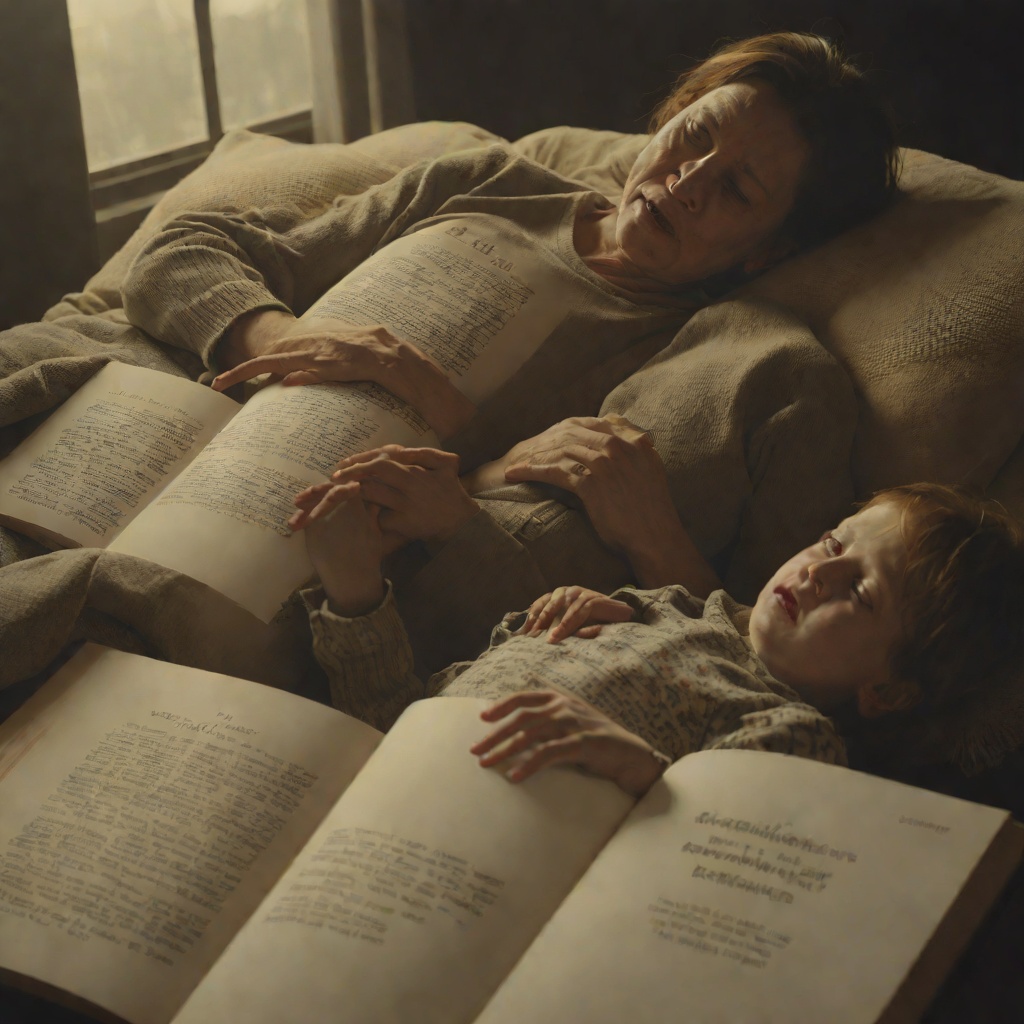
The rule also illuminates the Narrator’s divided relation to motherhood. In The Son’s room, she watches him nurse until he chokes, then burps him and lays him down wrapped in her scarf. The same body that provides milk is experienced as a source of trapped air and suffocation; care is real, but it is physically oppressive and emotionally estranging. The baby becomes a “dead weight” after feeding, while the mother’s thoughts move toward the glass doors and the wish to cut herself by crashing through them. The prohibition against abusing the baby thus coexists with a maternal scene saturated by bodily discomfort, self-harm imagery, and the fear of what the mother might do.
Later, the Narrator’s distress becomes literally inscribed on her body. After being brought to The hospital unconscious from a field, she is found to have small cuts across her shoulder blades, chest, belly, and neck. Nurses stare at her for thirty seconds when they enter, and medical staff remove shards, splinters, crystal, mirror fragments, and slivers of glass. Their examination turns private suffering into an observable condition subject to inspection and correction. The rule’s social voice is echoed by this institutional gaze: both identify deviation, watch the body, and attempt to restore a legible version of normal behavior.
The contrast between verbal and physical violence is not cleanly maintained. The Narrator can insist that she has not touched The Husband while also describing the desire to harm herself, to see her hands made of bones, and to become a body that leaves no air for anyone else. When The Husband offers cushions and then red boxing gloves, she rejects both forms of managed aggression. She does not want a safe substitute for violence or a regulated arena for it; she wants the destructive impulse in its uncontained form. The rule’s apparent simplicity therefore conceals a larger crisis over where violence may go when it cannot be acknowledged within domestic language.
Gas, Stupor, and the Failure of Enforcement
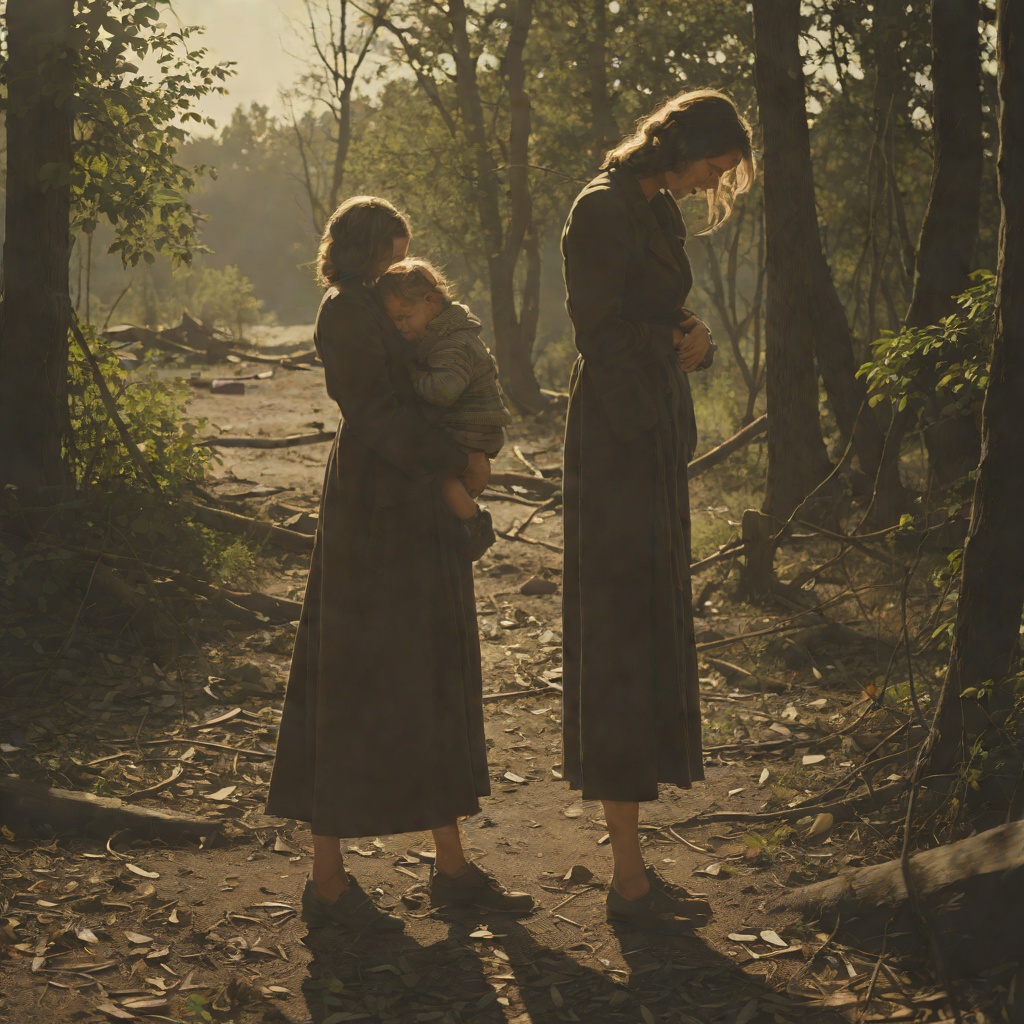
On the Sunday when the rule is invoked, the family spends the day in a stupor attributed to gas leaking from the pipes. The rotten smell, The Husband’s prolonged sleep, and the Narrator’s difficulty breathing transform the household into an environment of gradual poisoning. She and The Son go into the garden wrapped against the cold while he imitates a lorry with “vroom, vroom” and she gasps for air. The fire inside her continues to burn, making the scene a collision between environmental danger and emotional danger.
This setting weakens the distinction between prohibited individual behavior and harm produced by the household itself. No one is literally walking around firing a gun in the described moment, yet the family is exposed to a slow, hidden threat whose effects are bodily and potentially fatal. The rule focuses attention on conspicuous misconduct, while the leaking pipes make danger diffuse, delayed, and difficult to assign to a single offender. The Narrator’s rage is similarly difficult to isolate: it emerges through insults, fantasies, self-injury, sexual violence, exhaustion, and the routines meant to contain it.
Meaning and Narrative Function
As a rule, It's not okay to bad-mouth your own baby or walk around firing a gun expresses the moral vocabulary of social surveillance. It tells a mother how she must speak and tells a citizen how she must handle lethal power. Yet the Narrator repeats the standard at the exact point where her life makes its authority questionable. She knows the prohibition, recognizes its force, and resents the fact that it is not available to her as a simple release. The rule therefore dramatizes not ignorance of morality but the unbearable distance between knowing what conduct is forbidden and being able to inhabit the identity of a person who obeys.
The phrase finally works through irony. It treats verbal cruelty toward a baby and gunfire as violations of the same common-sense order, while the surrounding evidence presents a family already shaped by concealed weapons, inherited suicide, medical inspection, bodily fragmentation, suffocating domestic space, and maternal ambivalence. Its significance is not that the rule is false; the narrative never endorses abusing The Son or firing a gun indiscriminately. Its significance is that prohibition alone cannot explain the violence it seeks to contain. The rule marks the threshold of acceptable behavior, while the Narrator’s experience shows the pressure, secrecy, and damage accumulating on the other side of that threshold.