The Death of the Father-in-Law
Die, My LoveThe Death of the Father-in-Law is not merely a family tragedy but the novel's central rupture, an event that shatters the already fragile surface of the 'normal family' and plunges the narrator into a vortex of grief, disgust, and unexpected kinship. Occurring against the backdrop of the narrator's own deteriorating mental state, the death is filtered through her consciousness as a series of visceral, disjointed images rather than a linear narrative. It is the moment when the family's carefully maintained facade of normalcy cracks, revealing the secrets, absurdities, and profound loneliness that lie beneath, and it forges an unlikely bond between the narrator and her mother-in-law, who are united for the first time by their shared, yet vastly different, experiences of loss. The event's significance lies not in the death itself, but in the way it exposes the hollow rituals of mourning, the failure of language to capture a life, and the strange, almost hallucinatory quality of grief that the narrator both observes and absorbs.
The Night of Dying and the Ominous Prelude
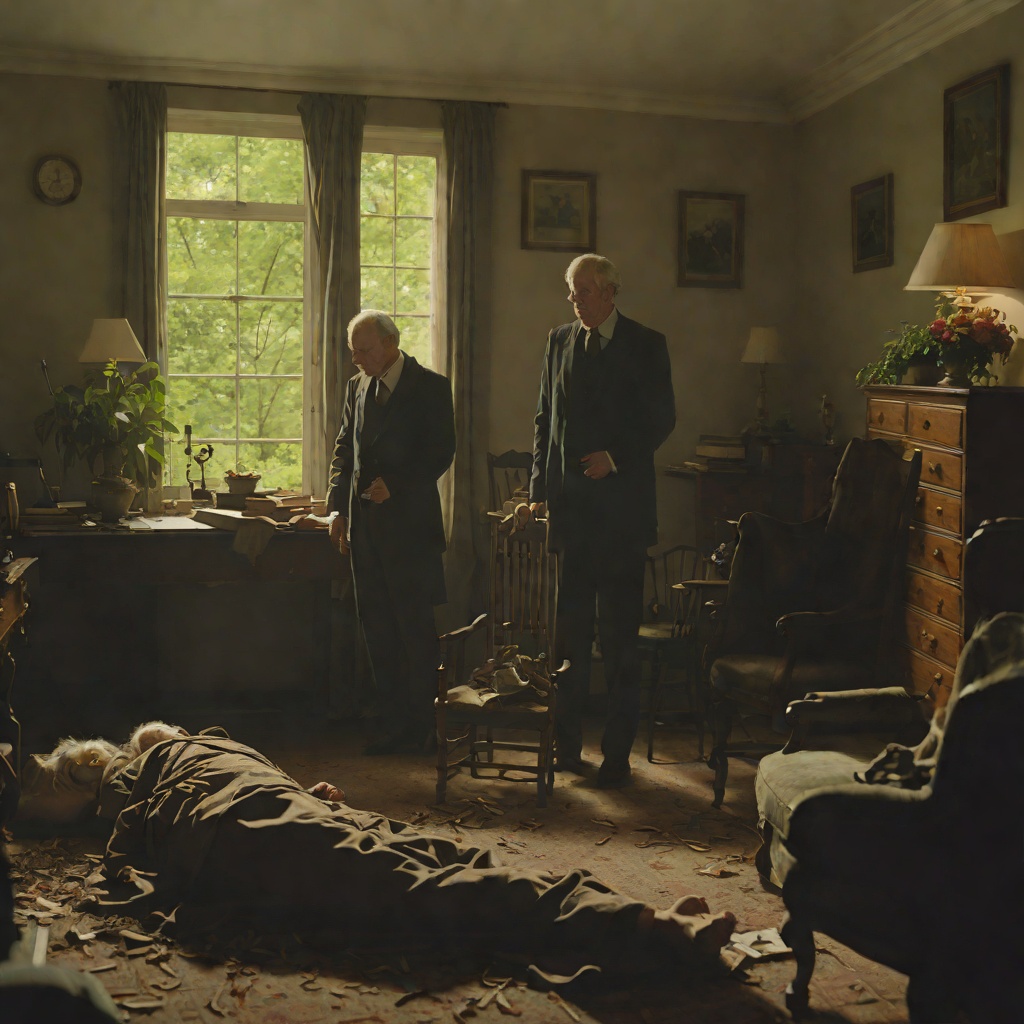
The event is framed by the narrator's own precarious mental state, which she describes as a 'decline, the anxiety, the descent into an altered state' that begins as night falls. She sits on the porch of her house, counting fireflies and the cries of animals, afraid of the harm she could cause her newborn son, while her family gathers inside by the fire. This atmosphere of dread is amplified by the memory of her father-in-law's last words before going to bed: 'My grandson will follow in my footsteps.' Though meant as a sweeping platitude, the phrase haunts the narrator, making matters worse. The death itself is not described directly but is implied through its aftermath, with the narrator noting that the fact that her father-in-law died in his sleep does not help her state of mind. The sky is like a velvet stage curtain, a metaphor that underscores the sense of an impending, unseen revelation.
The Funeral and the Hollow Rituals
At the graveside, the narrator's mind fixates on a sudden, perfect image of her father-in-law's teeth, recalling how he was always complaining about them or picking food out from between them as he spoke. This grotesque, intimate detail stands in stark contrast to the solemnity of the occasion. She observes the few people on the other side of the grave tearing up, while others feel obliged to keep a respectful distance from the body. The narrator's own reaction is one of detachment, comparing his passing to 'a horse trotting through a town and no one even remembering the clatter of its hooves.' She hugs her husband while their baby smiles at the graves, a jarring image of life's obliviousness to death. The funeral is a 'run-of-the-mill wake, a quick goodbye,' where guests offer the generic praise of 'an excellent father and husband.' The procession then moves to the inn where the dead man had been a regular, where he was remembered as 'a man among comrades,' telling witty tales of his time on the front line.
The Widow's Grief and the Perpetual Limbo
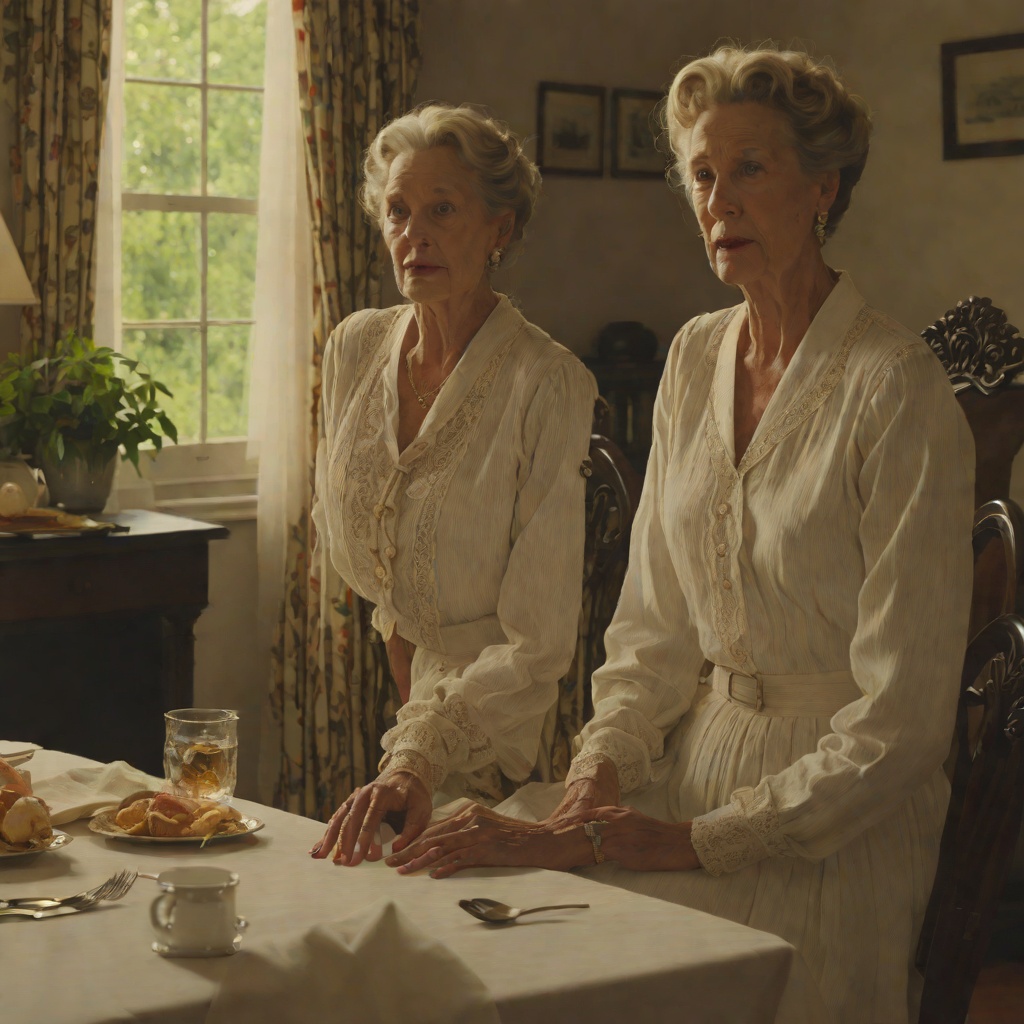
The narrator's focus shifts to her mother-in-law, whose grief is portrayed as a slow, agonizing unraveling. She imagines the widow opening up the house to air it out, throwing away her husband's spectacles, and smelling him on the backrest of the rocking chair where he used to doze. The narrator envisions her cooking for herself with the same pans she used for his fried eggs and porridge, and giving his socks away to the neighbours. The widow's grief is a physical, almost unbearable thing: she covers her mouth with her hand, clings to her husband's bedpan, and is seen as an elderly woman gasping for air after sliding a door shut. She tells the family that her husband squeezed her hand tight just before he died, but the doctor said it had only been a reflex reaction. The narrator's mother-in-law relives his death day after day, cooking for two, changing the pillowcases, and mending his underwear that was torn at the crotch. She lives in her body 'as though it were an infested house,' and the only time she is at peace is in her sleep, though she suffers from sleep-walking, once strolling through the village in a nightie shouting 'Fire!' and another time using a shoe as a phone to converse with God. The narrator articulates the widow's state with a devastating aphorism: 'Time doesn't pass for the person who's left behind. It's a perpetual limbo.'
The Dead Man's Secrets and the Failure of Language
The narrator's meditation on the death reveals the hidden life of the father-in-law, a man whose public persona of a jovial war veteran and family man concealed a more sordid reality. His widow reveals that he used to sit for hours in the semidarkness of the living room facing the lit-up tree, a detail that contradicts the image of the gregarious inn regular. The narrator catalogs the secrets that are now locked in the pinewood coffin: the visits to the local brothel, the time his roving hand found its way under the skirt of a secondary-school student on the bus, and the heroic exploits from his time in the navy. She notes the irony that 'so much screwing around, so many memories of bravery from the war, so much debauchery, but in the end no one really had anything to say about him.' What affects the narrator most is not the death itself but 'the loss of his words,' his turns of phrase, and his thick, spit-filled tone. The event underscores the failure of language to capture a life, as the generic eulogies and the dead man's own empty platitudes prove inadequate against the weight of his hidden history.
A Strange Intimacy and the Narrator's Descent
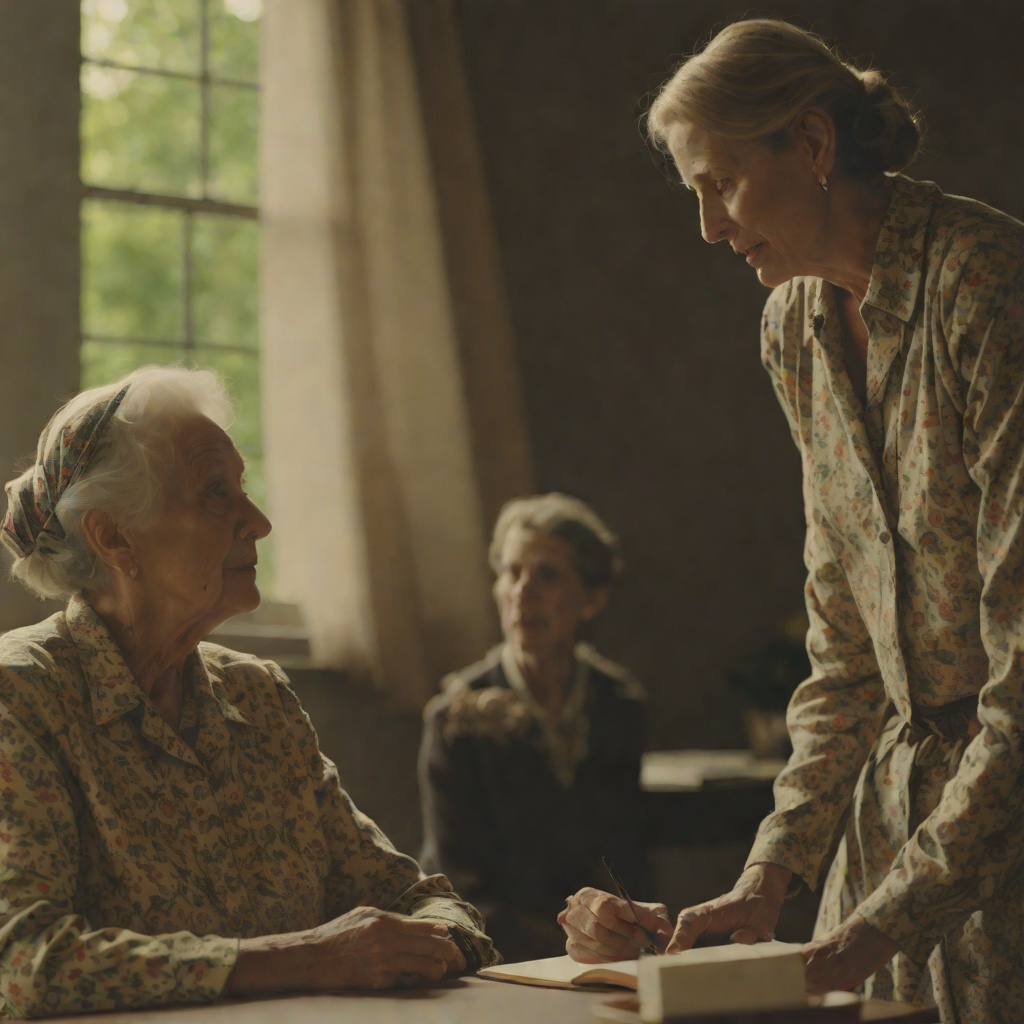
Amidst the grief and grotesquerie, the death forges an unexpected connection. The narrator states, 'It was then that I felt close to her for the first time,' referring to her mother-in-law. This closeness arises not from shared comfort but from the narrator's acute, almost voyeuristic observation of the widow's raw, unmediated grief. The narrator's own mental state remains precarious throughout, her mind 'spent' and 'lost on the river bank.' She describes building up so much rage that she could drink until she has a heart attack, though she admits she couldn't even down half a bottle. The event serves as a mirror for her own potential future, a vision of what it means to be left behind, and it deepens her sense of alienation from the 'normal family' whose rituals she cannot participate in. The death of the father-in-law is thus not a resolution but an intensification of the narrator's crisis, a descent into a world where the living and the dead become indistinguishable, and where the only authentic response is a silent, shared recognition of the void.