The Stag Collision
Die, My LoveThe Stag Collision is the novel's first major rupture, a violent interruption of an already-fractured domestic scene that transforms a routine drive into a moment of surreal, almost comic catastrophe. Occurring in the early-morning hours after a failed dinner, the accident sees a stag smash through the windscreen of the family car, leaving a huge dent in the bonnet and sending the narrator's body lurching forward because she has again forgotten her seatbelt. The event is decisive not only for the physical damage it inflicts but for what it exposes: the husband's fury barely concealed beneath concern, the narrator's habitual self-neglect, and the strange bond that will bind the family to the dog they name Bloody.
The Failed Dinner and the Ultimatum
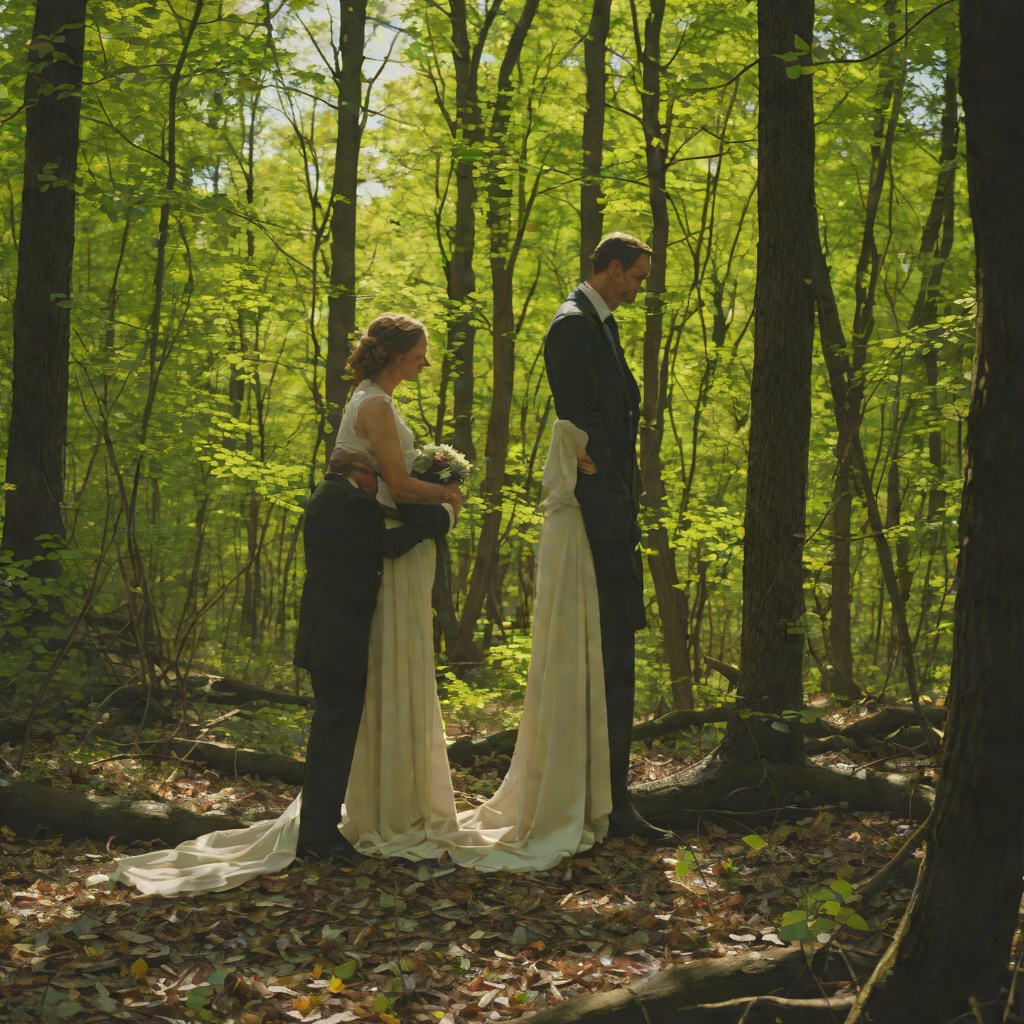
The collision is the culmination of a night of domestic tension. Earlier, the narrator sat paralyzed at an empty table, unable to move even as her husband cleaned up after the dog and tried to coax her outside. She describes the moment as being "face-to-face with something that's disintegrated," a family portrait of seven dead siblings hanging in her mind. When her husband started the car engine, she recognized it as an ultimatum. Her hands moved violently, as though they might break into pieces, yet she stayed seated long enough for him to overheat the engine and curse. Only when he flashed the lights at her did she rise, stiff, leaving the front door open and approaching the car window to find the dog's filthy paws all over the baby's car seat. He refused to let her stay behind, insisting they needed to talk, that things couldn't go on like this. She bit her tongue and got in.
The Drive and the Impact
Soon they were driving through the next town, listening to rock songs on the local radio despite terrible reception. The early-morning mist hid the roofs, stables, and wineries, covering the sleeping animals, milking yards, and churches like a murky veil. Her husband began to hum and whistle along to a song in English, calling it a great tune and turning up the volume. It was The Smiths. To him, she might as well be from another planet because she had never heard of them, and she confesses she thinks only morons listen to rock because she doesn't find guitars exciting. During the chorus, "And when a train goes by, it's such a sad thing," his hands came up off the wheel and he barely managed to slam on the brakes. A stag hit the windscreen. First its head, then its body took off to the left of the car, like some kind of flying creature. There was a huge dent in the bonnet. The dog whimpered. The narrator's upper body shot forwards, and though they had been going slowly, she hit her forehead against the glove compartment and was left feeling dazed.
Aftermath and the Naming of Bloody
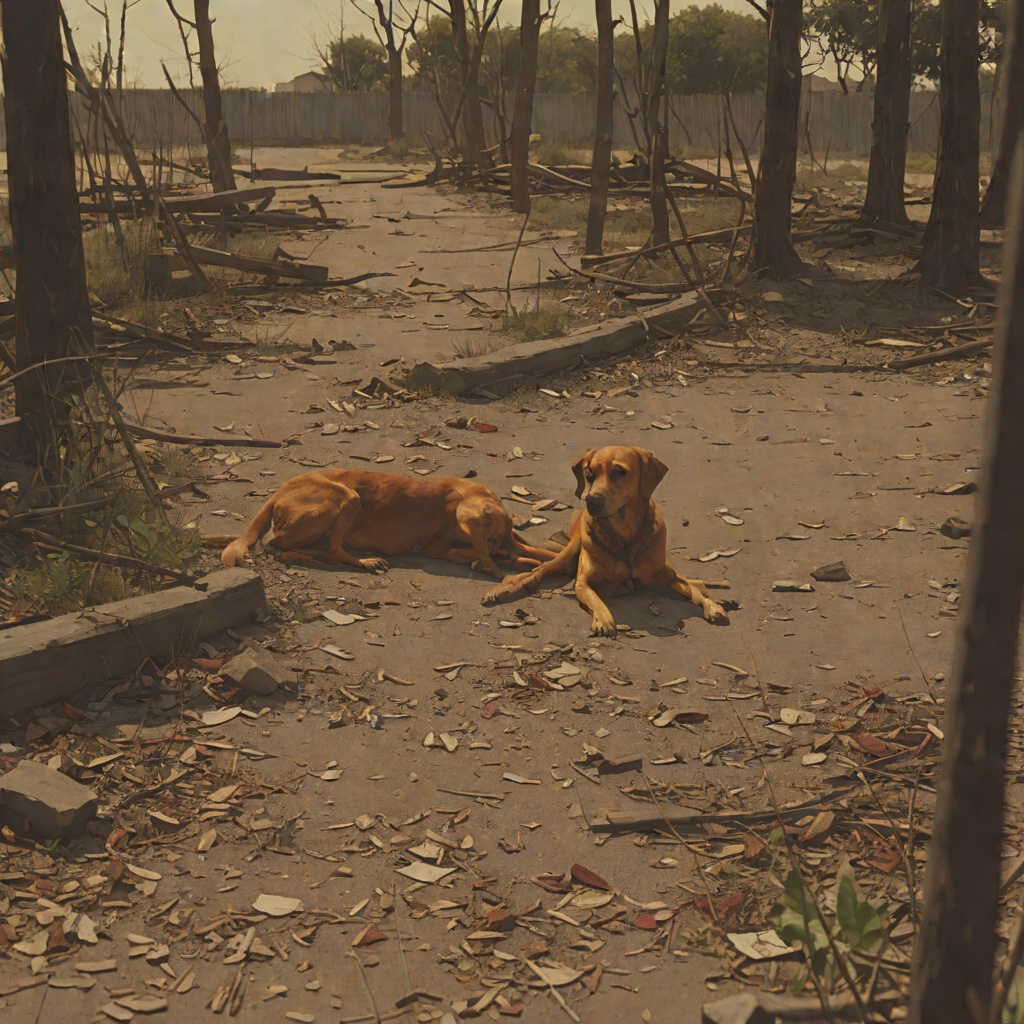
The husband's first reaction was anger at her carelessness. "You could have really hurt yourself! I've told you a thousand times, always wear your seatbelt!" He turned to check on the excited, panting dog that was fogging up the windows, but then he saw its leg, swaying disobediently to the rhythm of the windscreen wipers as though it were scratching its hip. They got out of the car, the husband with the dog in his arms while the music still played. The dog licked its beaten body. The stag ran off as best it could, limping, as though it didn't understand it had survived. The husband looked at the damaged radiator, then remembered about the narrator and gave her a hug. The heavy smoke coming out of the car blinded them, and for a second he kissed the dog on the mouth while she kissed the trunk of a fallen tree. He announced they would have to push, but first he walked a few feet away and lowered his tracksuit bottoms. The narrator reflects that she has an obscene husband, wondering how he could take it out at a time like this. The animal did the dirty work, licking the remains off the bonnet, shaking its head once the job was done. They christened it Blood, in English, but ended up calling it Bloody. They wrapped it up in whatever they could find, put it in the back of the car, and fastened the seatbelt.
The Push and the Return Home
The narrator pushed while her husband accelerated, then ran to catch up with the moving car. She had to run so hard she thought they were trying to leave her behind. At home, she found the baby standing up, his hands sticking through the bars of the crib, screaming for the prison warden. Her man was already rinsing the car off with the hose. The dog followed him around with a pained look on its face like it couldn't bear it any more, its eyes watering, its leg dragging, its body writhing as it made holes in the ground. They went to sleep, but Bloody's cry, "eeeeee, eeeeee," echoed throughout the house, driving her crazy. She got up, grabbed the small torch from the tool drawer, and went into the garage, rummaging through layers of filth on the pieces of wood, the unused furniture, and the swivel chairs. Only the telescope seemed clean, sheathed as it was in clear plastic. She knew she'd regret it if she left it at that, and went outside, leaving the front door open, the cold air chilling the house in no time.
Narrative Significance
The Stag Collision functions as a peripeteia in the novel's early movement, a sudden reversal that shifts the family from the stalled inertia of the failed dinner into a sequence of physical and emotional shocks. The accident reveals the husband's character in miniature: his fury at her carelessness, his casual obscenity, his ability to move on quickly while she remains dazed and alienated. The stag itself, limping away as though it didn't understand it had survived, becomes a mirror of the narrator's own condition, a creature struck by forces beyond its control, struggling to comprehend its own continued existence. The naming of the dog Bloody, born from the animal's act of licking the stag's remains off the bonnet, transforms the accident into the origin point of a new family member, one whose cries will later drive the narrator to seek refuge in her mother-in-law's house. The collision thus marks the moment when the natural world intrudes violently into the domestic sphere, and when the boundaries between human and animal, victim and witness, begin to blur in ways that will define the novel's unsettling vision.