the institution
Die, My LoveThe institution is the psychiatric facility to which The Narrator is taken by her husband and son after the breakdown of her marriage, a place that promises calm and cure but delivers only a different kind of confinement. It is the physical embodiment of her family's decision that she needs to be 'treated,' a space where the chaos of her mind is met not with understanding but with walls, routines, and the quiet expectation that she will emerge as someone else. The institution is less a hospital than a threshold: the place where her old life ends and an uncertain new one begins, and where the question of whether she can be 'fixed' is answered with a resounding, ambiguous silence.
Arrival and First Impressions
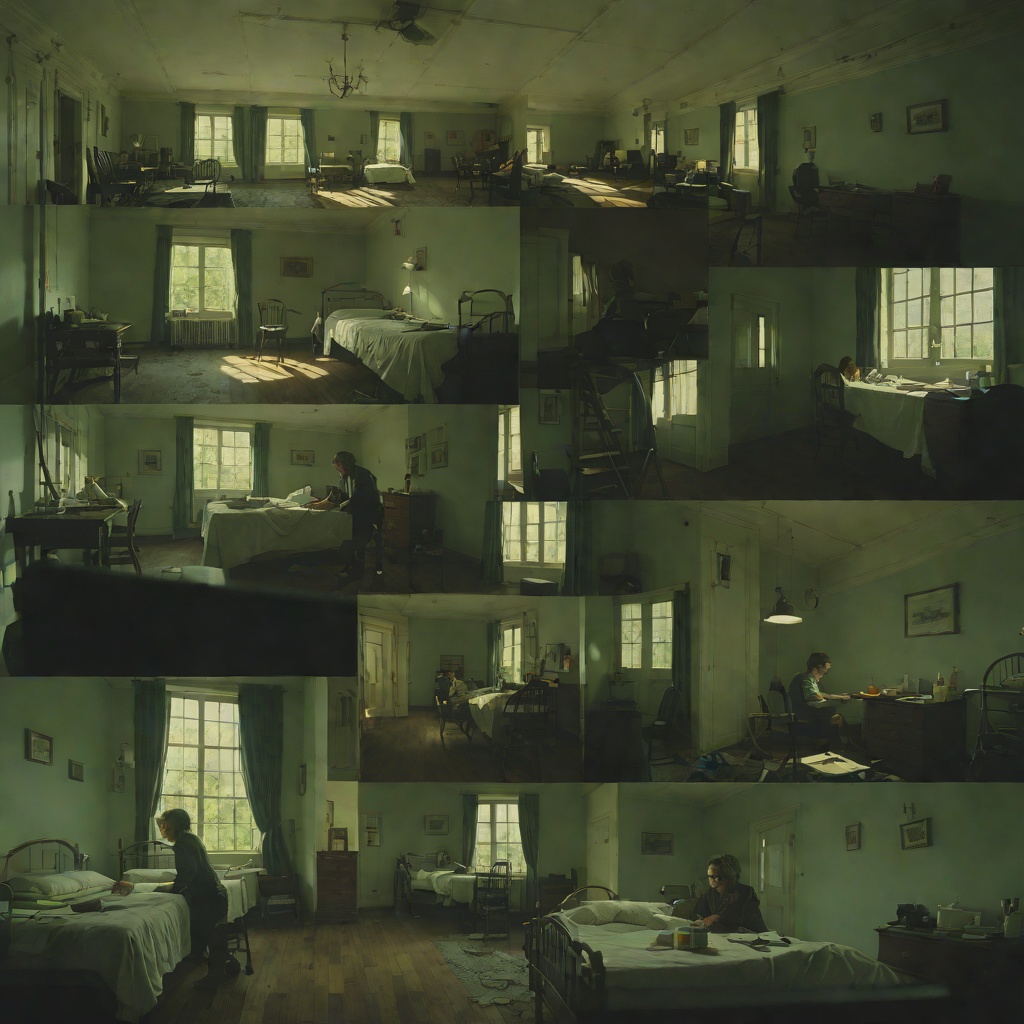
The journey to the institution begins with The Narrator sitting in the back of the car in her yellow shorts, a suitcase in hand, practicing her 'crazy face' in the rearview mirror. She is aiming for the look of Zelda Fitzgerald en route to Switzerland, a gesture that signals her awareness of the performance of madness. Her husband has had the car checked by the mechanic to ensure it is up to the trip, a detail that underscores the premeditated nature of the journey. The destination, when it appears, is a 'pile of uneven stones with a chimney on top,' a far cry from the hotel-like establishment she half-expects. She imagines breakfasts of toast with plum jam made by 'a band of disturbed inpatients,' work in the vegetable garden, craft workshops, and a narrow mattress, all of which she will indeed encounter. The three of them get out of the car 'looking like overwhelmed tourists,' taking photos as if on holiday, before someone grabs her arms and welcomes her, pushing her slightly. Her husband and son wave goodbye, saying 'see you later, beautiful, see you later, Mummy,' and within moments they are rolling away through the hills, already singing another song. She turns to see a hallway full of closed doors, and someone forces her forwards and shuts her away.
Daily Life and the New World
The first morning, The Narrator lies with her fingers hanging off the edge of the bed when a doctor with crooked eyeglasses approaches. She tells him she dreamt she had left her baby asleep under acid rain, and that he was looking at her from a long way away. When she apologizes, he tells her she doesn't have to do anything, that she is free to leave whenever she likes, and that this is not a new world but 'just somewhere that's a bit calmer than other places.' She watches a small iridescent fly hit the glass of the window again and again until it collapses, scattering pieces of its bright blue wings over her bed, a small omen of her own repeated, futile attempts to escape. Getting up, she feels happy to be in the care of an establishment that is 'not unlike a hotel,' and goes down to the dining hall feeling alive, greeting everyone and asking their names, a departure from her usual indifference. The nurses cover her in kisses, and someone yells that they want Rohypnol. She crosses the dining hall with its smell of instant soup and goes out into the grounds, where a high wall separates the patients from a villa and its pack of German shepherds. It is only then, as she plays with her hair, that she realizes she hasn't seen any women around, and that her husband has shut her away with men. Shaved heads look like walnuts, the air smells of testosterone, and all the voices are deep and leaden. She drinks her angel-hair soup at a round table, and at night she hears barking come over the wall 'like something that belongs to another life.'
The Confrontation with the Professional
A counselling session with her husband becomes a confrontation. The therapist, whom The Narrator feels 'likes' her husband, listens as he calls her negligent and juvenile. She bullshits him about trying family therapy, then ignores the professional and goes over to squeeze her man, hoping he won't reject her. He doesn't, and she calls him her saviour. But after he leaves, taking his baby with him, she feels like she has ruined everything. She walks down the hallway with a victorious smile on her face, her hand shaped like a revolver, her index finger miming the action of pulling the trigger. The professional, still worried about her behaviour, follows her and asks her into his office, locking the door behind him. He tells her that her husband feels powerless against the figure of the unknown man, who is 'like a bulldozer,' and that the air in her house is turning foul. He says her husband would prefer her to stay another week. It is official: she has been grounded. In the end, she says she feels responsible, that she will rethink her role as a wife and mother, and that it would be helpful to stay another week. She allows her hand to return to its five-fingered shape, and he opens the door.
The Blindfold and the Piñata
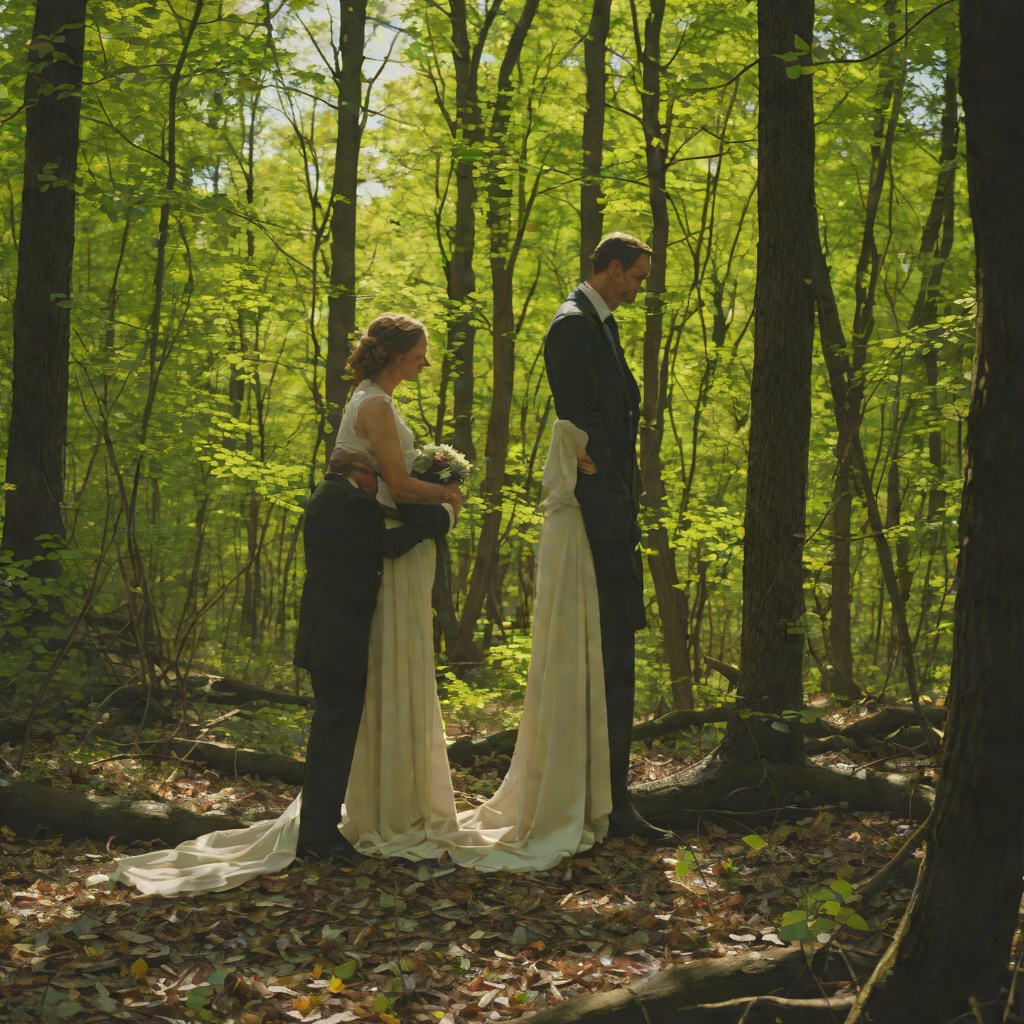
At some point, The Narrator wakes up inside her woods, a recurring mental landscape, and notices she no longer feels any love for her son. She goes looking for the stag, hoping that seeing him might help, but instead of his antlers she finds nurses. They sit her down and blindfold her, spin her around counting 'one, two, three!' and then let her go, leaving something like a needle in her hand. The exultant cheering guides her—'cold, cold, warmer, hot, hot, burning!'—and her needle finds the piñata, which explodes to applause. She stays blindfolded, wanting the pleasant darkness to continue, but the others grow impatient and remove it. She is covered in confetti, surrounded by streamers, colourful signs, and gifts. They give her cards and good-luck charms and lead her away. She is leaving. It is the end, yet for her it is the beginning, because out there is where gloom and pessimism lie.
Release and Return
They open the main door, and there are her husband, all dressed up, and her son, wearing his football kit, the two of them holding hands. The three of them hug. The baby is already walking, has more teeth, more hair, and an expanded vocabulary that includes 'coing coing' and 'taca taca.' Her husband tells a joke to lighten the mood: 'Now you're finally out we'll be able to live in peace.' They greet her as if she has graduated, as if it is time to get on with her life. He stops the car at the side of the road, and on the banks of a river she hasn't seen before, he tells her to shut her eyes. He presses a button and the roof opens up like a peacock's feathers. Back on the road, her son raises his hands and lets the air rush between his fingers, throwing stones into the river despite her warnings. When they drive into their town, they are escorted through the streets as though to the altar. She walks into her house and everything shines; there have been changes: a microwave with the time flashing, a tablecloth embroidered with the petals of large flowers, a new cordless phone with a notepad next to it. She sits on the sofa facing the fireplace, and the reflection of the first knife she ever dreamt of is in her hand again. Scared, she moves towards the glass door she once crashed through, which now has a mosquito mesh on it. She opens the door and runs outside to look for the stag, needing to see the tips of his antlers. 'Oh, stag of mine, darling stag, my one and only. I hope you're out there.' The institution has released her body, but her mind remains in the woods, searching for the animal that represents the wild, untamed part of herself that no amount of treatment could reach.