Dropping the knife
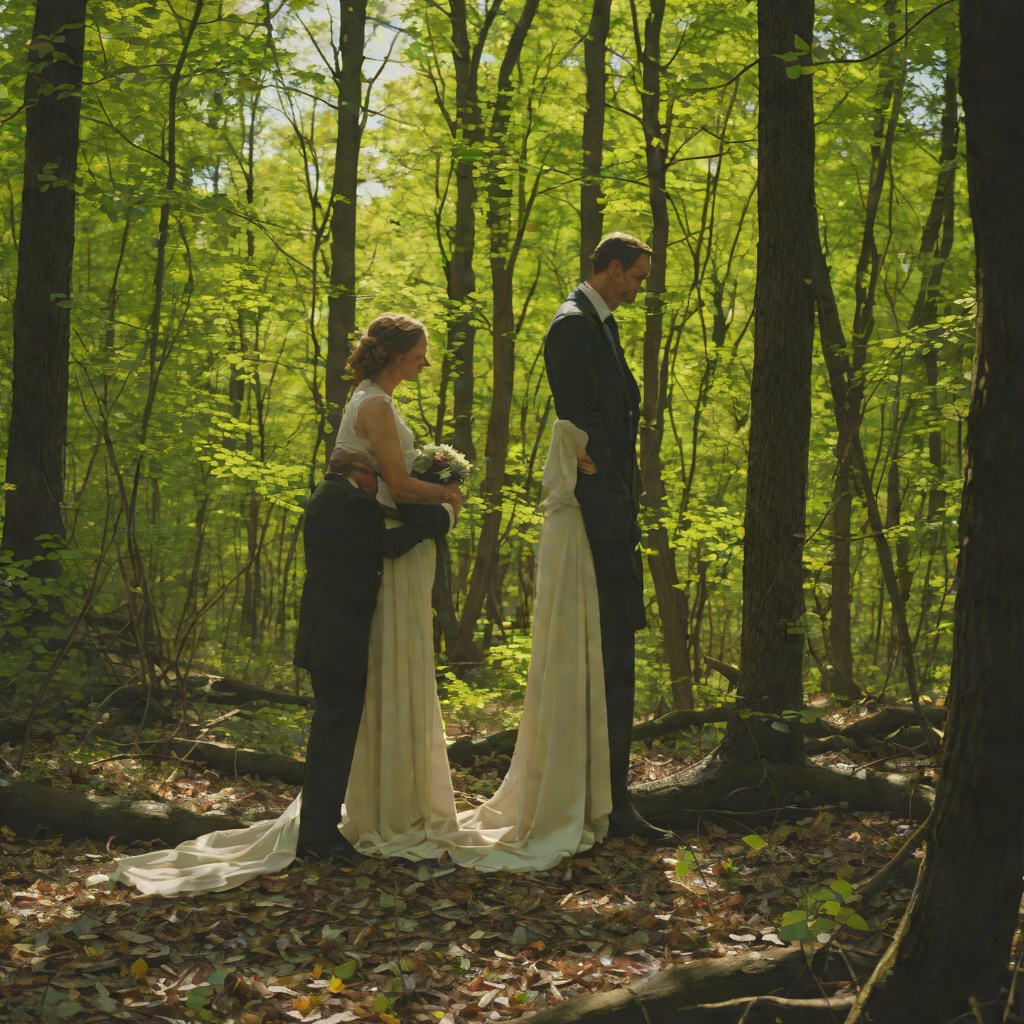
Die, My LoveDropping the knife is the novel's central gesture of aborted violence, a recurring action in which the narrator abandons a weapon she has been holding rather than use it. The first and most fully rendered instance occurs on the Sunday before a bank holiday, when the narrator lies back in the grass among fallen trees, hidden in the underbrush, spying on her naked son and husband splashing in a blue paddling pool filled with thirty-five-degree water. The sun on her palm feels like a knife she could use to bleed herself dry with one swift cut to the jugular. She asks herself how a weak, perverse woman who dreams of a knife in her hand could be the mother and wife of those two individuals, then burrows deeper into the ground, hiding her body. She concludes that she is not going to kill them. She drops the knife and goes to hang out the washing as if nothing had happened, carefully pegging the socks of her baby and her man to the line, along with their underwear and shirts. Looking at herself, she sees an ignorant country bumpkin hanging out laundry and drying her hands on her skirt before returning to the kitchen. They had no idea. Hanging out the clothes had been a success.
The Knife as Fantasy and the Choice of Domesticity
The dropped knife is not a weapon aimed at another person but an instrument of self-destruction turned aside. The narrator's fantasy is to cut her own jugular, to bleed herself dry, and the act of dropping the knife is a refusal of that suicide as much as a refusal of murder. The gesture is framed by the domestic scene she returns to: the laundry line, the pegged socks, the skirt she dries her hands on. The narrator's self-image as an ignorant country bumpkin is a performance of conformity that conceals the violence she has just renounced. The success of hanging out the clothes lies precisely in its invisibility, in the fact that no one suspects what she has imagined. The knife in the grass is thus a secret kept from her family, a private renunciation that allows her to re-enter the ordinary world of motherhood and marriage.
The Recurrence of the Gesture
The action recurs throughout the novel as a pattern of abortive violence. In her son's room, lit by a faint blue light, the narrator watches her nipple satisfy the baby with every slurp while her husband smokes outside, the puffs coming at regular intervals. After the baby burps and becomes a dead weight, she lays him down wrapped in her scarf and swaddles him, thinking of Isadora Duncan, of who gets which life and what body one ends up in. She throws out the heavy nappy and walks towards the patio doors, always toying with the idea of going right through the glass and cutting every inch of her body, always aiming to pass through her own shadow. But just before she hits it, she stops herself and slides the door open. This is the same structure as the dropped knife: the approach to self-destruction, the hesitation at the threshold, and the turn back to ordinary life. Outside, her husband is pissing a stream the colour of the mate he was drinking earlier, the hot greenish-yellow drops cascading down the garage's corrugated metal. He turns and smiles at her with his hands on his limp, dripping member and asks if she wants to go and look at the stars. She has never been able to make him understand that she is not interested in stars, in what is in the sky, in the telescope he struggles to carry to the bottom of the garden where it slopes down into the woods. He sets up his precious three-legged device and asks if she sees the String of Pearls. She says yes, dear, but her eyes linger in the starless space, in the absence of light.
The Knife and the Body's Cuts
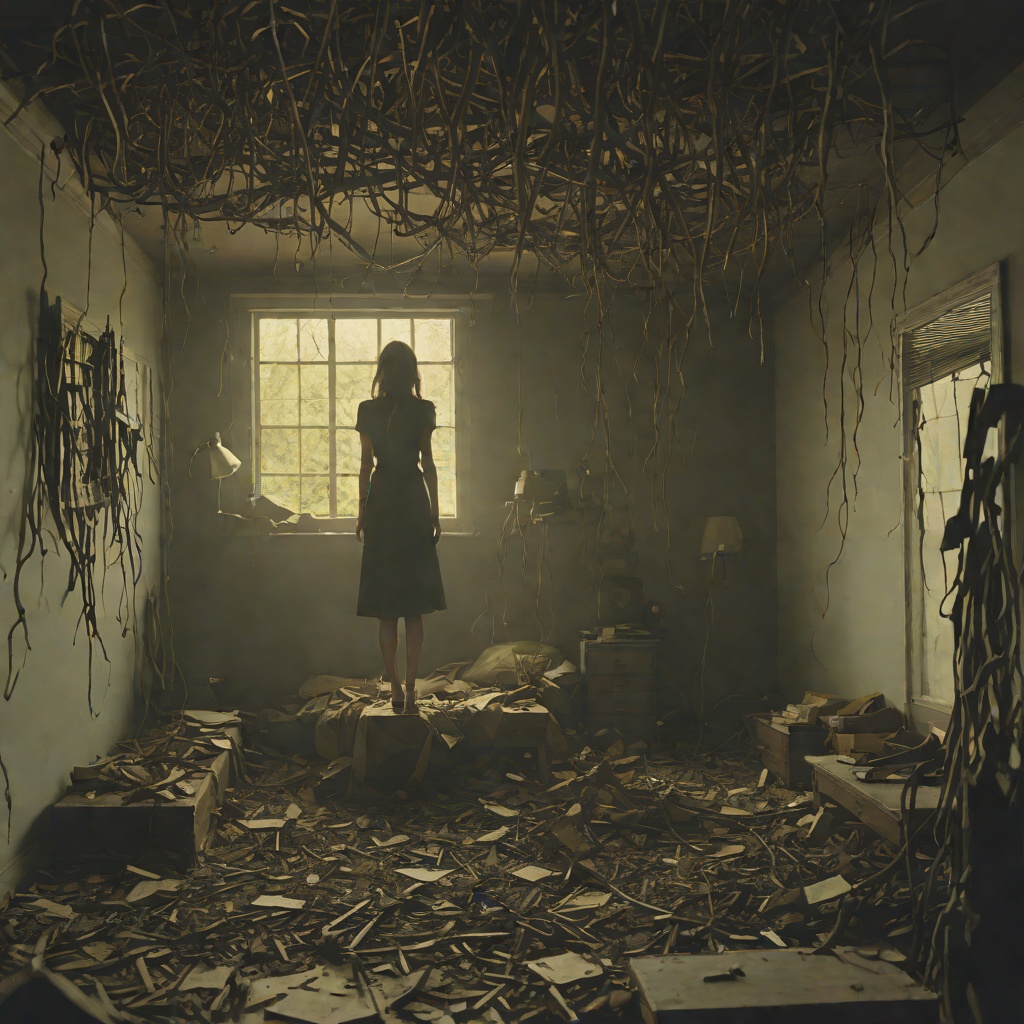
The dropped knife is connected to the narrator's later bodily wounds, the small cuts that cover her shoulder blades, chest, belly, and neck. After she is brought to the hospital unconscious, straight from the field, the nurses treat her cuts for days, removing tiny shards, bits of blades, splinters, pieces of crystal, tiny mirrors, petals, and slivers of glass from her body. First a small ulcer appears, and the next day, or the day after, a tiny sparkle. They disinfect her and give her painkillers. It is the first time she has fainted and been lost to the world. The shards of glass embedded in her body are the material trace of the violence she has repeatedly imagined and turned aside, the knife she dropped now lodged inside her as splinters and petals. The narrator is told to walk slowly, to avoid running at all costs, to keep her feet raised when she can, and not to pull open her scabs, because a lot of patients pick at their wounds. Her husband comes in saying knock knock and pretends to hide behind the flowers, kissing her while avoiding the gashes on her face that will not form scabs. She thinks she should say something, and all she can think of is that she did not touch him, did not touch a hair on his head. He says he does not know what she is talking about, and she repeats that she did not touch a hair on his head. He answers fine, whatever, and asks what she was doing with the condoms, what she needs to do so often at McDonald's instead of coming home early to be with them. She calls it a nice move, says he is learning. He reaches out to stroke her, but his hand falls exactly, precisely, on the cut along her neck.
The Knife and the Rage of the Body
The dropped knife is also the alternative to the narrator's later explosions of rage, when she yanks out clumps of grass over and over, green and yellow, worms and soil blending together in her hand, a beautiful palette for a pretty gruesome painting. The yanking does not calm her down. She runs inside, throws the old wooden chair at the mirror, wrenches the door off the wardrobe in one movement, and then the shutters off the window with another swipe. Her ovaries wring themselves out and there is a blood clot in her knickers that runs down her legs. She does not think she is pregnant again; it is just pure rage. She runs spastically, the cuts pulling tight. She has never done any sports. At school she used to jump off the diving board and sink to the bottom of the pool, not even trying to come back up, while above her they acted out the whole pantomime of panic, her classmates shouting that they hope she drowns. She grabs the folds of fat still there from the pregnancy, and it occurs to her that the clot is actually a miscarriage, but no, that is not it at all. It is the remains of her body. Her husband is cutting down wood next to the baby in the buggy, and she hears the chainsaw. The child watches intently as the pieces of wood crack, detach from the trunk, and fall. The child watches his mother fall apart, break down, but he smiles when he sees the particles of wood in the air, thinking they are flakes of dark snow, not worried about her. He is pleased to see the preparations for winter. He must think he has got a normal mother to give his first kindergarten drawings to. Beside him, a tree that was once full of life is now fraying. She has never been so far away from him. She imagines her body remaining undiscovered for years and years, becoming forensic evidence. Her buffalo breath suffocates her; she could fog up entire panes of glass, the large windows of a castle, cities mirrored in narrow rivers. She is a beast who breathes slowly and heavily, leaving no air for anyone else. She stares into the night, which is like a locked trunk, an old railway carriage on its way to hell, searching the thick air for the crack that will let her through. Her husband asks what more she wants from him, what she needs, if there is anything he can do, and places a cushion in front of her. But a cushion will not do it. She punches the air. He runs off and returns with a pair of red boxing gloves he had as a teenager and puts them on her. She throws two wild cross punches at his nose and then takes them off again. She does not want gloves or a boxing ring or a chest guard. She wants to see her hands made of bones firing in every direction. She screams like a bark for him to fuck her, but what she really feels like doing as he comes towards her with his hard-on is eating poisonous flowers, poisonous mushrooms, stones. She wants to put an end to this long, scattered, turbulent day. He throws her onto the bed while the baby is still in the buggy, next to the chopped wood, reaching for the chainsaw. He opens her legs wide and pokes around with his calloused hands. Desire is the last thing there is in her cries. When his piece of flesh enters her hole, she longs for a white room with a sea breeze blowing through it, the salt stinging the cuts on her shredded tongue. Someone heals her eyes, trains her gaze, and leaves her in a place infinitely more peaceful than this pigsty.
The Knife as a Pattern of Renunciation
The dropped knife is the novel's emblem of the narrator's repeated choice not to act on her violent impulses, a choice that leaves her trapped between the fantasy of destruction and the performance of normalcy. The gesture recurs in different forms: the knife dropped in the grass, the hand stopped before the glass door, the boxing gloves taken off, the rage that does not become murder. Each time, the narrator turns aside from violence and returns to the domestic world, hanging out the laundry, swaddling the baby, saying yes dear to her husband's talk of stars. The knife in the grass is thus not a single event but a pattern, a way of living with the gap between what she imagines and what she does. The shards of glass that later come out of her body are the accumulated residue of all these renounced acts, the violence she has refused to commit now embedded in her flesh. The narrator's final position is one of suspension: she has dropped the knife, but she has not escaped the desire that made her pick it up. She remains in the pigsty, longing for a white room with a sea breeze, her body covered in cuts that will not form scabs, her husband's hand falling precisely on the wound along her neck.