Social worker's advice
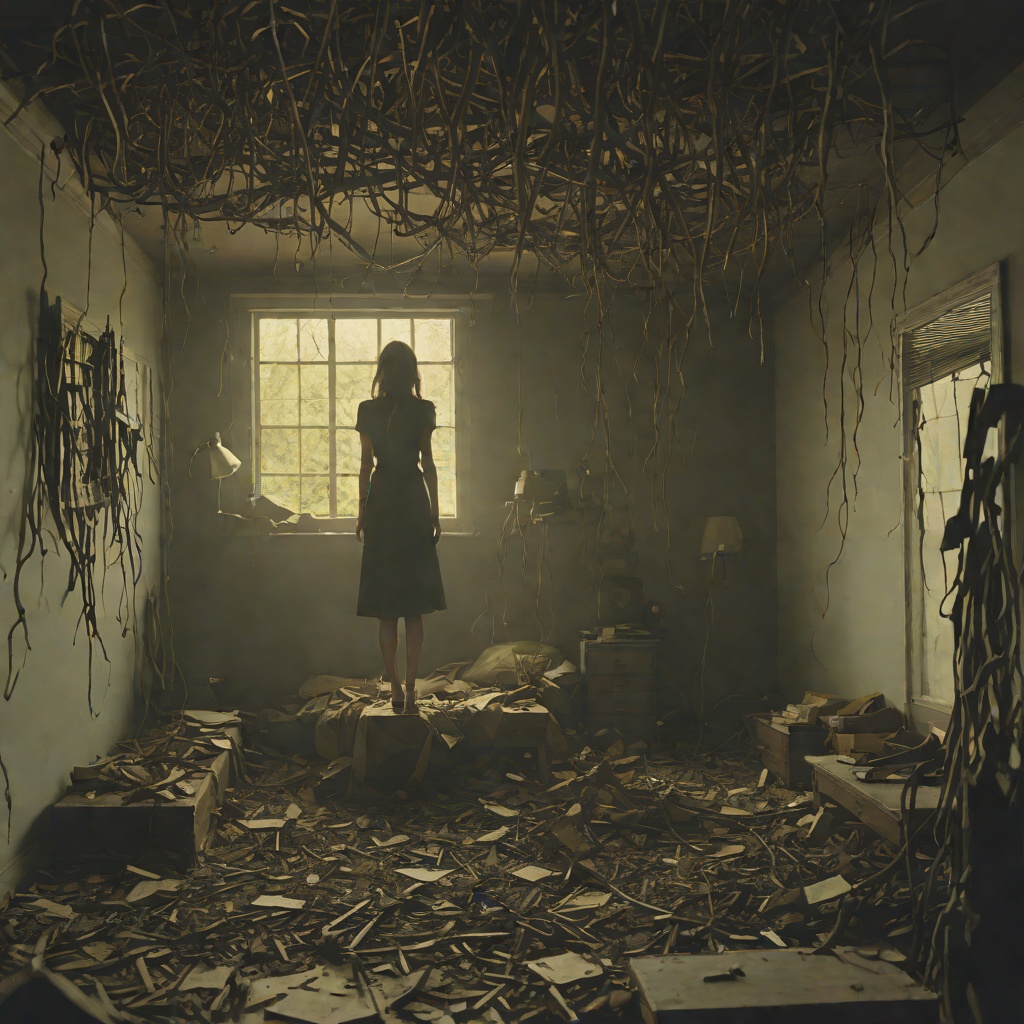
Die, My LoveThe social worker's advice arrives in The Narrator's life at the precise moment when her grip on motherhood is fraying. It is delivered by a young social worker who comes to the house because The Mother-in-Law, alarmed by what she has witnessed, has made a call. The advice itself is starkly practical, almost clinical in its simplicity: if the child cries so much that The Narrator feels she cannot go on and is about to lose control, she should get out of there, leave the child with someone else, and find a place where she can regain composure and calm. And if she is alone with no one to leave the baby with, the instruction continues, she should go somewhere else anyway—leave the child in a safe place and take a few steps back.
The Advice as a Lifeline and a Reproach
The advice is never followed. The Narrator records it verbatim, as though it were a prescription she has memorized but cannot bring herself to fill. It hangs over her days as both a lifeline and a reproach—a rational, humane solution that she acknowledges and then ignores. The advice assumes a world in which a mother can simply step away, in which composure is recoverable, in which the crisis is temporary and the solution is spatial. But The Narrator's reality is one of endless, tedious choreography: pacing up and down with the baby in her arms, hour after hour, moving from exhaustion to screaming and back to exhaustion. The advice's promise of a safe place to retreat to collides with her actual experience, in which there is no such place, only the starless space she stares into while her husband points out constellations.
The Advice and the Failure of Language
The social worker's advice belongs to a broader pattern in the novel: the failure of language to bridge the gap between The Narrator's inner turmoil and the world's expectations. Just as her husband's astronomical enthusiasm—his talk of meteors and the moon's dark side—fails to reach her, so too does the social worker's sensible counsel. The advice is a form of speech that assumes a coherent, recoverable self, but The Narrator is dissolving. She thinks about how a child is a wild animal, about another person carrying her heart forever. The advice cannot account for this. It offers a procedure for regaining composure, but The Narrator is not composed and cannot imagine becoming so by simply walking away.
The Advice as a Measure of the System's Blindness
The advice also exposes the limits of the institutional response to maternal distress. The social worker's visit is triggered not by The Narrator's own cry for help but by The Mother-in-Law's alarm—the family's concern filtered through the mother-in-law's judgment. The advice itself is sound, even compassionate, but it is delivered into a situation that has already passed the point where such counsel can help. The Narrator's mind is elsewhere, on the Apollo, watching the earth grow distant, on the possibility of escape that is not a walk to another room but a flight to outer space. The advice is a reasonable answer to a question The Narrator is no longer asking. It is the system's best effort, and it is utterly inadequate to the scale of her despair.
The Advice's Echo in the Novel's Structure
The social worker's advice resonates beyond its single appearance. It is one of several external voices—the husband's astronomy lessons, the mother-in-law's judgments, the cultural maxims about motherhood—that The Narrator records and then subverts. The advice's insistence on finding a safe place echoes ironically against the novel's recurring images of confinement: the house, the institution, the marriage itself. The advice assumes that safety exists and can be located; The Narrator's experience suggests that safety is an illusion, like the stars her husband urges her to admire. The advice is never followed, and its neglect becomes part of the novel's larger argument about the impossibility of the normal family, the most sinister kind, and about a mother who can say, I'm a mother, full stop. And I regret it.