The Narrator and Her Mother-in-Law (Daughter-in-Law·Mother-in-Law)
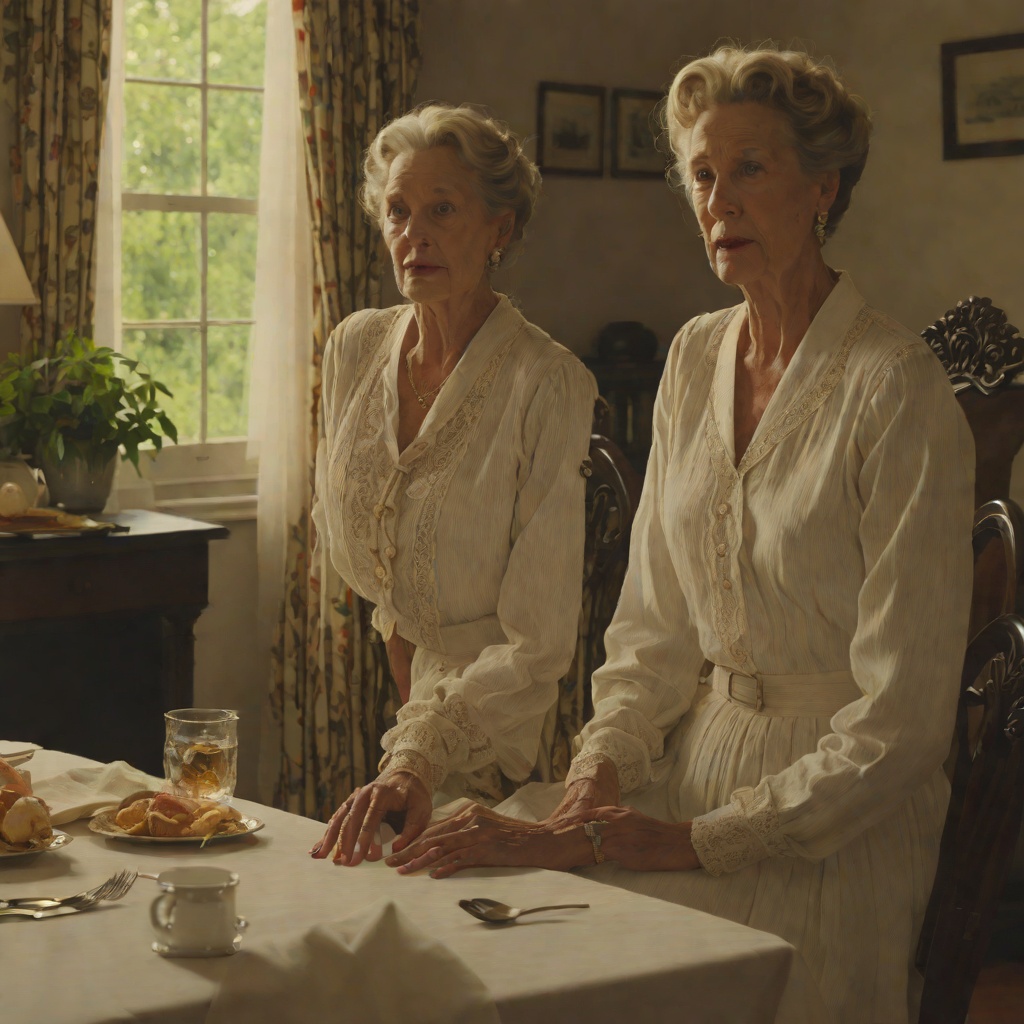
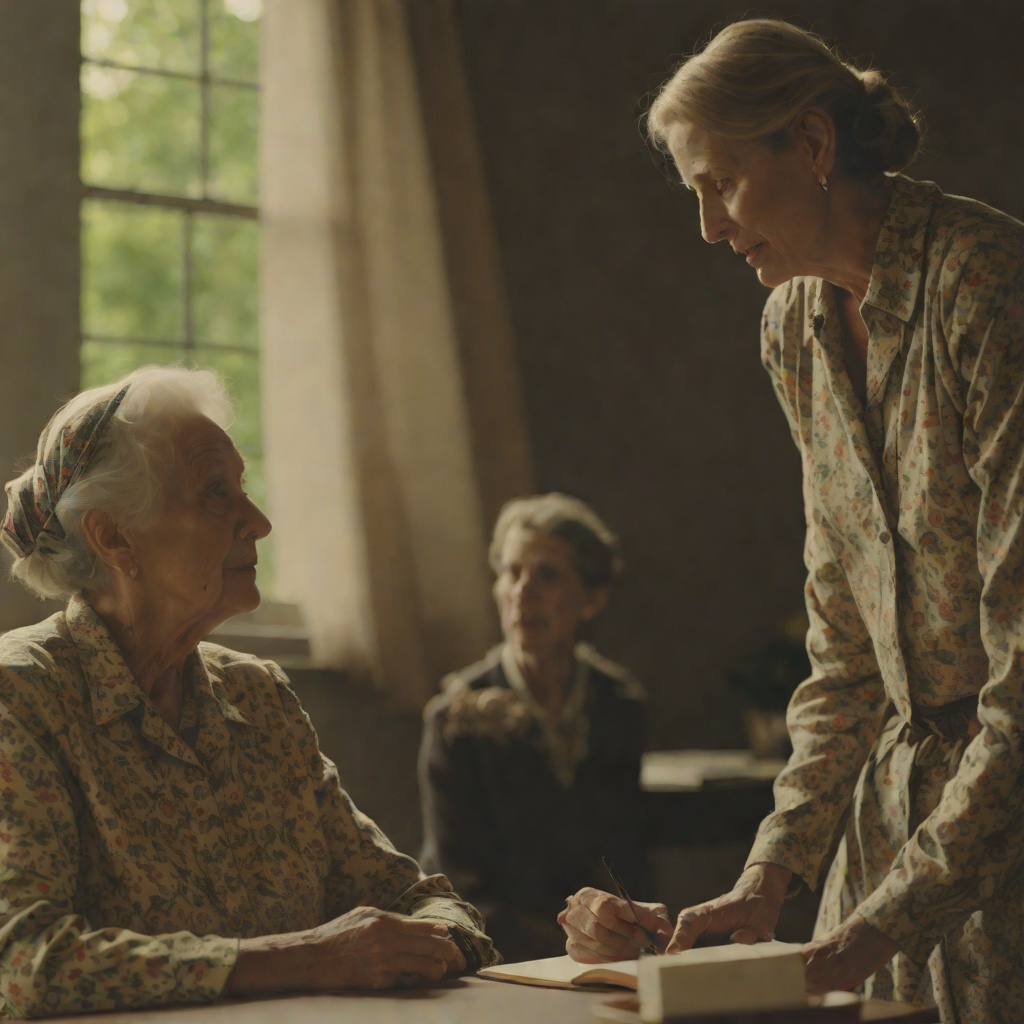
Die, My LoveThe bond between The Narrator and her mother-in-law is one of the novel's most quietly devastating threads: a relationship built not on understanding but on the ritualized performance of care, mutual surveillance, and a grief so profound that it finally collapses the distance between daughter-in-law and mother-in-law. Across the book, the older woman appears first as a figure of suffocating, medicalized concern — a woman addicted to doctors, ready to call one at the slightest sneeze, who offers a green-and-white pill to a pregnant daughter-in-law and watches her all day long with worried eyes. Yet by the end, she becomes the narrator's mirror: a widow left behind, asking impossible questions at four in the morning, and the only person in the family with whom the narrator feels a closeness that is almost unbearable in its intensity.
A Care That Suffocates
The mother-in-law's love is expressed almost entirely through the body and its ailments. She is, the narrator observes, addicted to doctors, idolizing them to the point of absurdity — the narrator imagines she 'gets wet even saying the word' — though this devotion does nothing for her own ruined pancreas. Her concern for her daughter-in-law takes the form of constant, anxious ministrations: when the narrator, pregnant and desperate, stands swaying by the fire at Christmas, the mother-in-law is among those who insist she sit down and drink a glass of cool water, as if sitting and drinking could cure the desire to die. Later, at dawn, she knocks timidly on the narrator's door and enters with another glass of water and a green-and-white pill — Prozac, offered to a mother-to-be. The narrator thanks her and tosses the pill into the fire the moment she leaves. She does not like side effects; she does not like antidepression. The gesture is a small act of rebellion against a care that cannot see the actual wound it is trying to heal.
This medicalized concern extends to the narrator's own body after her breakdown. When she is hospitalized, covered in small cuts from which nurses remove tiny shards of glass, pieces of crystal, petals and slivers of mirror, the mother-in-law's world of doctors and pills becomes the institutional reality of the narrator's life. The older woman's addiction to medicine is, in this light, a failed language — a way of approaching suffering that can only name it as illness, never as the rage and despair the narrator actually feels.
The Performance of Daughter-in-Law
For most of the novel, the narrator plays the role of daughter-in-law with a kind of detached, self-aware irony. She understands her mother-in-law so well, she says, that she wants to run over and climb into her chest, stick her fingers into her eyes, get inside her dressing gown — a violent, almost erotic longing for fusion that she immediately suppresses. 'Understanding one another is too violent,' she concludes. 'It's better to keep quiet, play dumb.' And so she does, sitting curled on the sofa by a fire that has gone out, watching the older woman grieve, saying nothing. She notes the details of the mother-in-law's widowhood with a forensic tenderness: the framed pictures, the prayer cards, the piles of clothing, the toothbrush, the comb, the socks, the ointment, the talcum powder, the underlined books, the armchair, the pipe and matches, the underwear, vests and shaving cream. And most of all, none of this — the way he breathes, the mark his behind leaves on the cushion, his morning breath, the goat noises he makes when he chews. She sees the mother-in-law's nightgown revealing her dark purple nipples and swollen ankles, sees her covering her mouth with her hand, clinging to her husband's bedpan, gasping for air after sliding a door shut.
The First Moment of Closeness
The narrator's first genuine feeling of closeness to her mother-in-law comes at the funeral of the father-in-law, who died in his sleep. The older woman tells the family that her husband squeezed her hand tight just before he died, but that the doctor said it had only been a reflex reaction. It is this detail — the doctor's cold reduction of a final human gesture to a neurological spasm — that breaks something open in the narrator. 'It was then that I felt close to her for the first time.' The moment is not one of shared joy or even shared sorrow, but of shared recognition: both women know what it is to have their deepest feelings dismissed as symptoms, reflexes, side effects. The mother-in-law's grief is real, but the medical establishment that surrounds her cannot see it; the narrator's despair is real, but the same establishment can only offer pills. In this, they are sisters.
The narrator imagines the mother-in-law's future with a mixture of pity and identification: opening up the house to air it out, throwing away her dear husband's spectacles, smelling him on the backrest of the rocking chair where he used to doze, cooking for herself with the same pans she used for his fried eggs and porridge, giving his socks away to the neighbours who have the same size feet. She pictures the older woman going from the bathroom to the bed, hearing him speak, cough, snore. This is the narrator's own fate, projected onto another woman: the perpetual limbo of the one left behind, for whom time does not pass.
The Impossible Questions
The relationship reaches its most intimate and most painful point in the early hours after the father-in-law's death, when the mother-in-law wakes at four in the morning to find her husband sitting in a striped deckchair reading the paper — a ghost, or a memory, or a hallucination of grief. She asks her son and daughter-in-law the questions that cannot be answered: 'When will I start feeling like he's dead? When will I be able to pray for him? What does it mean for a man to die?' The narrator, sunken into her pyjamas, has no answer. The son tries to soothe his mother with herbal tea and practical comfort — 'There's nothing you can do, Mum. Dad's not here any more' — but the narrator sees that he cannot stop the bullet that will reach her sooner or later. The guillotine's blade has been raised, but no one can see it is about to fall. By six in the morning, they have stopped answering her questions altogether. 'There was simply no point.'
The narrator's response to this scene is a strange, almost unbearable empathy. She wants to be Heidi; she wants to climb into her mother-in-law's chest; she wishes the older woman had not stopped cooking for her, filling the house with delicious smells and bringing bread and butter to her offspring. The wish is not for the food but for the life it represents — the life of a woman who fed her family, who made jam in the summers of '94, '97 and 2002, each jar labelled, each jar a small monument to a domestic order that death has now shattered. The narrator understands this loss so completely that she cannot speak it. She plays the role of daughter-in-law, but really, she says, she is a wolf in sheep's clothing.
A Shared Widowhood
The narrator's own marriage is, by this point, already a kind of living death — she sleeps alone, stretched out diagonally across the bed, in a house that was once a dairy farm — and her identification with her mother-in-law is therefore also a prophecy. The older woman's grief is the narrator's future, just as the father-in-law's death is a rehearsal for the narrator's own abandonment. When the mother-in-law agrees with a neighbour that 'it's not right to run off with another man,' she is speaking the language of a generation that endured marriage as a lifelong sentence; the narrator, contemplating her affair with the radiologist, hears these words 'in the distance' and does not know why they sound like a message for someone. The two women are bound by the same institution — marriage — and by the same impossible position: the one who stays, the one who is left, the one who must learn to live with the ghost of a man.
In the end, the relationship between The Narrator and her mother-in-law is not resolved but deepened into silence. The narrator never tells the older woman what she feels; she never climbs into her chest or her dressing gown. Instead, she watches, she remembers, she plays dumb. But the novel makes clear that this silence is not coldness — it is the only possible response to a grief so total that language fails. The mother-in-law, who once offered Prozac to a pregnant woman, and the narrator, who once tossed the pill into the fire, are finally united by what they cannot say to each other: that the men they loved are gone, that the living and the dead will soon be indistinguishable, and that the only comfort left is the presence of another woman who understands.