the father-in-law's rifle·shotgun
Die, My LoveThe father-in-law's rifle/shotgun is the novel's most charged object, a loaded emblem of patriarchal violence, domestic terror, and the narrator's own capacity for killing. Kept beside the old man's bed with cartridges on the night table, it embodies his paranoid readiness to fire at any noise; after his death it passes into the narrator's hands, and she turns it on her own husband and then on the suffering dog Bloody, pulling the trigger for the first time in her life.
The Rifle in the Father-in-Law's Bedroom
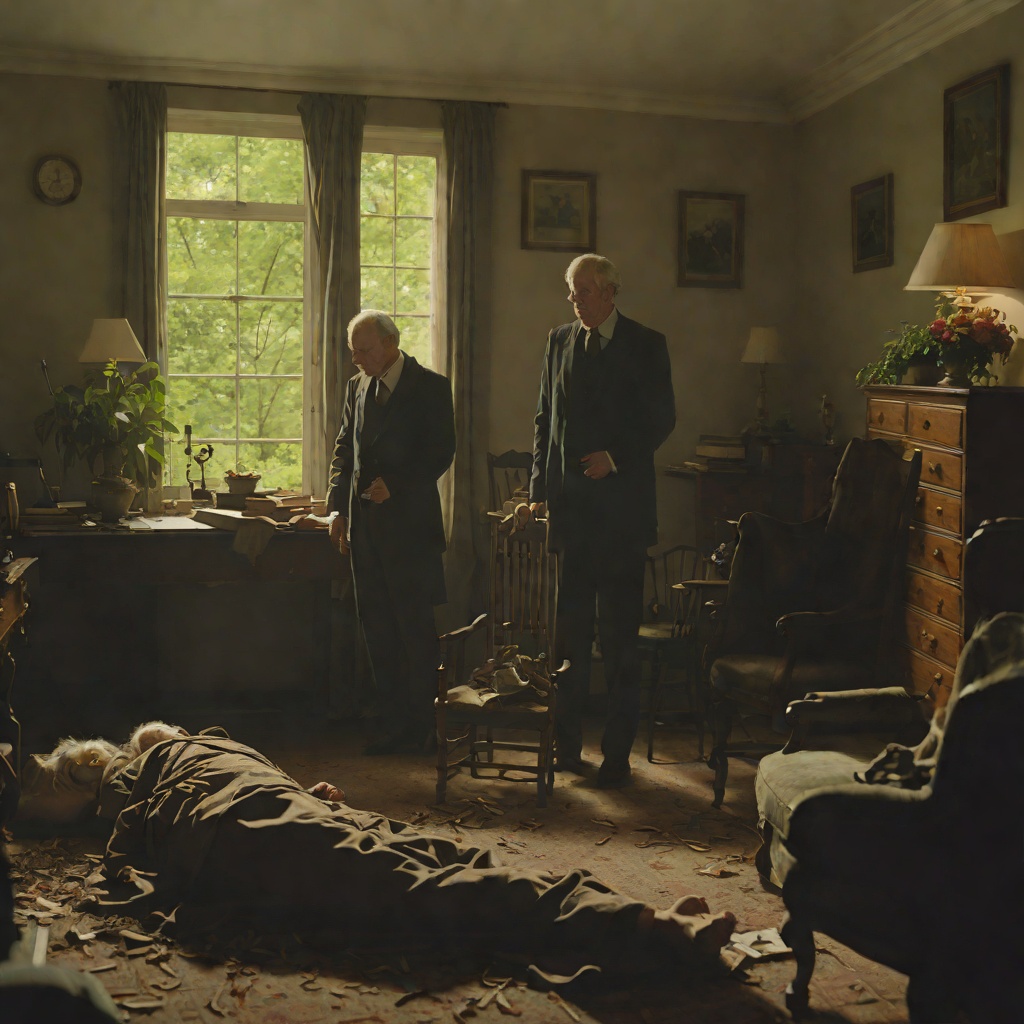
The rifle first appears as a fixture of the father-in-law's nightly ritual of vigilance. In his bedroom there is a rifle; on his night table, a few cartridges. His stated purpose is defensive and almost theatrical: "I won't be killed in my own bed," he says, and if he hears noises he will load his gun and go downstairs, firing "straight at the feet" if there is trouble. The narrator recalls him inhaling the saliva that was always caught in his throat as he made this threat. The weapon is thus introduced not as an instrument of hunting but of domestic paranoia, a loaded answer to imagined intruders, kept within arm's reach of sleep. Its presence in the same room where the old man cleans his dentures and records supermarket receipts in a log of monthly expenses makes it part of the ordinary furniture of his life, an unremarkable companion to his meticulous, unexceptional routines.
The Rifle as a Symbol of the In-Laws' World
The narrator's horror at the rifle is inseparable from her horror at the family that keeps it. She asks, in the woods on Christmas night, how it is possible for her father-in-law to spend the afternoon before Christmas going over receipts with a firearm under his pillow. The juxtaposition is deliberate and damning: the petty arithmetic of household economy and the lethal readiness of the gun belong to the same man, the same world. The rifle becomes the emblem of a masculinity that is at once banal and menacing, the hidden violence beneath the surface of the "normal family" the narrator so despises. Her mother-in-law, who offers Prozac to a mother-to-be and speaks so softly, is the other face of this same domestic order, and the rifle is its male counterpart. The narrator's question "How is it possible?" is not really a question but an indictment of the entire arrangement.
The Rifle After the Father-in-Law's Death
After the father-in-law dies, the rifle remains in the house, and the narrator's relationship to it changes. She goes to her mother-in-law's place at night, in wellies and half-naked, letting herself in with the rabbit-paw keyring hidden in the flowerpot. She notes that if her father-in-law had been alive, he'd have fired, no matter the direction, just for the pleasure of pulling the trigger. The pile of ironed shirts and the books organised on the shelves give no impression that someone has recently died, but the rifle is still there, a relic of the dead man's vigilance. The narrator searches the house and finds it, and her need for it is explicit: "Some people need to be able to see the ocean, but I need to be able to see a firearm, even if it's motionless, dirty and unloaded." The rifle has become her object of comfort, her version of a calming vista, a thing whose mere presence steadies her.
Aiming at the Husband
When the narrator returns with the rifle, she finds her husband with one eye open and aims at him. He is so scared he cannot say a word. "Kill him," she says, and when he asks who, she answers: "Kill the dog." The demand is for mercy killing, but the gesture is one of pure menace, the rifle trained on her husband's body as she makes her case. He refuses, telling her they will call the vet tomorrow, and rolls over onto his side, his arse facing her. She stays there, watching him sleep, astonished by his relentless cowardice. The rifle has become the instrument of a confrontation that is never quite spoken: she holds the power of life and death over the dog, and by extension over him, and he will not meet her there.
The First Shot
Shotgun in hand, the narrator goes from room to room until she reaches the corner of the kitchen where Bloody, all twisted on a filthy rag, is sobbing with pain. She aims. Her brain goes blank. She feels like an Israeli soldier and suddenly, in her mind, she hears the order: "Fire! Fire, you bastard!" And there, for the first time in her life, she pulls the trigger. The rifle, inherited from the paranoid father-in-law, becomes the instrument of her own first act of violence, a killing she performs not in self-defense but in mercy, or in madness, or in both. The old man's weapon, kept for the pleasure of pulling the trigger, is finally fired by the daughter-in-law he would have shot at for the same pleasure. The object has passed from one hand to another, and with it the capacity for violence that the narrator both despises and claims as her own.