
Dingo’s Wild Hunts
DingoThis thread follows the return of Dingo’s predatory instincts, from ominous signs to the destruction that makes rural coexistence impossible.
increasing Bearing strength in each event
 decreasing
Bearing strength in each eventdecreasingWarning Signs
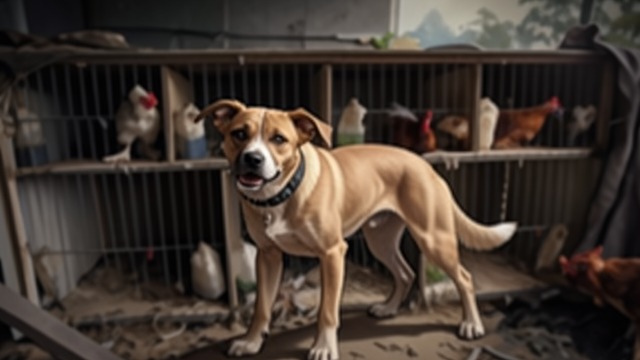
Predatory Signs
Reactions to Prey
Even as a young dog, Dingo trembles at the sight of poultry and livestock, not from fear but from suppressed desire.
A Dangerous Restraint
The narrator repeatedly calls him back, sensing that his self-control is temporary and that the inherited hunting impulse is growing stronger.
The Sheep at Sazy
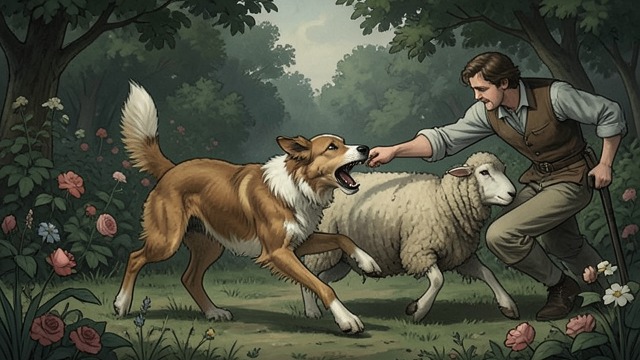
The Attack in the Garden
A Fatal Encounter
When Dingo sees the prized sheep, he charges and tears its throat before anyone can stop him.
Friendship Fractured
The family’s polite assurances cannot erase the death; the narrator leaves knowing that something between him and Édouard Legrel has ended.
The Poultry Massacre
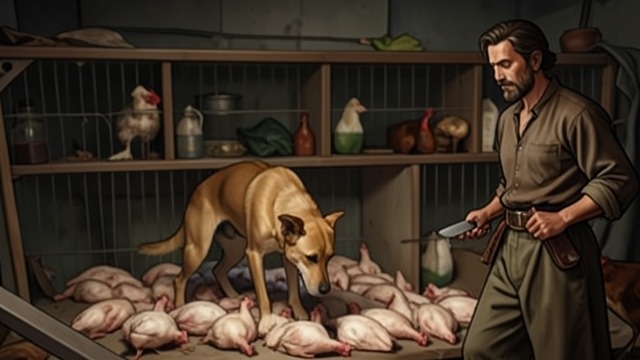
The Farmyard Massacre
A Scene of Destruction
Dingo kills a hundred chickens and arranges their bodies in orderly rows, while leaving every egg unbroken.
A Familiar Pattern
The tableau confirms that the attack is not an isolated mishap but the return of the behavior Herpett described in the puppy’s ancestry.
Village Animals Lost
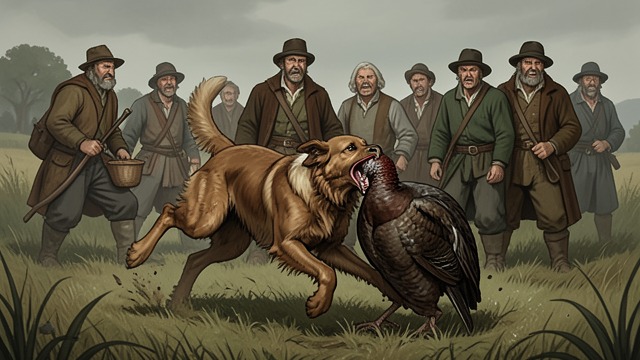
Hunts Across Ponteilles
Escalating Raids
Dingo kills turkeys, peacocks, rabbits, waterfowl, and animals belonging to neighboring households.
Public Anger
The losses make the narrator’s private affection a public problem, as residents demand compensation and begin treating Dingo as a menace.
The Partridge Hunt

Game Driven to Exhaustion
A New Kind of Hunt
Dingo repeatedly flushes partridges until exhaustion leaves them vulnerable, then pursues hares with comparable speed.
The Hunters’ Response
The depleted game frustrates the local hunting society, which turns from complaint toward a covert plan to poison him.
As Dingo approaches adulthood
During a visit to Édouard Legrel’s home
Soon after the sheep’s death
Over the month following the poultry massacre
After Dingo briefly stops ranging beyond the enclosure
