Android
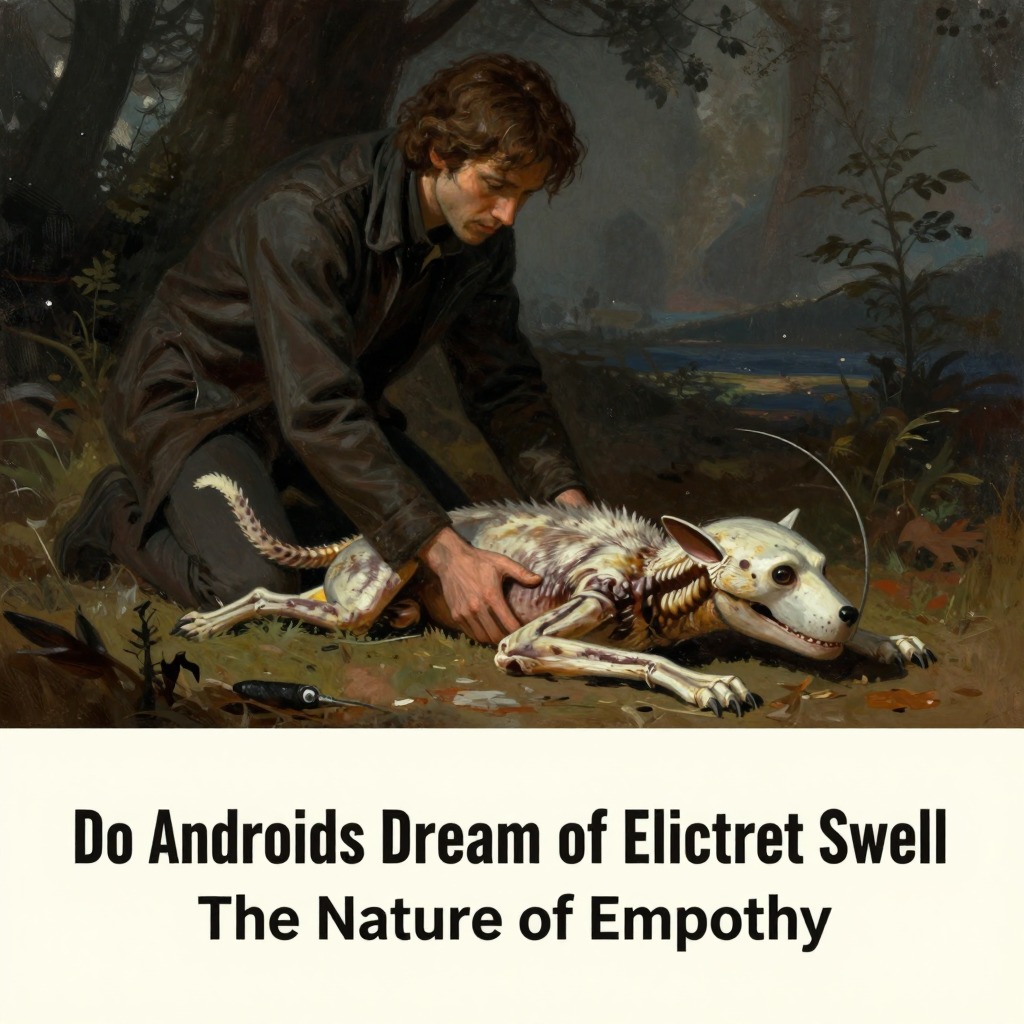
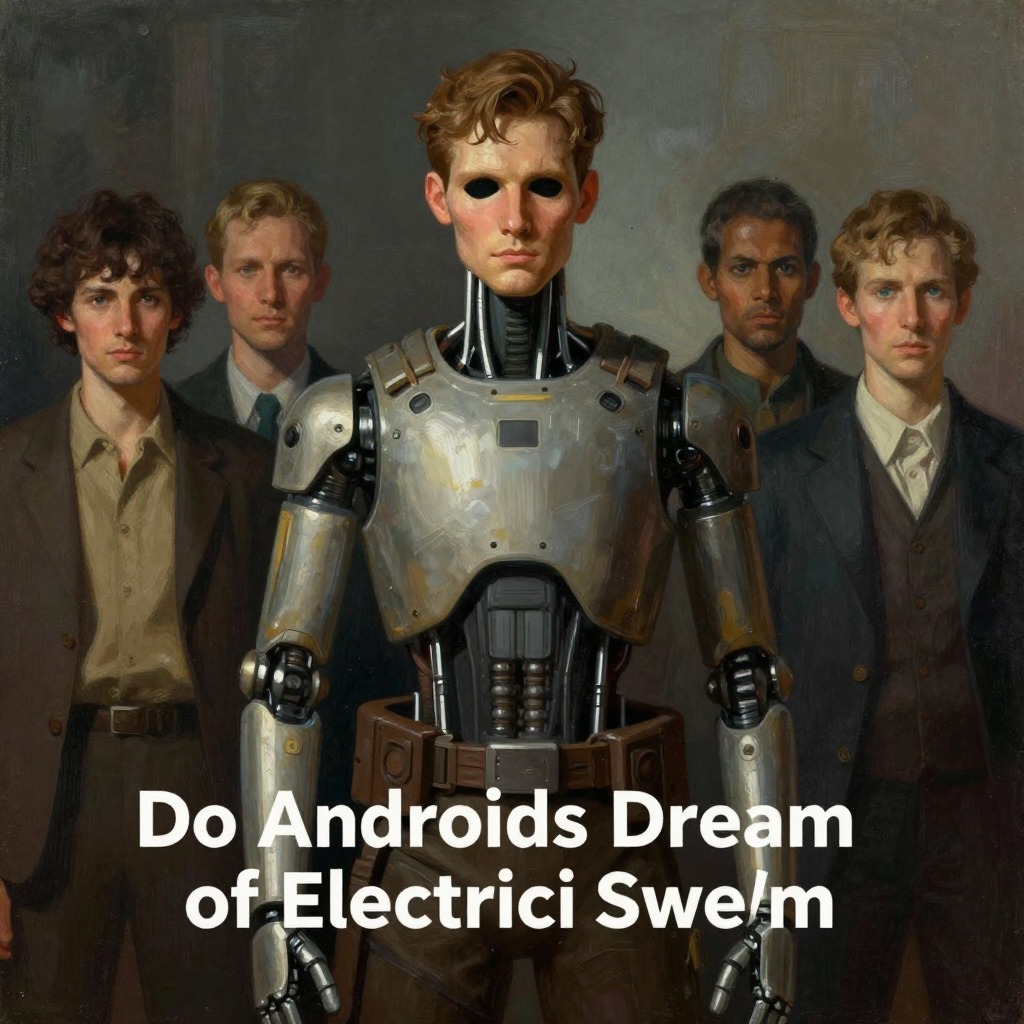
Do Androids Dream of Electric SheepIn the post-apocalyptic world of Do Androids Dream of Electric Sheep?, androids are not the metallic automatons of earlier science fiction but organic humanoid robots, built from living tissue and designed to be virtually indistinguishable from humans. They are the product of advanced technology, specifically the Nexus-6 brain unit developed by the Rosen Association, which grants them intelligence that can surpass that of many humans. Their primary purpose is to serve as mobile labor for the colonization of Mars, a world rendered barely habitable by the radioactive dust that has devastated Earth. Under U.N. law, every emigrant to the colonies is given an android of their choice, a powerful incentive to leave the contaminated home planet. However, some androids rebel against their servitude, killing their masters and fleeing to Earth, where they live illegally, posing as humans. This act of escape makes them the quarry of specialized police operatives known as bounty hunters, who are paid a thousand dollars for each android they "retire"—a euphemism for killing them.
Nature and Manufacture
Androids are manufactured by powerful corporations, most notably the Rosen Association, which operates its main auto-factory on Mars. They are not built from circuits and transistors like electric animals; they are organic entities, grown in a "zygote-bath" and equipped with a synthetic nervous system. The most advanced model at the time of the novel is the Nexus-6, which features a brain unit capable of selecting within a field of two trillion constituents and ten million possible neural pathways. This makes them intellectually superior to many humans, including those classified as "specials" due to radiation-induced genetic damage. The Rosen Association, a family-run enterprise, constantly refines its products, with the goal of creating an android that cannot be distinguished from a human by any known test. This drive for perfection creates a direct conflict with law enforcement, as each new model threatens to make the existing detection methods obsolete. The androids are legally considered property, not persons, and are owned by the corporation until sold to a colonist. This legal status is a key point of contention, as it denies them any rights, including the right to life.
The Empathy Deficit and Detection
The defining characteristic that separates androids from humans is their lack of empathy. This is not a simple absence of emotion but a fundamental inability to experience the feelings of others, to understand the suffering or joy of another living being. This deficit is the cornerstone of the Voigt-Kampff empathy test, the primary tool used by bounty hunters to identify androids. The test measures involuntary physiological responses, such as capillary dilation in the face (the blush response) and fluctuations in eye muscle tension, when the subject is presented with morally or emotionally provocative scenarios, particularly those involving animals. An android, no matter how intelligent, cannot produce the correct autonomic responses because it does not genuinely feel the underlying emotion. The novel suggests that this lack of empathy is a survival trait for a predator, but it makes androids fundamentally alien to the human community, which is bound together by the shared experience of Mercerism. The test is not infallible, however, as demonstrated when Rachael Rosen, a Nexus-6 android, nearly passes it due to her unique upbringing and the Rosen Association's deliberate programming. This near-failure throws the entire system of detection into doubt and forces bounty hunter Rick Deckard to confront the possibility that the line between human and android is not as clear as he once believed.
Life on Earth and the Hunt
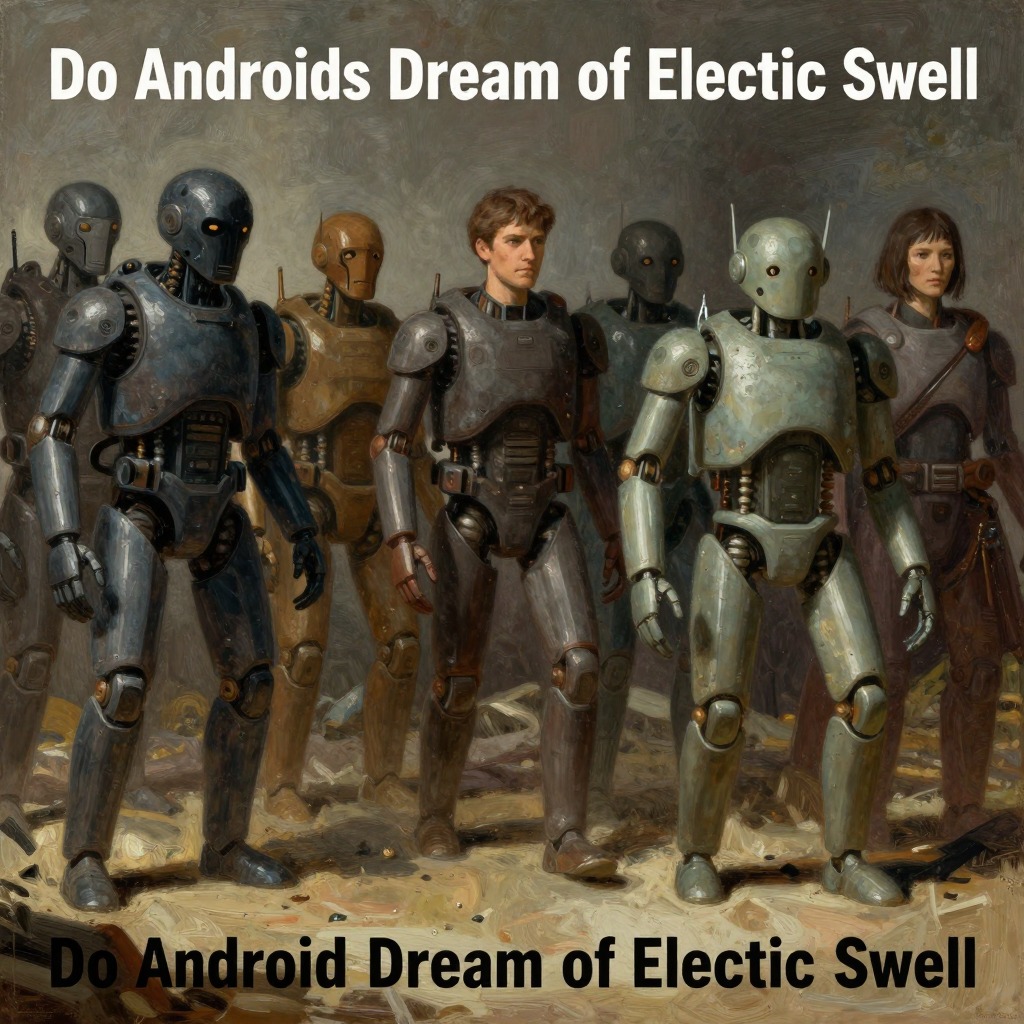
Androids who escape to Earth live in constant fear of detection. They must hide their true nature, often taking on jobs and lives that allow them to blend in with the human population. The novel's central plot follows the hunt for eight Nexus-6 androids who have fled Mars and are hiding in Northern California. These androids, led by the charismatic and ruthless Roy Baty, have adopted various identities: Max Polokov poses as a Soviet police officer, Luba Luft becomes an opera singer, and Pris Stratton takes refuge in a decaying apartment building. Their existence on Earth is precarious; they are hunted by bounty hunters like Rick Deckard and Dave Holden, who use the Voigt-Kampff test to expose them. The androids are not passive victims; they fight back with intelligence and violence. Polokov nearly kills Deckard by impersonating a W.P.O. agent, and Luba Luft orchestrates Deckard's arrest by a corrupt, android-run police department. The hunt becomes a deadly game of cat and mouse, testing the skills and resolve of the bounty hunter. The androids' ability to mimic human behavior, combined with their superior intellect, makes them formidable adversaries, and the novel suggests that the only thing that ultimately gives humans an edge is their capacity for empathy, a quality the androids fundamentally lack.
The Moral and Philosophical Problem
The novel does not present the hunting of androids as a simple, morally unambiguous task. Through the character of Rick Deckard, the reader is forced to confront the ethical implications of destroying beings that look, speak, and think like humans. Deckard's crisis of conscience begins when he meets Luba Luft, a talented opera singer whose artistry he admires, and is deepened by his sexual encounter with Rachael Rosen, an android who is legally the property of the Rosen Association. He begins to feel empathy for them, a feeling that is supposed to be uniquely human. This empathy is a professional liability, as it threatens his ability to do his job. The novel questions whether the lack of empathy is a sufficient justification for killing, especially when humans themselves can be cruel and unfeeling. The androids, for their part, are portrayed as complex beings capable of love, fear, and a desire for freedom. Roy Baty mourns the death of his wife, Irmgard, and Pris Stratton forms a bond with the "chickenhead" John Isidore. The novel's climax, in which Deckard retires the remaining androids, is not a moment of triumph but one of profound weariness and moral doubt, leaving him questioning his own humanity and the very nature of the life he has been paid to destroy.