Animal Row
Do Androids Dream of Electric SheepAnimal Row, a several-block-long district of big-time animal dealers with huge glass windows and lurid signs, occupies a central place in the moral and emotional geography of post-World War Terminus San Francisco. It is the place where the city's remaining inhabitants, surrounded by radioactive dust and the extinction of most species, go to measure their worth against the price tags of living creatures. For bounty hunter Rick Deckard, Animal Row becomes the stage on which his professional success, his personal longing, and his growing moral crisis all converge.
The District and Its Significance
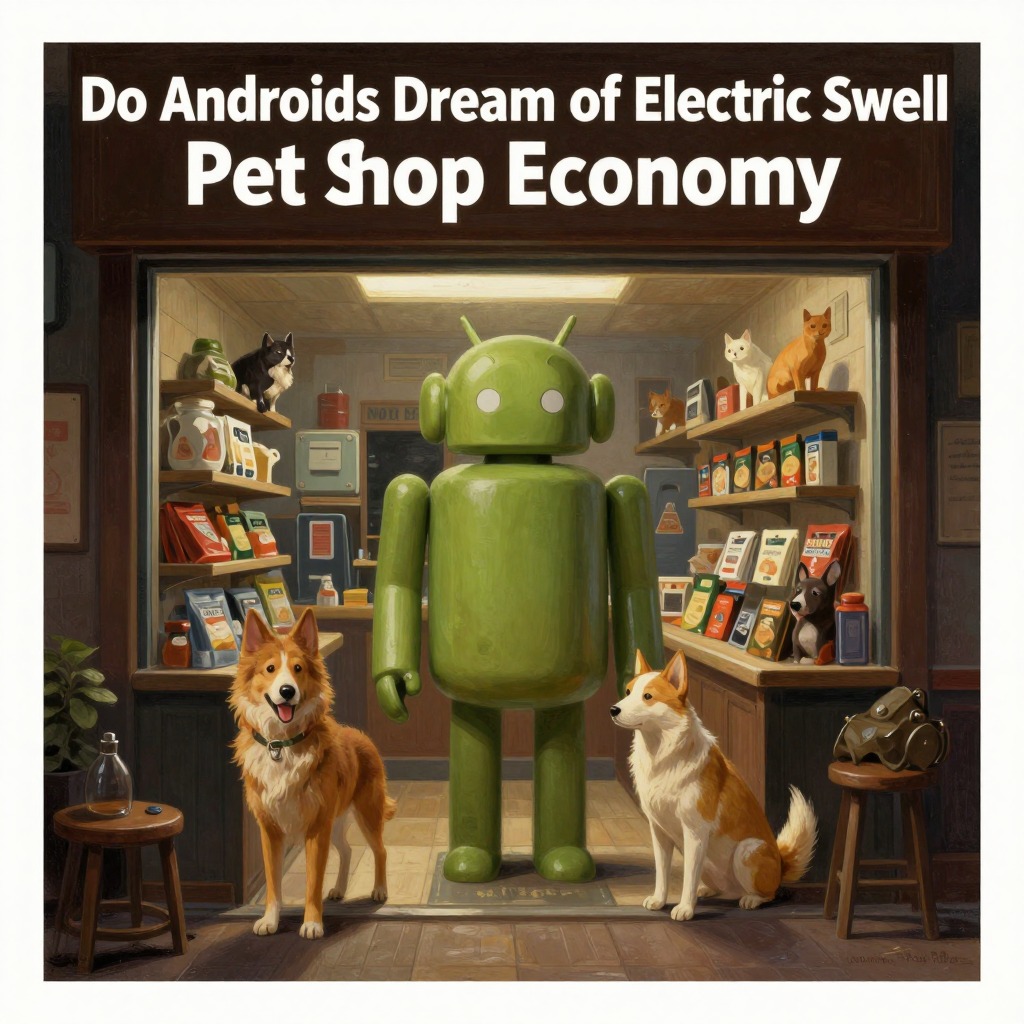
Animal Row consists of several blocks of large pet shops, each with expansive display windows designed to draw in passersby. The district operates in a world where the sanctity of animal life has become a near-religious tenet of Mercerism, yet where genuine animals are so rare that their prices have become astronomical. The shops cater to a clientele for whom owning a real animal is the ultimate status symbol, a proof of one's regular status and moral worth. The radioactive dust that blankets the planet has driven most species to extinction, making every surviving creature a treasure beyond ordinary reach. The shops themselves are a testament to the war's legacy: they thrive because the desire for living animals has become a form of spiritual currency, yet they can only serve the wealthy few who can afford the prices.
Rick Deckard's Visits to Animal Row
On his way to work, Rick Deckard stops briefly to skulk about in front of one of San Francisco's larger pet shops along Animal Row. In the center of the block-long display window, an ostrich in a heated clear-plastic cage returns his stare. The bird, according to the info plaque attached to the cage, had just arrived from a zoo in Cleveland and is the only ostrich on the West Coast. After staring at it, Rick spends a few more minutes staring grimly at the price tag before continuing on to the Hall of Justice on Lombard Street, arriving a quarter of an hour late to work. Later, after retiring three androids and earning bounty money, he flies across town to Animal Row again, driven by a new and horribly unique depression that had floored him earlier in the day. This activity with animals and animal dealers seems the only weak spot in the shroud of depression, a flaw by which he might be able to grab it and exorcise it. In the past, the sight of animals and the scent of money deals with expensive stakes had done much for him.
The Goat Purchase and Its Aftermath
At the pet shop, a nattily dressed salesman engages Rick, steering him away from rabbits toward a goat. The salesman argues that a goat can be taught to butt anyone who tries to steal it, that it is loyal, and that it has a free, natural soul which no cage can chain up. He emphasizes that goats are not bothered by contaminated quasi-foodstuffs, making them a superior long-term investment. Rick notices a big black goat standing squarely in the center of its cage and moves toward it. The goat is a female black Nubian goat, very large, and to Rick it seems beautiful. After consulting his creased Sidney's catalogue for the listing on goats, black Nubian, he negotiates a price. He signs a time-payment contract, pays his entire three thousand dollars in bounty money as a down payment, and shortly finds himself standing by his hovercar, rather dazed, as employees load the crate of goat into the car. The expense and contractual indebtedness appall him, but he feels he had to do it: the experience with Phil Resch had shaken his confidence, and he needed to restore his faith in himself and his abilities. The goat, however, is later killed by Rachael Rosen, who drags it to the edge of the roof and pushes it off, an act of android vengeance that deepens Rick's despair.
Thematic Significance
Animal Row embodies the central paradox of the novel's world: the desperate yearning for authentic life in a dying ecosystem, and the way that yearning is commodified and monetized. The district is where the abstract moral value of animals—their sacredness in Mercerism—meets the hard reality of supply and demand. Rick's visits to Animal Row trace his trajectory from a man who owns an electric sheep and dreams of a real animal, to a bounty hunter who earns enough to buy a goat, to a man who loses that goat to the very forces he has been paid to destroy. The district thus becomes a spatial representation of the novel's core tension: the impossibility of possessing life without participating in the system that destroys it.