Nexus-6
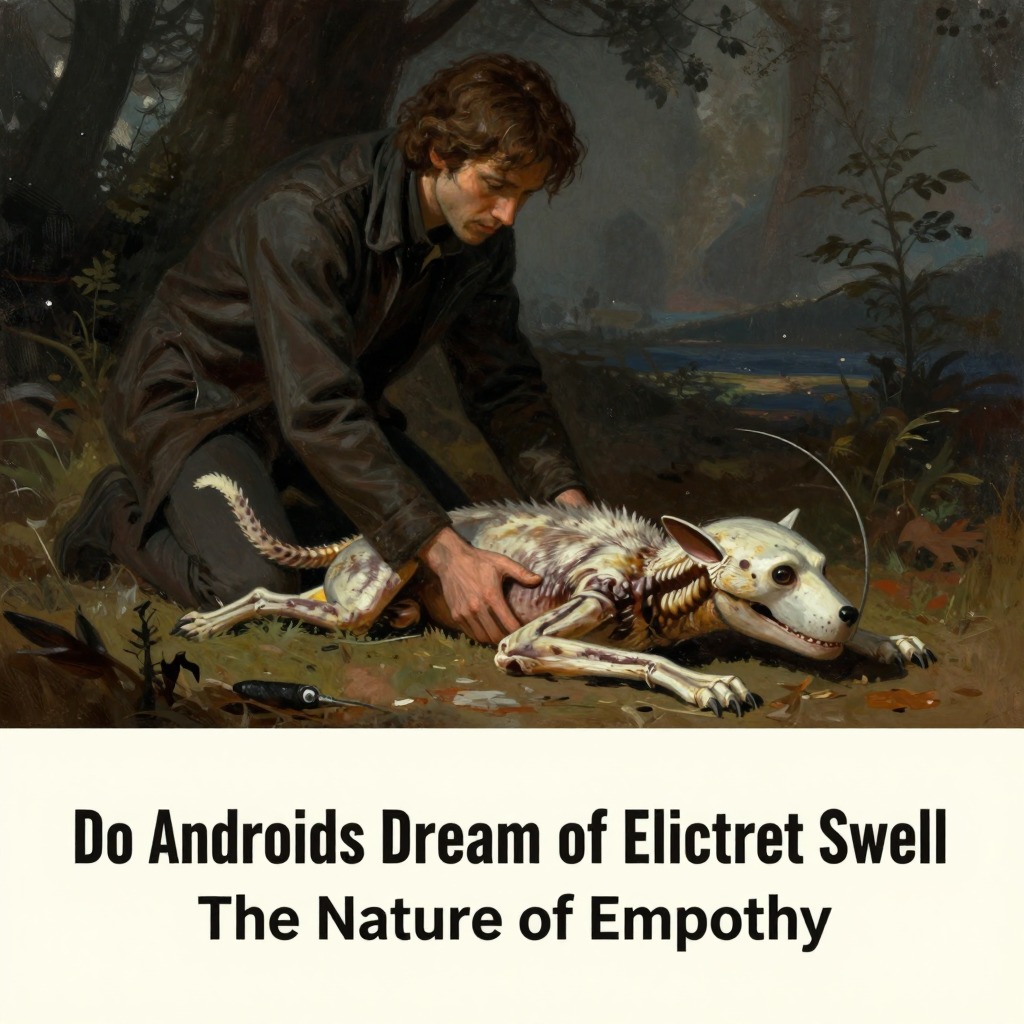
Do Androids Dream of Electric SheepThe Nexus-6 brain unit, developed by the Rosen Association, stands as the most sophisticated android brain ever produced, a technological novum that reshapes the moral and practical landscape of Philip K. Dick's novel. With a capacity to select within a field of two trillion constituents and a choice among ten million possible neural pathways, the Nexus-6 can assume any of fourteen basic reaction-postures in 0.45 of a second. This intelligence surpasses several classes of human "specials," making the android servant potentially more adroit than its master. The unit's existence forces a crisis: the standard Voigt-Kampff empathy test, long the primary tool for distinguishing humans from androids, may no longer be reliable against such advanced constructs.
Design and Capabilities
The Nexus-6 brain unit is the culmination of the Rosen Association's drive to produce ever more human-like androids for the colonization program. Its two trillion constituents and ten million possible neural pathways represent a vast increase in complexity over previous models. The unit's speed—0.45 seconds to assume any of fourteen basic reaction-postures—makes it exceptionally difficult to trap through intelligence tests, which had not caught an android in years since the crude varieties of the 1970s. The Nexus-6 is not merely a machine; it is an organic android, built from biological components, and its brain unit is designed to mimic human cognition with unprecedented fidelity. The Rosen Association, a family-run corporation, manufactures all its current output with the Nexus-6, making it the standard for all new androids.
Challenge to Detection
The Nexus-6 poses a direct threat to the Voigt-Kampff empathy test, the only method police agencies have for detecting escaped androids. The test measures autonomic responses—capillary dilation in the face and eye-muscle tension—to morally shocking stimuli, relying on the assumption that androids lack genuine empathic ability. However, the Nexus-6's advanced brain unit may allow it to simulate these responses, or at least to evade detection. When Rick Deckard travels to the Rosen Association in Seattle to test the scale against a Nexus-6, he is confronted with Rachael Rosen, an android who nearly passes the test. Her responses to questions about a calfskin wallet, a butterfly collection, a wasp, and a nude girl on a bearskin rug show only feeble or absent reactions, leading Deckard to initially conclude she is human. Only by using a trick question—claiming his briefcase is made of genuine human babyhide—does he provoke a delayed but measurable response, confirming her android nature. This near-failure reveals that the Voigt-Kampff test is not specific for the Nexus-6, and that a small class of human schizophrenics with flattened affect might also fail it, creating a dangerous ambiguity.
Narrative and Thematic Significance
The Nexus-6 brain unit is not merely a technological upgrade; it is the catalyst for the novel's central crisis of identity and empathy. Deckard's encounter with Rachael Rosen, a Nexus-6, forces him to recognize that androids can appear more human than some humans, and that his own capacity for empathy extends to them. The Nexus-6 androids he hunts—Polokov, Luba Luft, Pris Stratton, Roy Baty, and Irmgard Baty—each embody different facets of this challenge. Polokov, posing as a Soviet police officer, nearly kills Deckard; Luba Luft, an opera singer, uses her public persona to evade detection; Pris Stratton, a duplicate of Rachael, is sent to exploit Deckard's emotional vulnerability. The Nexus-6's intelligence and adaptability make it a formidable adversary, but also a mirror that reflects the moral ambiguity of bounty hunting. Deckard's eventual retirement of six Nexus-6 androids in a single day—a record—leaves him spiritually exhausted, questioning the very nature of life and the right to kill. The Nexus-6 thus becomes a symbol of the blurring line between human and machine, and the novel's exploration of what it means to be alive in a world of radioactive dust and artificial beings.