Rick Deckard and Iran Deckard
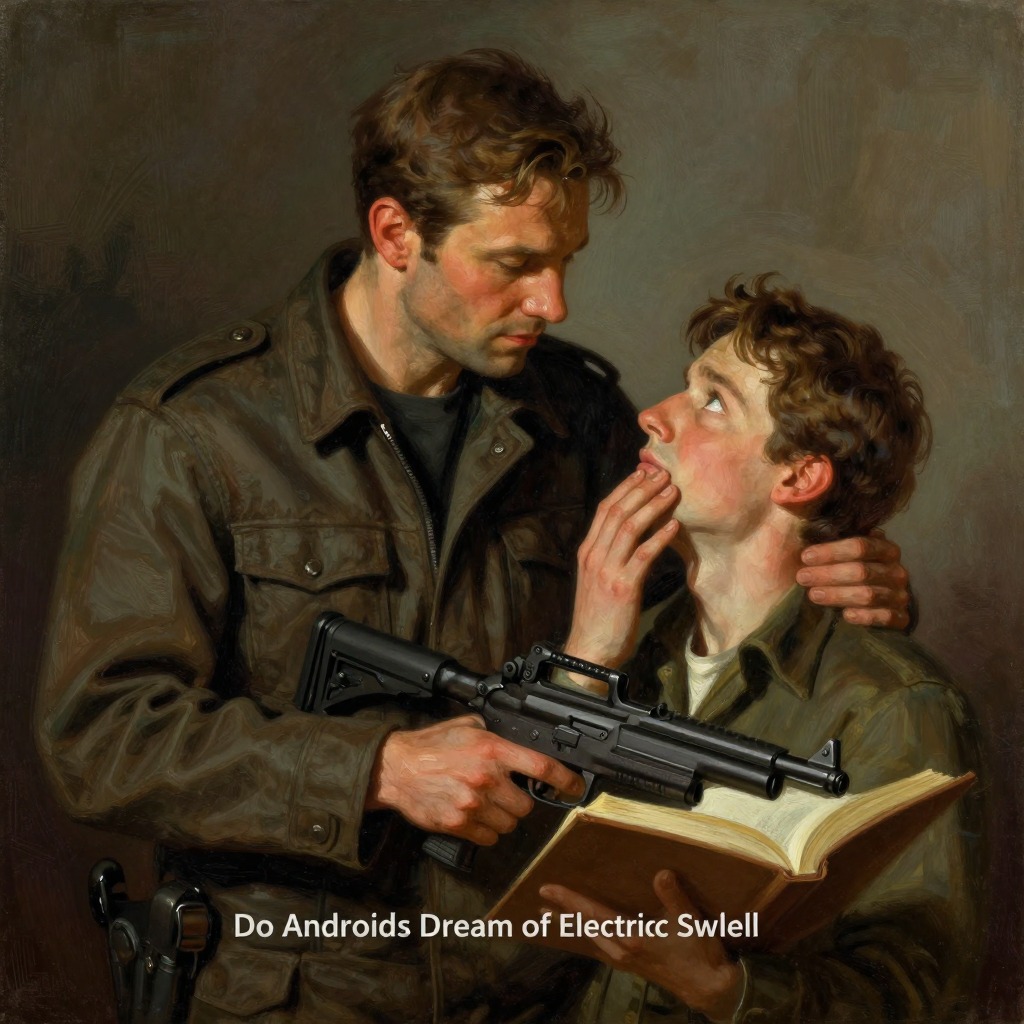
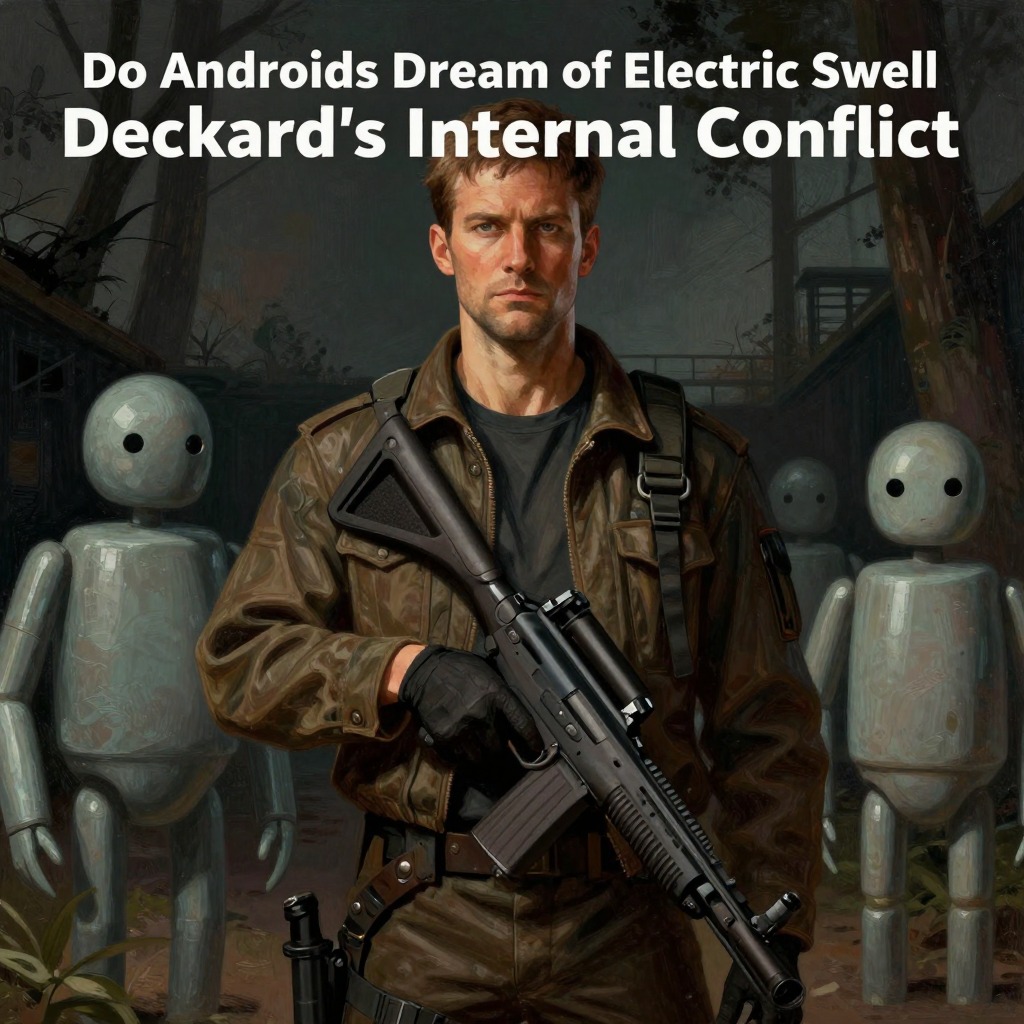
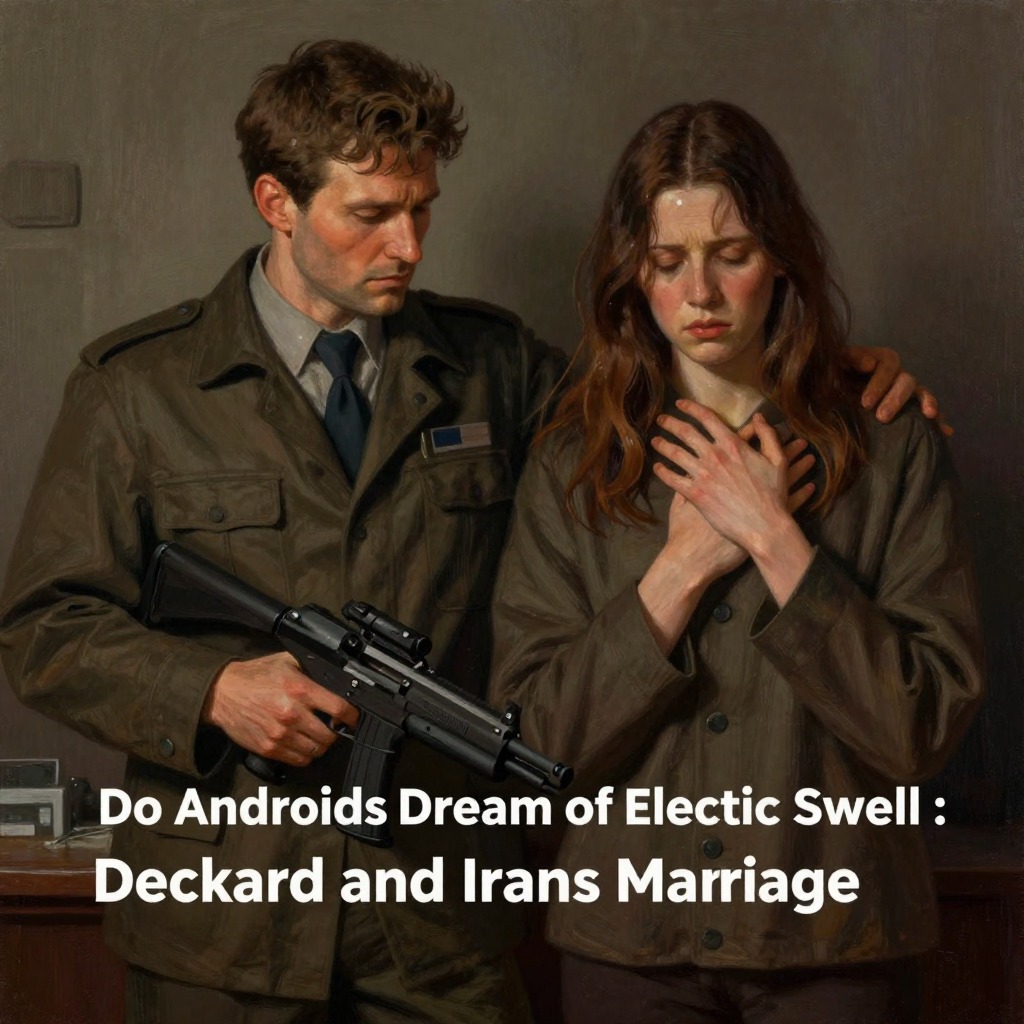
Do Androids Dream of Electric SheepThe marriage of Rick Deckard and Iran Deckard is a strained, emotionally distant union shaped by the mood organ, Mercerism, and the pressures of Rick's work as a bounty hunter. Their relationship oscillates between bitter conflict, fragile reconciliation, and a final, tentative peace after Rick's traumatic day of retiring six Nexus-6 androids.
Identity and Background
Rick and Iran Deckard live in a half-occupied conapt building in San Francisco, a world scarred by radioactive dust and mass emigration. Their marriage is mediated by the Penfield mood organ, a device that allows them to dial prescribed emotional states. On the morning of January 3, 1992, Rick awakens to find Iran has set her mood organ for a six-hour self-accusatory depression, a setting she deliberately scheduled after hearing the emptiness of the building and feeling an "absence of appropriate affect." Rick, who has dialed a businesslike professional attitude for the day, tries to convince her to reset for a 104 — a mood of "pleased acknowledgment of husband's superior wisdom in all matters" — but their argument escalates. Iran accuses him of being "a murderer hired by the cops" who kills "just those poor andys," while Rick retorts that she has no hesitation spending the bounty money he brings home. They eventually compromise: Rick dials 594 for her and a creative attitude toward his job for himself, but the morning leaves a residue of hostility.
Arc Through the Plot
Rick's work as a bounty hunter dominates the marriage. After he retires the android Max Polokov, he calls Iran from his hovercar, hoping to share his success. He tells her he has made a thousand dollars and asks if she can hear him, but Iran, still in her self-accusatory depression, stares at him sightlessly; her voice sinks into a dreary drone of despond. Rick bitterly reflects that "most androids I've known have more vitality and desire to live than my wife" and considers that he could have divorced her two years ago. Later that evening, after retiring three androids, Rick buys a black Nubian goat with his bounty money. He brings Iran to the roof to show her, and her reaction is transformative: she quotes an old song by Josef Strauss, kisses him, and says, "Much love. And very much pleasure." She insists they go downstairs to fuse with Mercer in gratitude, and Rick follows, though he is wary. The moment of shared joy is interrupted by a phone call from Inspector Harry Bryant, summoning Rick to retire the remaining three androids.
Relationships and Conflict
The marriage is defined by a pattern of emotional distance and brief, intense connection. Iran's depression is a recurring source of conflict; she schedules despair twice a month and programs an automatic resetting for a 481 — "awareness of the manifold possibilities open to me in the future" — but Rick worries that such a mood is self-perpetuating. He sees her depression as a choice she could snap out of, while she sees his work as morally compromised. After Rick buys the goat, Iran's mood lifts, but she is immediately anxious about the financial burden, calculating the interest on the contract. When Rick suggests transferring to a desk job, she points out that they need the bounty money to keep the goat. The marriage is also tested by Rick's encounter with the android Rachael Rosen, with whom he has sex in a hotel room. He tells Rachael, "If you weren't an android, if I could legally marry you, I would," a confession that underscores the emotional void in his marriage.
Change and Ending
After Rick retires the last three androids, he drives to a desolate area near the Oregon border and experiences a solitary ascent, feeling he has permanently fused with Wilbur Mercer. He returns home covered in dust, with a cut on his cheek, carrying a cardboard box. Iran opens the door and sees him: "Round with awe his eyes shone, like those of a little boy." He tells her he has a toad, which he found in the desert. Iran, examining it, discovers a tiny control panel and realizes it is an electric animal. Crestfallen, Rick says, "The electric things have their lives, too. Paltry as those lives are." Iran tells him, "It's over," and he agrees, saying, "God, what a marathon assignment." She kisses him and says she is glad he has come home. He asks if he did wrong, and she says no. He goes to bed, and Iran orders artificial flies for the electric toad, feeling better. The marriage ends not in grand reconciliation but in a quiet, exhausted peace: Iran stays by the bed to be sure he won't wake in fear, then returns to the kitchen to care for the electric toad, a gesture of devotion to the thing he loves.