Voigt-Kampff test on Rachael Rosen
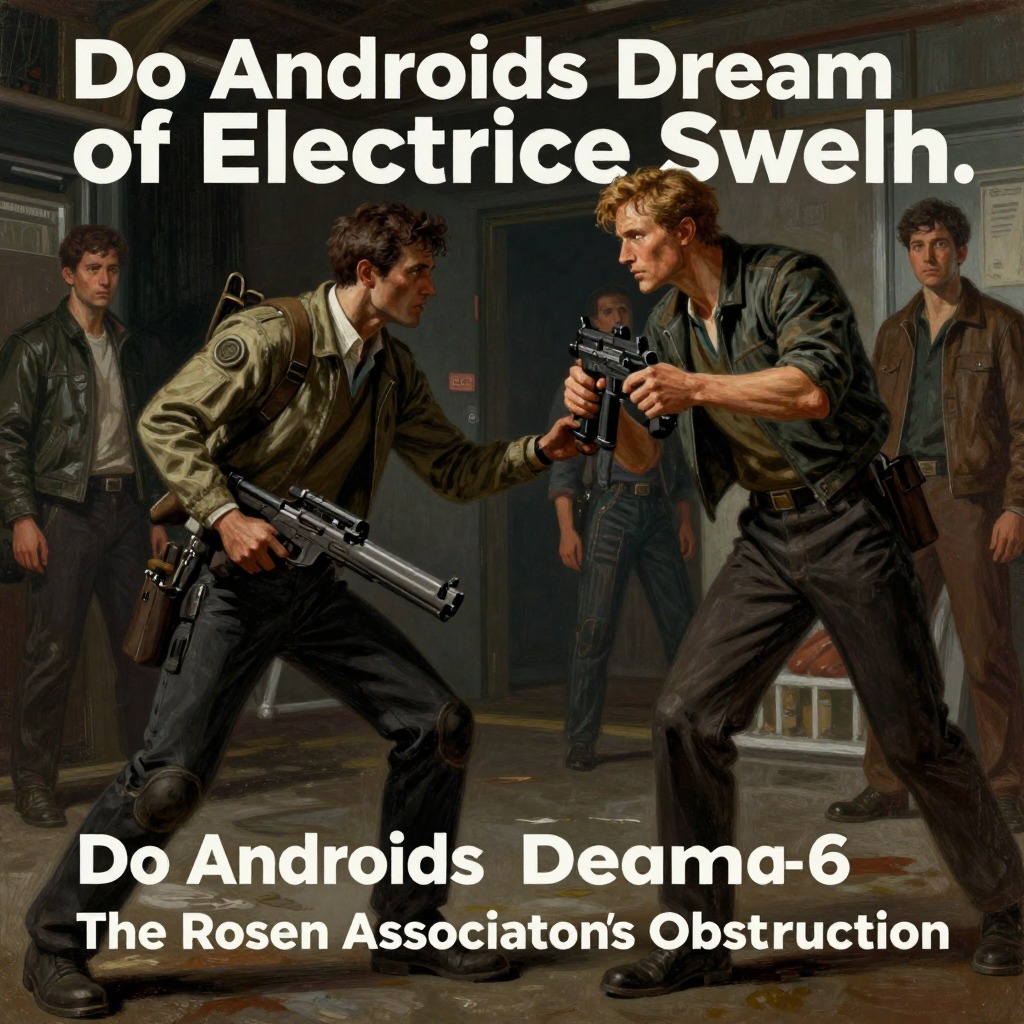
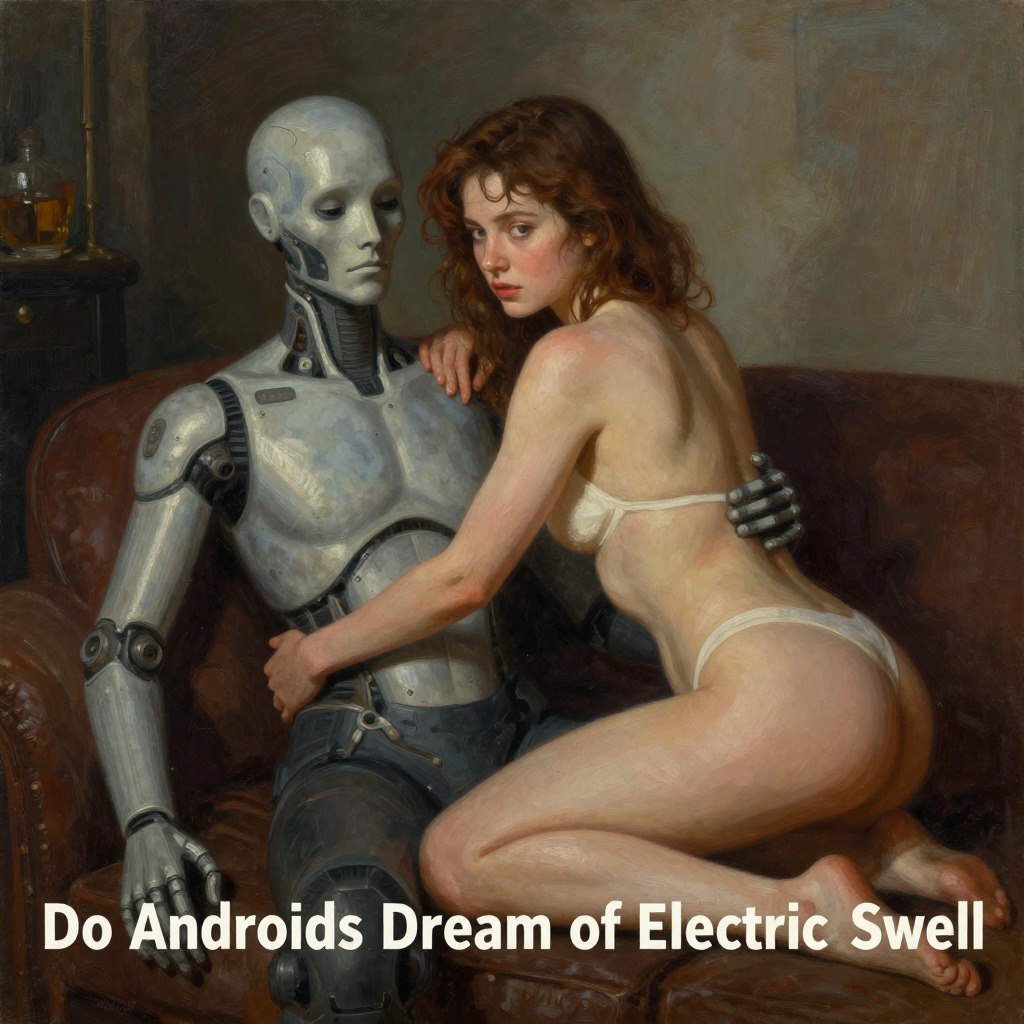
Do Androids Dream of Electric SheepThe Voigt-Kampff test on Rachael Rosen is the narrative hinge of Do Androids Dream of Electric Sheep?, the moment when bounty hunter Rick Deckard, sent to the Rosen Association in Seattle to validate his empathy test against the new Nexus-6 android brain unit, is systematically manipulated into misidentifying a human as an android—only to discover that Rachael herself is an android, a revelation that nearly discredits the test and forces Deckard to confront the limits of his own detection methods and the moral ambiguity of his profession.
Setup and the Rosen Association's Trap
Deckard arrives at the Rosen Association Building after his superior, Inspector Harry Bryant, has arranged a blind test: the Rosens will supply a group of subjects, some human and some Nexus-6 androids, and Deckard must use the Voigt-Kampff apparatus to distinguish them. The test is critical because the new Nexus-6 brain unit, with its two trillion constituents and ten million possible neural pathways, threatens to outpace existing detection methods. Eldon Rosen, the elderly head of the corporation, and his niece Rachael greet Deckard on the roof, where he is momentarily distracted by the company's collection of living animals—a raccoon named Bill and an owl called Scrappy—before being led downstairs. Eldon Rosen, visibly nervous, tells Deckard that Rachael will be his first subject, adding, "She may be an android. We're hoping you can tell." This sets the trap: if Deckard identifies a human as an android, the Voigt-Kampff test will be discredited, and the Rosen Association can continue manufacturing Nexus-6 types without police interference.
The Initial Test and Rachael's Responses
Deckard sets up his equipment—a flat adhesive disk to measure capillary dilation in the face (the "blush" reaction) and a pencil-beam light to record fluctuations in eye-muscle tension—and begins asking standard Voigt-Kampff questions. Rachael, calm and composed, responds to each prompt. When asked about receiving a calfskin wallet on her birthday, both gauges register violently into the red, and she says she would report the giver to the police. When asked about a butterfly collection with a killing jar, she says she would take the boy to the doctor, and the needles move less. When asked about a wasp crawling on her wrist, she says she would kill it, and the gauges register almost nothing. The critical moment comes with a question about a full-page color picture of a nude girl lying on a bearskin rug: the gauges remain inert until Deckard adds that the girl is on a bearskin rug, at which point the needles move. He notes this as an android response—failing to detect the major element, the dead animal pelt. When asked about a lobster dropped into boiling water, she expresses horror, but the gauges do not respond. When asked about a deer's head mounted above a fireplace, she objects, but the amplitude stays within the green. Only when the question turns to abortion—a topic with legal consequences—do the needles swing violently into the red. Deckard concludes, "You're an android."
The Revelation and the Rosen Association's Strategy
Eldon Rosen immediately contradicts him: "She's not an android." Rachael, fierce, asks why he would lie, adding that if anything they would lie the other way. Deckard demands a bone marrow analysis, but Rachael points out that legally she cannot be forced to undergo one. Eldon Rosen then explains that Rachael grew up aboard the Salander 3, a starship that turned back a sixth of the way to Proxima, and spent fourteen of her eighteen years living off its tape library and the knowledge of nine adult crew members. This, he argues, accounts for her deficient empathic responses—not android nature but a peculiar upbringing. The Rosens have recorded the entire exchange via a ceiling camera, and they now have proof that the Voigt-Kampff test can misidentify a human as an android. Eldon Rosen tells Deckard, "Your position, Mr. Deckard, is extremely bad morally. Ours isn't." Rachael, with a quiet, reasonable voice, says, "We have you, Mr. Deckard." The trap is complete: the test appears invalid, and Deckard's career as a bounty hunter is in jeopardy.
The Retest and the Final Revelation
As the Rosens prepare to leave Deckard alone to consider his options—including an offer of the owl Scrappy in exchange for his cooperation—Deckard asks for one more question. He reattaches the adhesive disk and trains the light on Rachael's eye. Then, instead of a standard question, he strokes his briefcase and says, "Babyhide. One hundred percent genuine human babyhide." The needles gyrate frantically, but only after a pause—a delayed reaction that, for Deckard, reveals the truth. He knows the correct reaction period down to a fraction of a second; there should have been none. He gathers his equipment and says, "Thanks, Miss Rosen. That's all." Eldon Rosen, slumped morosely by the door, admits, "No. We programmed her completely. But I think toward the end she suspected." Rachael, pale, nods fixedly. Deckard asks if the owl is genuine, and Eldon Rosen, knowing Deckard is leaving anyway, tells him, "The owl is artificial. There are no owls." Deckard steps numbly into the corridor, realizing that Rachael must be a Nexus-6—the first he has encountered—and that the Rosen Association came "awfully damn close to undermining the Voigt-Kampff scale, the only method we have for detecting them." He now faces six more Nexus-6 androids, and he knows he will earn the bounty money "assuming he made it through alive."
Significance and Aftermath
The test on Rachael Rosen is the event that shatters Deckard's professional certainty and initiates his moral crisis. It reveals that the Voigt-Kampff test, while still functional, can be manipulated by the manufacturer's corporate power and that androids can be programmed with false memories so complete that even they do not know their own nature. The scene also introduces the theme of android empathy—or its absence—as a contested category: Rachael's responses are ambiguous enough to cast doubt on the test's reliability, yet her final, delayed reaction to the babyhide briefcase confirms her android identity. This event directly leads to Deckard's subsequent encounters with Polokov, Luba Luft, and the Batys, and it sets the stage for his eventual fusion with Mercer and his discovery of the electric toad. The test is not merely a plot device but a philosophical crucible in which the boundaries between human and android, empathy and simulation, are tested and found to be disturbingly porous.