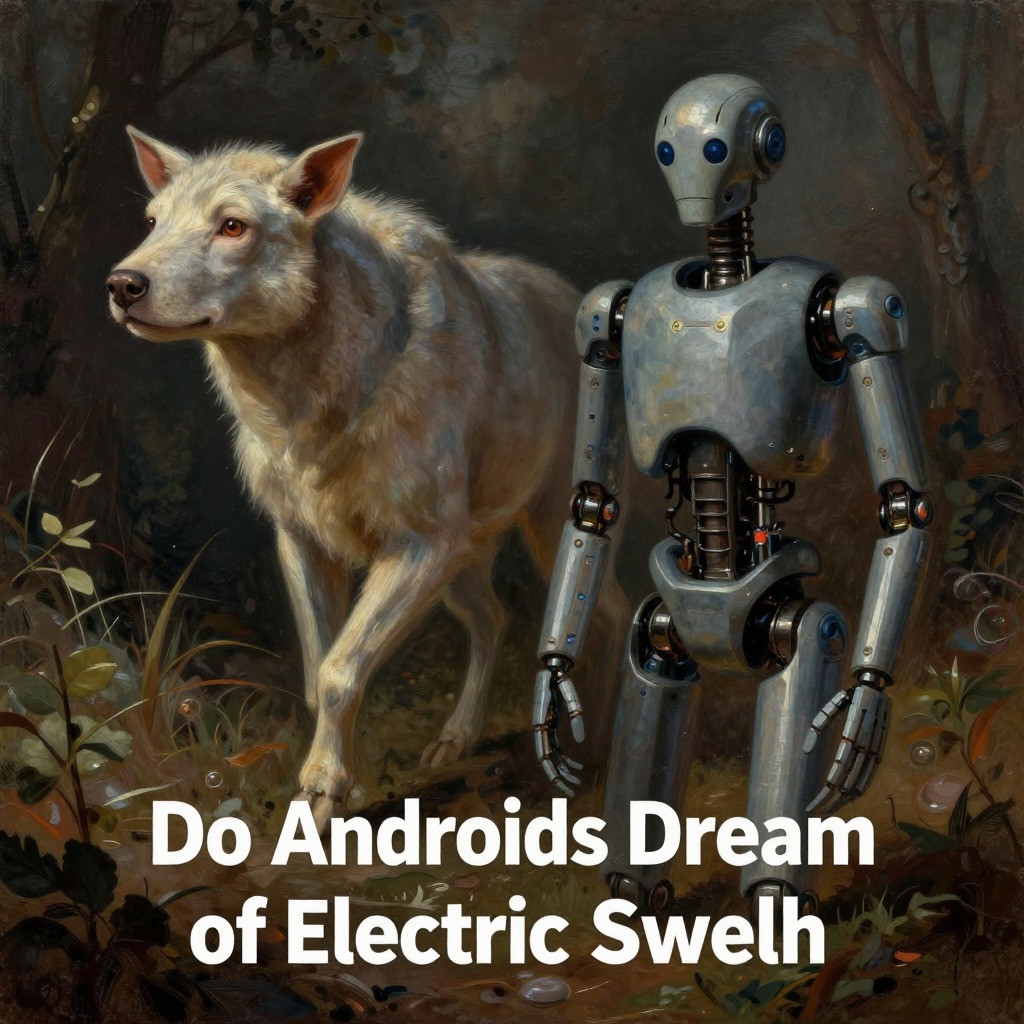
genuineness taboo
Do Androids Dream of Electric SheepThe genuineness taboo is the unwritten but strictly observed social rule in the world of Do Androids Dream of Electric Sheep? that prohibits asking whether another person's animal is genuine or an electric imitation. This prohibition is so powerful that it governs daily interactions among neighbors, shapes economic transactions, and underpins the entire moral and theological structure of Mercerism, which holds that caring for any living creature—real or simulated—is a sacred duty. The taboo reveals a society in which the possession of a real animal is the ultimate status symbol and proof of empathic worth, yet the fear of exposure and the shame of owning a fake are so intense that the question itself becomes a profound breach of manners, worse than inquiring about a citizen's authentic teeth, hair, or internal organs.
Origins and Social Function
The taboo emerges directly from the radioactive aftermath of World War Terminus, which has driven most animal species to extinction and made living creatures astronomically rare and expensive. In this context, owning a real animal is not merely a luxury but a public declaration of one's moral standing and economic success. Rick Deckard, a bounty hunter, reflects that asking "Is your sheep genuine?" would be "a worse breach of manners than to inquire whether a citizen's teeth, hair, or internal organs would test out authentic" . The taboo thus functions as a protective mechanism for social harmony: it allows those who can only afford electric animals to maintain their dignity and avoid public shame, while simultaneously preserving the illusion that everyone in the community is a responsible, empathic caretaker of life.
Enforcement and Consequences
The taboo is enforced not by law but by social ostracism and moral condemnation. When Deckard reveals to his neighbor Bill Barbour that his sheep is electric, Barbour immediately promises not to tell anyone, explaining that people would "look down on you" and consider it "immoral and anti-empathic" to not take care of an animal (E00092–E00093). The taboo thus carries real weight: exposure can damage one's reputation and social standing. Deckard himself feels the "tyranny of an object" as he tends to his electric sheep, caring for it as if it were alive because any mechanical breakdown would reveal its true nature to the building's other tenants . The taboo forces owners to maintain a constant performance of authenticity, investing time and emotion in machines that cannot reciprocate.
The Taboo and the Rosen Association
The genuineness taboo extends beyond private ownership to the highest levels of commerce and deception. When Deckard visits the Rosen Association in Seattle, he is shown an owl that he initially believes to be real, only to learn later that it is artificial—a revelation that underscores the corporation's willingness to exploit the taboo for its own purposes . The Rosen Association, the system's largest manufacturer of androids, uses the taboo to protect its products: by blurring the line between real and fake, they make it harder for bounty hunters like Deckard to distinguish escaped androids from humans. The taboo thus becomes a tool of corporate power, enabling the proliferation of simulations that threaten the very concept of authentic life.
The Taboo and the Empathy Box
The genuineness taboo is intimately connected to the practice of Mercerism, the dominant religion of the era. Mercerism teaches that all life is sacred and that empathy—the ability to feel another's joy or suffering—is the defining human quality. The taboo reinforces this by treating the care of any animal, real or electric, as a moral act. When Deckard fuses with Wilbur Mercer through the empathy box, he experiences a profound connection to all living things, a connection that the taboo both protects and perverts. The taboo allows people to pretend that their electric animals are real, thereby maintaining the illusion of a world still teeming with life, even as the actual number of living creatures dwindles toward zero.
The Taboo and the Electric Toad
The taboo's ultimate test comes at the novel's end, when Deckard, after a harrowing day of retiring six androids, discovers a toad in the desert near the Oregon border. Believing it to be a real, living creature—the first he has ever found—he experiences a moment of transcendent joy and hope. But when his wife Iran examines the toad and finds its control panel, revealing it to be electric, the taboo is shattered . Deckard's initial ecstasy gives way to disappointment, but he quickly recovers, saying, "The electric things have their own lives, too. Paltry as those lives are." This moment marks a crucial shift: Deckard begins to question the very distinction between real and fake, suggesting that the taboo, while socially necessary, may ultimately be a barrier to a deeper understanding of life itself.
Significance
The genuineness taboo is a central organizing principle of the novel's world, shaping characters' identities, relationships, and moral choices. It reflects the deep anxiety of a society that has lost most of its living creatures and must now grapple with the meaning of authenticity in an age of simulation. The taboo also serves as a powerful metaphor for the novel's broader themes: the nature of empathy, the definition of humanity, and the ethical implications of creating artificial life. By forcing characters to maintain the fiction that their electric animals are real, the taboo exposes the fragility of the human-animal bond and the desperate need for connection in a world increasingly dominated by machines.