“What goes around comes around”
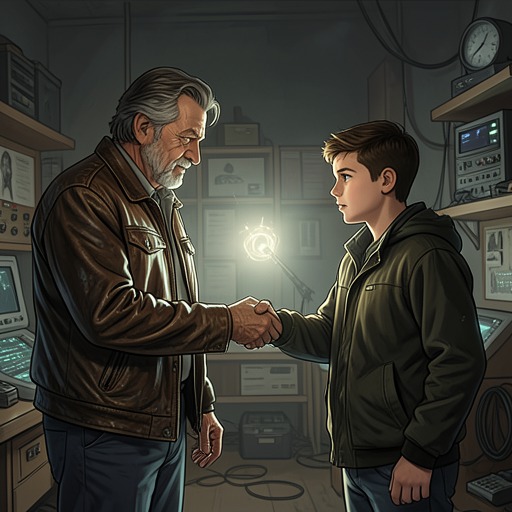
Doctor Sleep“What goes around comes around” is a principle of return that connects Dan Torrance’s childhood rescue, his recovery, and his growing responsibility to Abra. In the novel, return is not simply a promise that good deeds earn rewards. It is a chain of assistance and teaching: Dick Hallorann once came when Dan needed him, and Dan is later called to recognize that someone else needs help. The pattern brings old pain back with it, making inheritance both a source of obligation and a chance to act differently.
The Meaning of Return
Dan thinks about the phrase while considering the harm he did to Deenie and, by doing nothing, to her son. He expects neither to confess these matters to Casey Kingsley nor to escape the memory: the damage remains lodged inside him. The recollection turns toward an earlier history of harm. When Dan was five, he and his mother were victims too, and his father was not the only person responsible for their danger. Dick did something that helped them survive the Overlook Hotel. The past therefore returns in more than one moral register: Dan carries guilt for what he failed to do, but he also remembers that intervention once made a difference to him.
That memory gives the phrase its force without making it a neat accounting of debts. Dan does not claim that his later kindness cancels his earlier failures, or that suffering is deserved. Instead, the remembered rescue helps him see a possible obligation in the present. The return is practical and relational: what was done for him can inform what he does for someone else, even while the harm he caused remains painful and unresolved.
Dick Hallorann and the Teacher’s Return
The idea is bound to Dick’s teaching. Dan recalls Dick’s words, “When the pupil is ready, the teacher will appear,” and admits that he is not equipped to teach much beyond the immediate lesson that not drinking prevents drunkenness. The modesty matters: Dan does not present himself as a finished mentor or as someone who has mastered every consequence of his past. What he has learned is limited but usable, and it can be passed on through action as much as instruction.
When Dan later needs Dick, Dick comes: first at the Overlook Hotel, and later in Florida, when Mrs. Massey returns. Dan connects that presence to the Twelfth Step calls he makes with Casey and other people in the Program. They visit people overwhelmed by drugs or alcohol, sometimes at the request of friends or employers, and often because relatives have run out of options. These visits do not reliably succeed. Some end in slammed doors or abuse; one man, a veteran using meth, threatens the visitors with a pistol. Dan initially judges that visit a waste of time. Casey answers that the work is not done for the person receiving it alone: it is also done for those who make the call, and he asks Dan whether he likes the life he is living. The principle of return thus becomes a practice of recovery, not a guarantee of gratitude or success.
From Received Help to Responsibility
Dick’s later appearance gives the pattern a new recipient. When Dan raises the danger facing a little girl, Dick identifies Abra as someone like him and says, “It all comes around.” The resemblance places Abra in a chain of people whose abilities and vulnerability make help necessary. Dan has a good life in Frazier and believes he deserves it after the years he lost; yet Abra’s danger interrupts the comfort of treating that life as a private reward. The old lesson returns as a reason to respond.
The turn is not abstract. Dan is directed toward friends who know what he is, including Billy Freeman, who has some of Dan’s ability. Dan recognizes a debt between them: his stronger shining saved Billy’s life. He doubts that he would say this aloud, and believes Billy would not need him to. Their connection makes reciprocity something understood through shared knowledge and action, rather than a formal exchange of thanks.
John Dalton enters the same chain through an apparently incidental connection: he once lost a watch and is Abra’s pediatrician. Dan recalls that Dick, speaking through the dead Eleanor Ouellette, had said that it all comes around. Dan considers what Abra has asked him to do and recognizes that obtaining it may be complicated. The passage does not resolve that complication here; instead, it gathers the relationships and circumstances that make action possible. The lost watch, the doctor’s connection to Abra, and Dick’s message all point toward the way separate lives can become linked through return.
Recurrence Without Simple Closure
Across these episodes, the phrase gathers together repetition and change. Dan’s childhood fear returns in memory, but now he can also remember the person who helped him. The help he received does not erase his failures toward Deenie and her son, and his Twelfth Step work does not guarantee that those he visits will accept assistance. Still, Dick’s example gives Dan a way to meet need without requiring a clean past or a certain outcome.
The teacher-and-pupil saying and the language of things coming around are closely related but not identical. The first suggests that help or instruction arrives when it can be received; the second emphasizes that relationships and consequences recur. Together they describe a form of inheritance in which Dan is not simply repeating what happened to him. He carries forward Dick’s intervention, his recovery practice, and the knowledge of what his own omissions have cost. The return matters because it converts memory into a present choice: to notice who is in trouble, accept that help may be difficult, and answer the need as someone once answered his.