Abra mannequin
Doctor SleepThe Abra mannequin is a store-bought child figure that Billy Freeman uses as a stand-in for Abra during the confrontation at Bluebell Campground. Dressed and positioned to resemble a waiting girl, it briefly draws Rose the Hat’s attention and helps sustain her mistaken reading of the scene. Its stillness, plastic body, and eventual visibility in the wrecked pickup make it more than a disguise: the mannequin exposes the distance between a convincing image and the living person Rose believes she sees.
Identity and Construction
Billy retrieves the mannequin from the bed of his truck after Dan Torrance has started down the path. It has staring china-blue eyes and stiff blond curls, and Billy judges it light enough to lift easily. The figure had been purchased at a failing children’s clothing shop in Martenville; its history is ordinary and commercial, sharply unlike the danger into which Billy now carries it.
Its outfit supplies the most immediate signs of childhood: a Colorado Rockies T-shirt and blue shorts. It is barefoot, a detail Billy accepts on the grounds that the mannequin has never taken a step. Its knees bend, allowing him to seat it in the passenger seat, and its neck bends slightly as well. These limited articulations are enough for Billy to adjust its posture, but not to animate it. The figure can be arranged to look toward its lap; it cannot move or respond.
Billy buckles the mannequin’s seatbelt and examines the effect after positioning its head. From a suitable distance, it appears to be looking down at something in its lap, perhaps bracing itself for what is coming. That pose gives the artificial figure a legible human attitude without changing its essential stillness. The impression has a clear limit: someone with binoculars could see what the mannequin really is.
Staging the Decoy
The mannequin’s placement in the passenger seat makes it part of Billy’s plan at the campground. After setting it in place, he gets back into the truck and waits, giving Dan time to continue along the path. Billy also worries that Dan may have passed out on the way to Bluebell Campground. At quarter to five, Billy starts the truck and heads back the way he came.
The staging depends on distance and appearance rather than on the mannequin having any power of its own. The Rockies shirt, shorts, bent posture, and seatbelt produce the outline of a passenger; the bowed head makes the figure seem absorbed in its own thoughts. But the same details that make the illusion readable also emphasize its construction. The knees and neck bend only because Billy positions them, and the mannequin remains as still as it was when he lifted it from the truck bed.
Rose’s Mistaken Reading
Rose turns her attention to the passenger seat and sees the mannequin sitting with its head bowed and its body perfectly still. She initially reads the scene as Abra remaining in the truck rather than watching her uncle or attempting to get out. Rose’s alarm rises, even as the image before her appears passive. The mannequin’s apparent presence contributes to Rose’s sense that Abra is there, while Token Charlie and the others in the Lodge also register her presence. The passage does not make the mannequin itself the source of that perception; its role is to provide a visible stand-in within a scene already charged by Rose’s awareness of Abra.
Billy then calls up to Rose and performs an unsteady cartwheel. His hat falls, revealing the fine white hair of a man in his seventies, perhaps older. Rose looks back at the passenger seat: the figure has not moved or reacted to the performance. The contrast between Billy’s conspicuous action and the passenger’s total stillness breaks the illusion. Rose recognizes that the supposed girl is a mannequin. The decoy has held her attention, but its inability to behave like a person makes the deception legible once Rose examines it closely.
At the Lookout and Narrative Significance
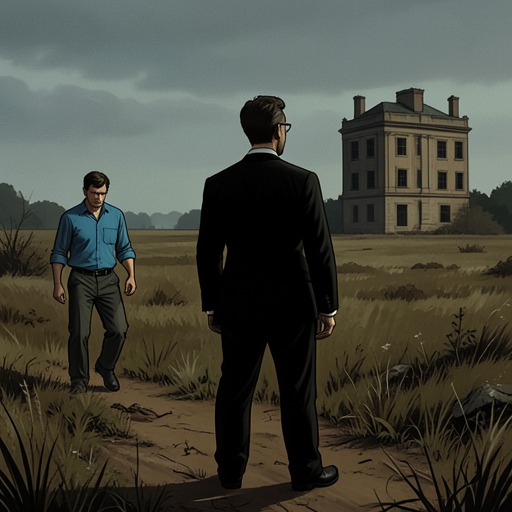
The mannequin appears again in Dan’s view during the encounter at Roof O’ the World. After Dan and Abra’s fingers interlace and his childhood surroundings dissolve, he registers the scene outside: Billy’s pickup has struck one of the thick posts supporting the lookout tower, and its radiator is steaming. The mannequin is hanging out of the passenger-side window, one plastic arm cocked behind it. Billy is trying to open the damaged driver’s-side door, with blood running down one side of his face.
This final image changes the mannequin’s position from a carefully arranged passenger to an unmistakably displaced object. The bent arm may preserve something of Billy’s earlier effort to pose it, but now its plastic construction is impossible to mistake. In the middle of the real danger, it remains a fabricated substitute, caught in the consequences of events without becoming a participant in them. Its function in the scene rests on that tension: it can momentarily pass for Abra at a distance, yet its stillness and material body ultimately distinguish the figure from the person it represents.