Frazier
Doctor SleepFrazier is the New Hampshire town where Dan Torrance’s flight from his past becomes a tentative return to life, and where the people and places he comes to rely on later become central to the fight for Abra Stone. The town offers him work, shelter, and a community organized around care; it also lies close to the isolated Cloud Gap, where that fragile refuge is tested. From Dan’s first arrival by bus to his fifteenth-sobriety anniversary, Frazier gathers the novel’s recurring concerns with recovery, memory, and the way a life can circle back to its beginnings.
Arrival and Setting
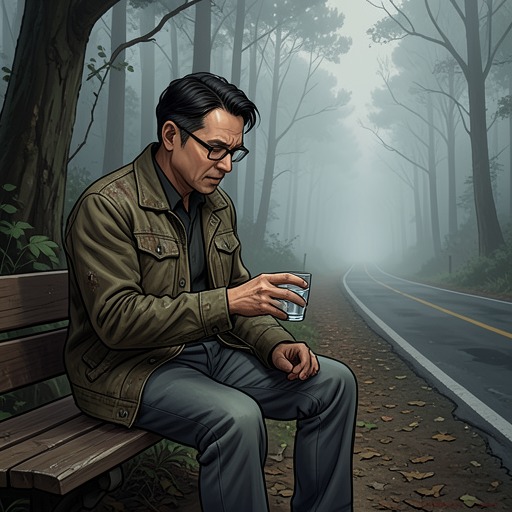
Dan reaches Frazier by bus after throwing away his bottle just over the New Hampshire state line. At the town’s community center, Tony speaks clearly to him for the first time in years and identifies the place as the one Dan has been looking for. Dan takes his duffel and watches the bus leave, with the White Mountains visible to the west. He has spent his wanderings avoiding mountains, but these seem gentler than the ones that still haunt his dreams. His arrival is not a clean escape: he is still troubled by the memory of the boy in the Braves shirt and by the knowledge that moving elsewhere cannot separate him from himself.
The town’s seasons are part of its texture. When Dan arrives, a fine snow flurry crosses the street, and the shops on Cranmore Avenue are nearly deserted during the cold, damp interval that passes for spring in northern New England. The stores mainly serve winter skiers and summer visitors, with leaf-peepers expected in September and October. Later, when the temperature climbs into the mid-fifties, melting snow turns Teenytown into a soundscape of small waterfalls, and Dan’s spirits rise enough for him to sing while clearing snow. Frazier is not an abstract haven: its weather, work rhythms, and local attractions mark the gradual change in Dan’s circumstances.
One of the first buildings to draw Dan’s attention is Helen Rivington House, a rambling Victorian mansion flanked by newer brick buildings connected to it by covered walkways. Its uneven shape—the turret on one side, none on the other—appeals to him, though the smile it prompts fades when he sees Tony at a turret window and then realizes that the window is boarded up. The vision makes the house feel bound to his childhood and the return of the shining. He later learns that a gray cat does live there, though his imagined name for it is wrong.
Work, Shelter, and the Hospice
Frazier gives Dan a practical foothold through employment with the municipal department. After three days painting the bandstand and clearing dead leaves from the common, Casey Kingsley offers him a room on Eliot Street, with a private bathroom, for eighty-five dollars a week. The offer comes with a warning: Casey has vouched for Dan on limited evidence, including Billy Freeman’s intuition, and expects him not to jeopardize that trust. Dan’s response is colored by memories of his father, Jack Torrance, who once had to beg for work from a wealthy friend after losing his teaching position. Sympathy for Jack coexists with the knowledge that his drinking and failures had made him dangerous.
About six months after beginning work at the hospice as a janitor and orderly, Dan asks Mrs. Clausen about the turret room at Helen Rivington House. He had already felt, from the first sight of Tony in its window, that he would eventually live there. The room is cluttered with junk, but Dan offers to clear it on his own time, arguing that living on site would make him available when needed. Mrs. Clausen, the house’s capable and compassionate chief supervisor, agrees to consider the arrangement. Dan becomes not only an orderly but an unofficial doctor in residence, with Azzie as his regular companion.
The turret becomes a working home rather than a picturesque retreat. Dan makes it usable with a safe space heater and, in summer, fans set in open windows; the room can grow hot, but he is rarely there by day and New Hampshire nights are generally cool. Among the discarded objects, he keeps a large grammar-school blackboard that had been hidden behind old wheelchairs. He uses it to track hospice patients and their room numbers, erasing the names of those who die and adding new arrivals. In spring 2004, it carries thirty-two names: ten patients in Rivington One, twelve in Rivington Two, and the remainder on the floors beneath Dan’s apartment. The board’s ordinary cycle of erasure and replacement makes the rhythms of care and death visible in the place where Dan lives.
Helen Rivington’s legacy gives the hospice its purpose. The famous former resident wrote romance novels under the name Jeannette Montparsse, but her lasting importance to Frazier is that she left the town substantial money and gave it the house. She believed older people should have a place where they could die with dignity. That commitment shapes the institution Dan serves: the hospice is not simply his workplace or lodging, but a local answer to suffering that depends on practical attention, companionship, and the possibility of an orderly death.
A Local Network of Work and Care
Frazier connects Dan to a durable circle of relationships. Although his municipal employment lasts only a short time, he and Billy remain friends over the following decade. Their bond rests partly on Casey, who is Billy’s boss and Dan’s sponsor, but also on straightforward affection and Dan’s appreciation of Billy’s blunt manner. Dan brings coffee to Billy at Teenytown and enjoys taking the controls of The Helen Rivington, the sightseeing train that makes a ten-mile loop to Cloud Gap and back. During the summer season it runs the route ten times a day between the Fourth of July and Labor Day; Billy often lets Dan drive, especially when the season’s workload grows tiring.
The hospice brings other kinds of responsibility into Dan’s daily life. Fred Carling, still working nights as an orderly, has a history of mistreating patients, including leaving marks on Charlie Hayes. He remains lazy and ill-tempered, but has learned to keep away from Doctor Sleep, Dan’s reputation in the hospice. The detail locates Dan’s authority in the place: his work is not limited to comfort or paperwork, and his presence changes how other staff behave around vulnerable residents.
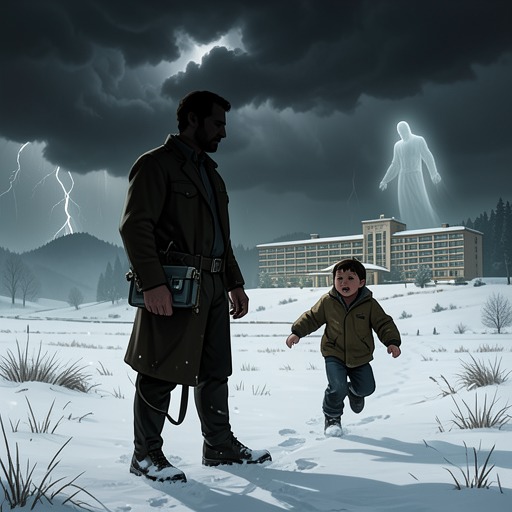
Frazier also becomes a place where Dan must reckon with what care cannot undo. After a disturbing encounter, he walks across Cranmore Avenue toward Rivington House but delays going inside, using the night air and the walk to think. The experience turns him back toward Dick Hallorann and memories he has never disclosed to Casey. Dan knows he once abandoned Deenie and her son, but he also remembers that, as a five-year-old, he and his mother were endangered by Jack; Dick helped save them from the Overlook. The town’s familiar streets and hospice grounds do not erase these histories. They give Dan a settled place from which to face them, even when he would rather not.
Frazier and the Threat at Cloud Gap
The routes out of Frazier become important when Abra is threatened. During the journey toward Cloud Gap, Dan drives The Helen Rivington while Abra’s presence comes and goes from his mind. She reaches telepathically toward a member of the True Knot who has put on Bradley Trevor’s baseball glove, carefully tracing the group’s movements. They have stopped in a town Dan thinks may be Sturbridge, left the turnpike for secondary roads, and paused at a roadside café; they are not hurrying because they believe the isolated destination will make their task easier. Frazier’s connection to Cloud Gap is therefore both literal—the train carries Dan and his companions along the route—and strategic, as the group’s apparent confidence in the remote location shapes the danger ahead.
At Cloud Gap Station, the Saco River shines below a fenced drop, with autumn-colored woods rising along its banks. Dan stops the train and Abra, speaking through his mouth, thanks her father for letting her drive before correcting her word for their meal. The moment of family ease sits beside the coming violence. After the confrontation, the return to Frazier is marked by refusal: nobody wants to take the True Knot’s Winnebago back to the cars at Teenytown Station. The vehicle carries the smell of sickness, death, and evil, and Dan does not want to discover whether the group’s dead might return as ghosts. They discard clothes and drug paraphernalia into the Saco and travel back in The Helen Rivington. The familiar train, town station, and river thus become part of the aftermath as well as the approach to the conflict.
Return and the Wheel of Time
The town’s later meaning comes into focus when Dan tells his story after the confrontation. He recounts the northbound bus, the bottle left in a trash can, and Tony’s first clear words in years as the beginning of his return to Frazier. He then turns further back to Danny’s childhood, explaining that Tony had helped him bear not only the shining but the greater burden of living with an alcoholic and dangerous father whom Danny and his mother loved. Frazier is consequently the site of a return that includes both recovery and painful recollection: Dan does not arrive as someone untouched by the past but as someone who can finally narrate it to others.
At the Saturday noon AA meeting, Frazier’s long communal history frames Dan’s own milestone. The meeting dates to 1946 and remains well attended; on this occasion it is full because food and a sheet cake will follow the ceremony. Dan, now often called Doc because of his hospice work, celebrates fifteen years of sobriety. John chairs at Dan’s request, and Casey walks with a cane as they are called forward. Casey receives the medallion marked XV and jokes about Dan’s old attitude, while Dan steadies himself to speak, remembering the fear he felt at Roof O’ the World. The nickname Doc, which Dan’s parents had also used, strikes him as ironic in a welcome way: life has turned back toward an earlier point, but with a changed meaning. Frazier makes that circularity concrete, holding together the lost man who arrived by bus, the caregiver who learned to stay, and the sober man able to stand before his community.