God’s a connoisseur of fragile things
Doctor Sleep“God’s a connoisseur of fragile things” is a line Lucy Stone remembers from a poem by Concetta Reynolds, and its image of people as delicate glass ornaments gives the family a language for confronting Concetta’s decline. The metaphor shifts from an idea Lucy once found merely pretty to a way of acknowledging loss, while David Stone’s response adds a counterweight: fragile things may also prove unexpectedly tough.
The remembered poem
Lucy recalls the poem while describing Concetta’s confusion and the profane words she could remember after a difficult night. She admits that she cannot quote it word for word, but remembers it beginning: “God’s a connoisseur of fragile things, and decorates His cloudy outlook with ornaments of finest glass.” The qualification matters: this is a recollection rather than a verified full quotation, and Lucy remembers having once regarded the sentiment as conventionally pretty, almost twee, for Concetta’s poetry.
The line’s ornament imagery joins beauty to vulnerability. In Lucy’s earlier reading, the glass ornaments seemed to make the thought too pretty; in the present, with Concetta’s condition demanding a decision, that delicacy no longer feels remote or decorative. The remembered poem gives Lucy an image through which to understand the painful limits of care.
Hospice and the mantelpiece
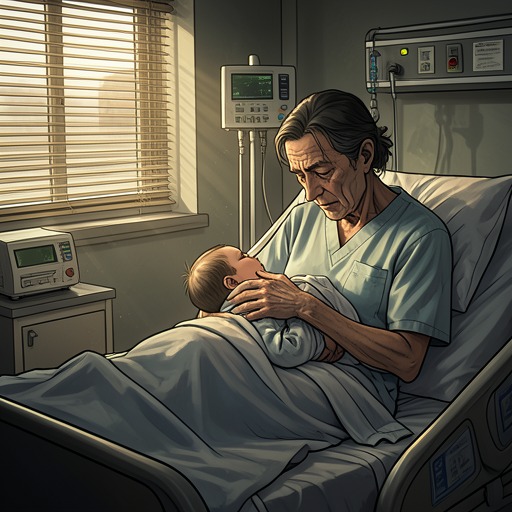
Lucy tells David that she cannot continue caring for Concetta, even with daytime help. She has already called Helen Rivington House, a hospice in Frazier, and learned that a place is available that day. Explaining the decision, she adapts the poem’s image: “I guess God pushed another of His ornaments off the mantelpiece last night.” The ornament has become a figure for a person whose life and health are precarious, and the mantelpiece makes the metaphor’s loss starkly physical.
Lucy’s decision is practical as well as emotional: the hospice vacancy offers a concrete next step, while Concetta’s condition makes continued care at home impossible for her. The poetic image does not resolve the difficulty; it allows Lucy to speak about it while acknowledging that the loss cannot be softened away.
A family image of fragility and endurance
Later, Abra tells David that Concetta was like a glass ornament, then clarifies that the thought had been in her mind rather than spoken aloud. She extends the comparison beyond Concetta: “She says we all are.” The image has moved from Lucy’s memory of Concetta’s poem into the family’s shared understanding of vulnerability, reaching Abra as an unspoken thought and emerging in her conversation with her father.
David accepts the comparison but resists equating fragility with helplessness. He tells Abra that some people are made of “surprisingly tough glass,” and reminds her that her great-grandmother has been safe on the shelf for many years. His reply preserves the poem’s delicacy while changing its emphasis: glass can be vulnerable, yet it can also endure. The phrase therefore holds two truths at once—the family’s exposure to loss and its capacity to withstand it.