The True Knot's concealment and migration practices
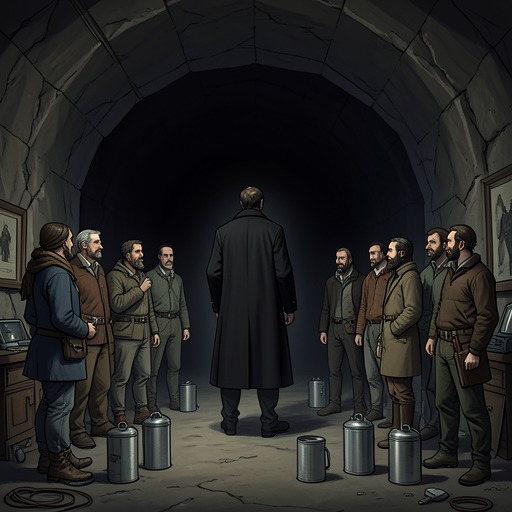
Doctor SleepThe True Knot’s concealment and migration practices are the means by which the group remains difficult to distinguish from ordinary travelers despite its members’ unnatural changes in age and appearance. It maintains havens across several states but does not stay in one place for long; instead, it blends into the traffic and routines of American road life. Its invisibility depends not on a single disguise, but on a repeated pattern of mobility, unremarkable behavior, and avoidance of publicity.
A scattered, mobile network
The True Knot is not an incorporated business, but its influence can be traced through holding companies to major businesses and large parcels of land in communities in Maine, Florida, Colorado, and New Mexico. These places function as company towns and safe havens, among them Dry Bend, Jerusalem’s Lot, Oree, and Sidewinder. The group’s presence is substantial enough to shape local property and commerce, yet it does not make those towns a permanent home. Its members are migratory, using safe places without remaining long enough for them to become conspicuous.
The group’s movement follows familiar American routes. Its motorhomes may appear on I-95 in South Carolina, on I-80 in Nevada, or on Georgia’s Highway 41 near Tifton. At highway rest areas, its vehicles gather in the parking areas set aside for long-haul trucks and recreational vehicles, apart from the spaces used by ordinary cars. The recurring sight is a cluster of large motorhomes and a group of travelers moving together. What might otherwise seem like a distinctive concentration becomes part of a common roadside scene.
Camouflage in ordinary life
The True Knot adopts the recognizable habits and consumer details of other recreational-vehicle travelers. Its members wear ordinary clothes and inexpensive sunglasses, buy souvenir shirts, consult AAA road maps, and put travel decals and familiar bumper stickers on their motorhomes. They eat commonplace fast food, shop at highway convenience stores, and sometimes spend an evening at a local bingo hall. These routines make the group legible as a collection of older travelers rather than as an organized community with something to hide. Its members’ ability to pay for fuel and travel may invite passing curiosity, but the familiar surface gives observers an easy explanation and little reason to keep looking.
There is also a small but notable contrast between the True Knot’s vehicles and those of many other recreational-vehicle travelers: the group has no dogs. The absence distinguishes its motorhomes from the pet-owning households commonly seen at rest stops, though the account does not identify it as a deliberate concealment measure. More broadly, the group’s camouflage works through resemblance rather than perfect imitation. It appears ordinary enough to be overlooked, and its members keep to themselves rather than inviting familiarity.
Why the group must keep moving
Mobility is necessary because the True Knot does not age as other people do. Over time, a member’s appearance may shift markedly: an elderly person can seem decades younger, while another member may return toward the age at which they underwent the Turning. Physical changes can include the disappearance of a limp or cataracts, the return of hair, or a newly straightened posture. Snakebite Andi is the group’s only genuinely young member, although she too is older than she looks. Such reversals are not merely private changes. If neighbors had enough time to observe them, they would begin to wonder and talk; eventually, a reporter might investigate.
The group therefore avoids staying long enough for its changing appearances to become a public pattern. When a stay in one of its company towns lasts longer, members remain socially separate. The practice answers a specific danger: the True Knot’s unusual longevity and apparent rejuvenation could attract scrutiny if the same people were observed in one place over time. Migration interrupts that observation before curiosity can grow into sustained attention.
Low-profile conduct and the limits of concealment
The group’s discretion extends to encounters with law enforcement. If a member is stopped for a minor traffic offense, the officer finds valid licenses, current insurance, and paperwork in order. Members do not raise their voices or dispute a charge, even when they believe a stop is unfair, and they pay fines promptly. This orderly response keeps a routine stop from becoming a confrontation that might draw further notice. The True Knot moves through the country unobtrusively, using its compliance with ordinary procedures as another part of its public cover.
The book’s other scenes of privacy and restraint sharpen the distinction between concealment and chosen self-control. Dan Torrance, attending his eighth meeting in a ninety-meetings-in-ninety-days plan, sits in the front row at a noon AA meeting in the basement of Frazier Methodist Church because Casey Kingsley has instructed him to do so. His recovery does not depend on pretending that the past is absent: his memories of Deenie and her son remain, but have become less painful, and he has stopped trying to shut the past away. In contrast with the True Knot’s evasion of public scrutiny, the meeting makes facing and sharing difficult truths part of a deliberate practice.
Abra’s handling of her abilities offers a related, though distinct, contrast. Her childhood powers have changed: moving objects has become harder, while looking into other people’s minds and far-seeing remain possible. She has learned to keep her mind’s seeing faculty mostly closed and avoids intruding on her parents’ or Momo’s thoughts. That restraint marks a boundary she chooses to respect; the True Knot’s concealment instead protects a group whose visible changes could expose its existence. Together, these contrasting practices make secrecy more than a question of hiding: the same outward reserve can serve ethical privacy, recovery, or the avoidance of accountability.